
Full-Circle Moment: Why Vedanta is more than a corporate restructuring story
Agarwal’s business journey has come full circle, unlocking value through a deep corporate restructuring.
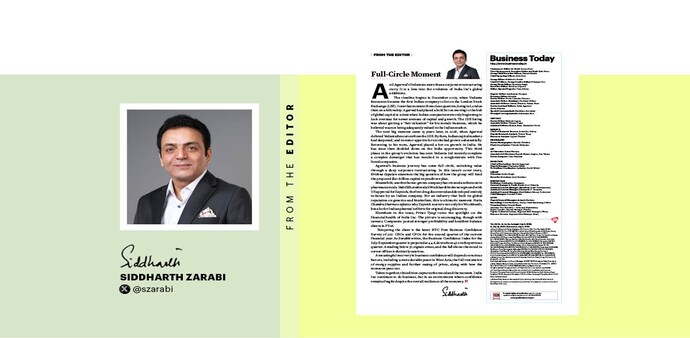
- Jul 6, 2026,
- Updated Jul 6, 2026 12:39 PM IST
Anil Agarwal’s Vedanta is more than a corporate restructuring story. It is a lens into the evolution of India Inc’s global ambitions.
The timeline begins in December 2003, when Vedanta Resources became the first Indian company to list on the London Stock Exchange (LSE). I saw that moment from close quarters, being in London then on a fellowship. Agarwal had placed a bold bet on moving to the hub of global capital at a time when Indian companies were only beginning to look overseas for newer avenues of capital and growth. The LSE listing was about getting a “fair valuation” for his metals business, which he believed was not being adequately valued in the Indian market.
The next big moment came 15 years later, in 2018, when Agarwal delisted Vedanta Resources from the LSE. By then, Indian capital markets had deepened, and investor appetite for stocks had grown substantially. Returning to his roots, Agarwal placed a bet on growth in India. He has since then doubled down on the India opportunity. This third phase in the group’s evolution has seen Vedanta Ltd recently complete a complex demerger that has resulted in a conglomerate with five listed companies.
Agarwal’s business journey has come full circle, unlocking value through a deep corporate restructuring. In this issue’s cover story, Krishna Gopalan examines the big question of how the group will fund the proposed $20-billion capital expenditure plan.
Meanwhile, another home-grown company has crossed a milestone in pharmaceuticals. Habil Khorakiwala’s Wockhardt broke new ground with US approval for Zaynich, the first drug discovered and developed entirely in-house by an Indian company. For an industry that built its global reputation on generics and biosimilars, this is a historic moment. Neetu Chandra Sharma explains why Zaynich matters not only for Wockhardt, but also for Indian pharma’s efforts for original drug discovery.
Elsewhere in the issue, Prince Tyagi turns the spotlight on the financial health of India Inc. The picture is encouraging, though with caveats. Companies posted stronger profitability and healthier balance sheets in FY26.
Tempering the cheer is the latest BT-C Fore Business Confidence Survey of 500 CEOs and CFOs for the second quarter of the current financial year. As Surabhi writes, the Business Confidence Index for the July-September quarter is projected at 44.6, down from 47.2 in the previous quarter. A reading below 50 signals stress, and the fall shows the mood in corner offices is distinctly cautious.
A meaningful recovery in business confidence will depend on various factors, including a more durable peace in West Asia, the full restoration of energy supplies and further easing of prices, along with how the monsoon pans out.
Taken together, this edition captures the mood and the moment. India Inc continues to do business, but in an environment where confidence remains fragile despite the overall resilience of the economy. @szarabi
Anil Agarwal’s Vedanta is more than a corporate restructuring story. It is a lens into the evolution of India Inc’s global ambitions.
The timeline begins in December 2003, when Vedanta Resources became the first Indian company to list on the London Stock Exchange (LSE). I saw that moment from close quarters, being in London then on a fellowship. Agarwal had placed a bold bet on moving to the hub of global capital at a time when Indian companies were only beginning to look overseas for newer avenues of capital and growth. The LSE listing was about getting a “fair valuation” for his metals business, which he believed was not being adequately valued in the Indian market.
The next big moment came 15 years later, in 2018, when Agarwal delisted Vedanta Resources from the LSE. By then, Indian capital markets had deepened, and investor appetite for stocks had grown substantially. Returning to his roots, Agarwal placed a bet on growth in India. He has since then doubled down on the India opportunity. This third phase in the group’s evolution has seen Vedanta Ltd recently complete a complex demerger that has resulted in a conglomerate with five listed companies.
Agarwal’s business journey has come full circle, unlocking value through a deep corporate restructuring. In this issue’s cover story, Krishna Gopalan examines the big question of how the group will fund the proposed $20-billion capital expenditure plan.
Meanwhile, another home-grown company has crossed a milestone in pharmaceuticals. Habil Khorakiwala’s Wockhardt broke new ground with US approval for Zaynich, the first drug discovered and developed entirely in-house by an Indian company. For an industry that built its global reputation on generics and biosimilars, this is a historic moment. Neetu Chandra Sharma explains why Zaynich matters not only for Wockhardt, but also for Indian pharma’s efforts for original drug discovery.
Elsewhere in the issue, Prince Tyagi turns the spotlight on the financial health of India Inc. The picture is encouraging, though with caveats. Companies posted stronger profitability and healthier balance sheets in FY26.
Tempering the cheer is the latest BT-C Fore Business Confidence Survey of 500 CEOs and CFOs for the second quarter of the current financial year. As Surabhi writes, the Business Confidence Index for the July-September quarter is projected at 44.6, down from 47.2 in the previous quarter. A reading below 50 signals stress, and the fall shows the mood in corner offices is distinctly cautious.
A meaningful recovery in business confidence will depend on various factors, including a more durable peace in West Asia, the full restoration of energy supplies and further easing of prices, along with how the monsoon pans out.
Taken together, this edition captures the mood and the moment. India Inc continues to do business, but in an environment where confidence remains fragile despite the overall resilience of the economy. @szarabi