
A dream policy to help capital goods manufacturing
The National Capital Goods Policy unveiled at the Make in India venue in Mumbai will remain the most significant development during the week-long government sponsored 'Make in India week' celebrations.
- Feb 16, 2016,
- Updated Feb 16, 2016 5:49 PM IST
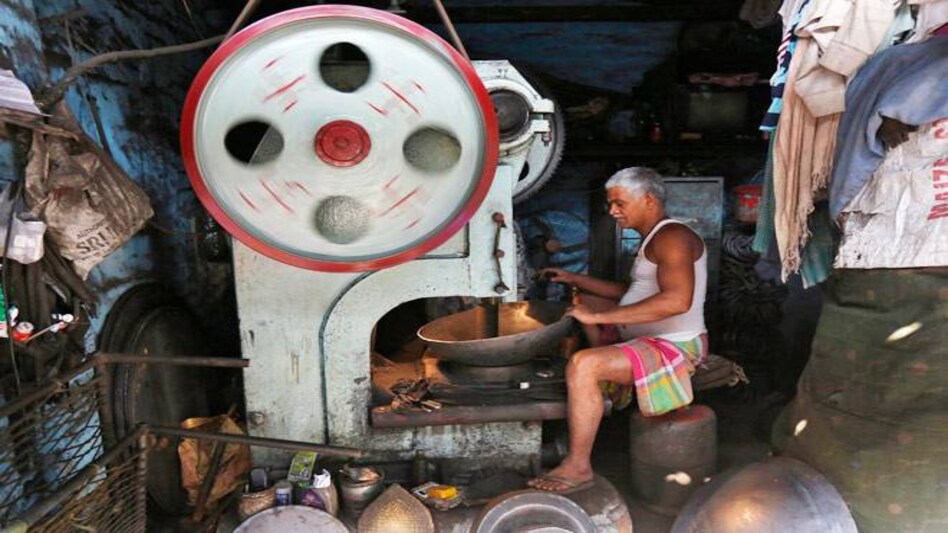
It has, for the first time, taken a holistic look at the real problems impacting India's manufacturing sector. It covers all the major sub-sectors, and suggests not just visionary roadmaps but practical solutions to improve productivity and demand in each of them.Take, for instance, the machine tools sector, which has huge employment potential. The sector, with a market size of Rs 9,267 crore, has been struggling over the past three years with a negative annual growth rate of 7.6 per cent. Import constitutes 57 per cent of total demand and only 7 per cent of total production is exported.
The policy says that machine tools should be excluded from trade agreements, specifically with strong countries such as Japan, Korea, Taiwan, and EU, and included in agreements with countries in South-East Asia, which do not have strong machine tools industries. While this is a direct remedy to make imports expensive, the other suggestion is to strengthen Indian manufacturing by encouraging acquisitions of potential overseas companies in key technologically competitive countries such as European Union, with the intent of acquiring technology knowhow as well as manufacturing competencies.
The other recommended policy measures include development of 'Technology Centres' in key markets of Thailand, Turkey, Brazil and Mexico, greater incentives for promoting technology development by SMEs and encouraging them to avail 200 per cent weighted deduction on R&D initiatives, extending 'investment allowance' measure for a period of five years, as also reducing the permissible limit from Rs 100 crore to Rs 25 crore to enable reaping of benefits by SMEs. The section also talks about enhancing depreciation allowance to around 25 per cent for purchase of indigenous capital goods.
Yes, what would normally be seen as an industry wish list is what the National Capital Goods Policy is all about.
And it is not limited to machine tools sector. It has specific chapters on textile machinery, earth moving and mining machinery, heavy electrical equipment, plastic machinery, process plant equipment, dyes, moulds and press tools, metallurgical machinery and food processing machinery.
It is true that the policy has been prepared by industry associations like CII and the Ministry of Heavy Industries and Public Enterprises. It may not have gone through intense finance ministry scrutiny also. But to have a policy that spells out all the practical problems and real time solutions is something the industry, perhaps, has never seen before.
Capital goods sector will lead India's "Make In India" initiative, provided the policy turns into action.Let's be optimistic.
It has, for the first time, taken a holistic look at the real problems impacting India's manufacturing sector. It covers all the major sub-sectors, and suggests not just visionary roadmaps but practical solutions to improve productivity and demand in each of them.Take, for instance, the machine tools sector, which has huge employment potential. The sector, with a market size of Rs 9,267 crore, has been struggling over the past three years with a negative annual growth rate of 7.6 per cent. Import constitutes 57 per cent of total demand and only 7 per cent of total production is exported.
The policy says that machine tools should be excluded from trade agreements, specifically with strong countries such as Japan, Korea, Taiwan, and EU, and included in agreements with countries in South-East Asia, which do not have strong machine tools industries. While this is a direct remedy to make imports expensive, the other suggestion is to strengthen Indian manufacturing by encouraging acquisitions of potential overseas companies in key technologically competitive countries such as European Union, with the intent of acquiring technology knowhow as well as manufacturing competencies.
The other recommended policy measures include development of 'Technology Centres' in key markets of Thailand, Turkey, Brazil and Mexico, greater incentives for promoting technology development by SMEs and encouraging them to avail 200 per cent weighted deduction on R&D initiatives, extending 'investment allowance' measure for a period of five years, as also reducing the permissible limit from Rs 100 crore to Rs 25 crore to enable reaping of benefits by SMEs. The section also talks about enhancing depreciation allowance to around 25 per cent for purchase of indigenous capital goods.
Yes, what would normally be seen as an industry wish list is what the National Capital Goods Policy is all about.
And it is not limited to machine tools sector. It has specific chapters on textile machinery, earth moving and mining machinery, heavy electrical equipment, plastic machinery, process plant equipment, dyes, moulds and press tools, metallurgical machinery and food processing machinery.
It is true that the policy has been prepared by industry associations like CII and the Ministry of Heavy Industries and Public Enterprises. It may not have gone through intense finance ministry scrutiny also. But to have a policy that spells out all the practical problems and real time solutions is something the industry, perhaps, has never seen before.
Capital goods sector will lead India's "Make In India" initiative, provided the policy turns into action.Let's be optimistic.