
GM eyes big under Mary Barra
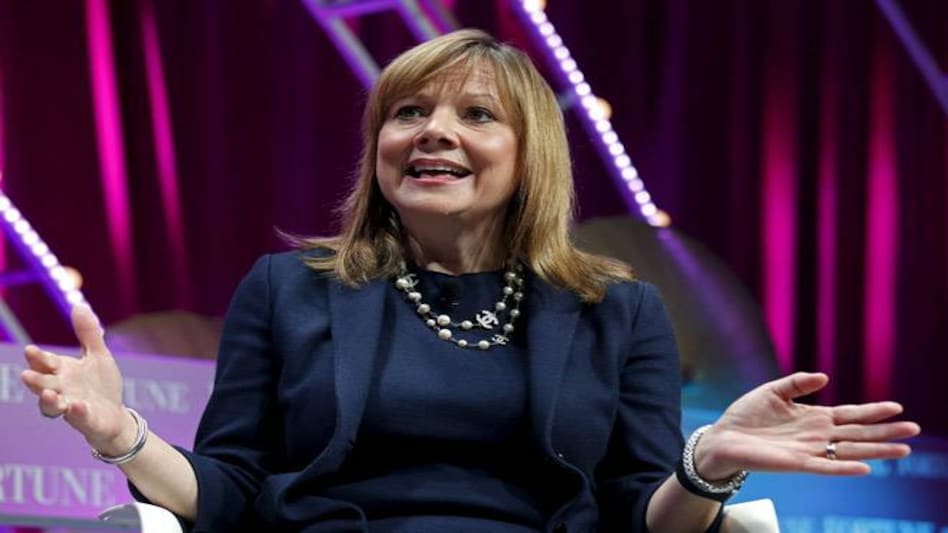
The elevation of the GM chief executive Mary Teresa Barra as the chairman of General Motors Company may rev up the carmaker's expansion in India.
- Jan 5, 2016,
- Updated Jan 5, 2016 6:28 PM IST
Though the American carmaker has operated here for almost two decades, it hasn't been able to succeed in a market dominated by Japanese and Korean companies.
Earlier in August, during her visit to India, the 54 year old CEO had outlined a plan of launching at least 10 new launches until 2020, including their luxury products in the country.
Barra had also met with Prime Minister Narendra Modi and discussed the $1 billion investment plan and consolidation of production at its Talegaon plant in Maharashtra, closing down the Gujarat plant, in August.
In making Barra, the company's first female chairman, the board of GM has provided an endorsement of her two years leadership and revival of the carmaker.
Barra, who come up through ranks in GM, succeeds Tim Solso, who was at the helm of affairs since January 2014.
"You are being recognised for a job because of your contribution for the results. There is no gender specific reason for it. But in this role I can motivate young women," Barra told BT in an interview in August, when asked about her experience as the first woman CEO of an automotive company.
Also the rise in profits and the clearing off of legal issues from the ignition-switch recall has put GM on sound footing during Barra's stint as CEO and MD.
During Barra's time, the carmaker voluntarily took responsibility for the ignition-switch fiasco that was linked to 124 deaths and cost the company $900 million in a settlement, with the US Justice Department and $600 million in payments to victims. GM had set up a fund to pay victims who could not sue because the switches were installed before the company's 2009 bankruptcy.
The $1 billion investment that GM allocated for India is part of the $5-billion investment the company plans for strengthening Chevrolet brands and positioning them to win in growth markets--- China, India, Brazil and Mexico.
Barra said in the interview that they recognised India as an important country, where there were rising opportunities in sync with the growing middle class.
"We have done a lot of work to understand the Indian customer, their concern on values, technology, fuel economy, safety and connectivity. We want to double our market share in a short span," she added.
The carmaker looks at deep localisation of manufacturing and wants to participate in Make in India campaign. Their strategy is to make GM India the hub of export. GM targets to export 30 per cent of the volume from the country. They already export cars to Chile and look to expand the network adding Mexico and African countries.
However for launching luxury products such as Cadillac and Buick in India, GM is still studying the market. "We will be looking at launching the right products across markets and will check whether high-end products could signify the brand," she said.
They target to get sophisticated customers, who truly want new variants than moving from vehicle A to B. But, launching of high-end products is under consideration, especially compact SUVs.
GM has invested $1 billion in 19 years in the country. The new investment is spent in developing new products specifically for the Indian market. Barra accepted that GM didn't see some of the opportunities in the Indian market. "We didn't have the right products to continue the success. The issues in quality and the recalls impacted growth.
The important aspect that Barra looks at GM is margins and profitability.
"You can grow market share, but it is not sustainable if it's not profitable… GM is today nimble and agile to face the market challenges."
Though the American carmaker has operated here for almost two decades, it hasn't been able to succeed in a market dominated by Japanese and Korean companies.
Earlier in August, during her visit to India, the 54 year old CEO had outlined a plan of launching at least 10 new launches until 2020, including their luxury products in the country.
Barra had also met with Prime Minister Narendra Modi and discussed the $1 billion investment plan and consolidation of production at its Talegaon plant in Maharashtra, closing down the Gujarat plant, in August.
In making Barra, the company's first female chairman, the board of GM has provided an endorsement of her two years leadership and revival of the carmaker.
Barra, who come up through ranks in GM, succeeds Tim Solso, who was at the helm of affairs since January 2014.
"You are being recognised for a job because of your contribution for the results. There is no gender specific reason for it. But in this role I can motivate young women," Barra told BT in an interview in August, when asked about her experience as the first woman CEO of an automotive company.
Also the rise in profits and the clearing off of legal issues from the ignition-switch recall has put GM on sound footing during Barra's stint as CEO and MD.
During Barra's time, the carmaker voluntarily took responsibility for the ignition-switch fiasco that was linked to 124 deaths and cost the company $900 million in a settlement, with the US Justice Department and $600 million in payments to victims. GM had set up a fund to pay victims who could not sue because the switches were installed before the company's 2009 bankruptcy.
The $1 billion investment that GM allocated for India is part of the $5-billion investment the company plans for strengthening Chevrolet brands and positioning them to win in growth markets--- China, India, Brazil and Mexico.
Barra said in the interview that they recognised India as an important country, where there were rising opportunities in sync with the growing middle class.
"We have done a lot of work to understand the Indian customer, their concern on values, technology, fuel economy, safety and connectivity. We want to double our market share in a short span," she added.
The carmaker looks at deep localisation of manufacturing and wants to participate in Make in India campaign. Their strategy is to make GM India the hub of export. GM targets to export 30 per cent of the volume from the country. They already export cars to Chile and look to expand the network adding Mexico and African countries.
However for launching luxury products such as Cadillac and Buick in India, GM is still studying the market. "We will be looking at launching the right products across markets and will check whether high-end products could signify the brand," she said.
They target to get sophisticated customers, who truly want new variants than moving from vehicle A to B. But, launching of high-end products is under consideration, especially compact SUVs.
GM has invested $1 billion in 19 years in the country. The new investment is spent in developing new products specifically for the Indian market. Barra accepted that GM didn't see some of the opportunities in the Indian market. "We didn't have the right products to continue the success. The issues in quality and the recalls impacted growth.
The important aspect that Barra looks at GM is margins and profitability.
"You can grow market share, but it is not sustainable if it's not profitable… GM is today nimble and agile to face the market challenges."