
As NSE prepares for IPO, Zerodha's Nithin Kamath says it’s a ‘cash machine’. Here's why
Nithin Kamath added that the NSE is likely to continue its stride even after its listing. Find out why in this story
- Jun 23, 2026,
- Updated Jun 23, 2026 11:06 AM IST
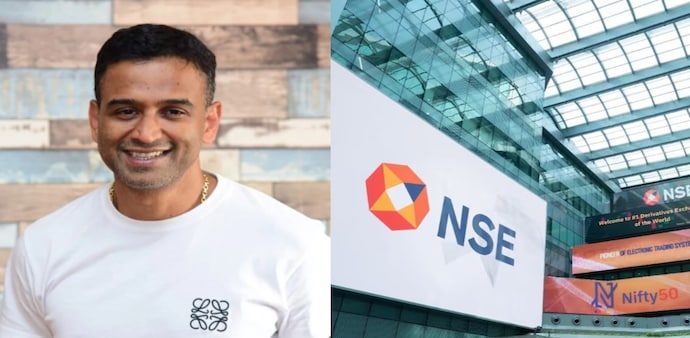
Zerodha co-founder Nithin Kamath on Sunday described the National Stock Exchange (NSE) as a "cash machine" due to its highly profitable and capital-light business model. He added that the NSE is likely to continue its stride even after its listing because it can't do much with the excess profits.
"NSE is a cash generation and distribution machine. In FY26 alone, NSE earned a profit of over ₹10,300 crore and paid out roughly ₹8,660 crore in dividends— a payout ratio of 84%. This will likely continue even after listing because NSE can't do much with the excess profits. SEBI doesn't allow exchanges to invest in other businesses, listed or private," Kamath wrote on X.
Furthermore, Kamath said that other businesses are unable to give huge dividends like NSE because of tax arbitrage. According to the Zerodha co-founder, if a business earns ₹100, it pays around 25% corporate tax and is left with ₹75.
DON'T MISS THIS | NSE IPO: From regulatory hurdles to D-st debut - comeback story behind India's much awaited issue
He added that if ₹75 is distributed as dividends, the shareholder pays tax again at the marginal rate, which can be another ~36% for somebody in the highest bracket, and the investor ends up getting only ₹48 out of the original ₹100.
But what if the company invests that entire ₹100 into growth? "Now contrast that with a company that reinvests the entire ₹100 into growth. If that growth reflects in the stock price, the investor pays capital gains tax only when they sell and at a much lower rate of 14.5% (the highest rate). Adding to this, there is no tax on this ₹100 because nothing is booked as profit."
He further said that a massive differential provides profitable companies with a strong incentive to reinvest aggressively instead of distributing. "A differential of 14.5 % vs 51% creates a strong incentive for profitable companies to reinvest aggressively rather than distribute. Which is why you don't see many new-age businesses choosing to be profitable in the first place. I hope something changes here. Reinvestment is good for the economy in the short run, but businesses that aren't profitable are also far more vulnerable. One bad cycle can kneecap them severely. In the long run, that isn't smart."
SEE WHY | NSE IPO: Here's why analysts expect strong investor interest
About the NSE IPO
NSE recently filed its DRHP for what could be India's largest-ever IPO with an estimated size of around ₹30,000 crore. The IPO is a pure offer for sale (OFS) as NSE itself won't raise any fresh capital. Existing shareholders will sell up to 14.89 crore shares, which represent roughly 6% of NSE's equity capital.
Key shareholders who will sell their shares include IDBI Bank, State Bank of India (SBI), IFCI, and Bank of Baroda. Those who won't be selling their shares are Life Insurance Corporation of India (LIC), Radhakishan Damani, and Premji Invest. At present, NSE has a valuation of around ₹5 lakh crore in the unlisted market.
It, however, does not come without its fair share of risks. Transaction charges contribute nearly 79% of NSE's operating revenue, whereas options trading alone constitutes more than 60% of its operating revenue. Besides this, NSE's earnings are highly dependent on regulations that govern derivatives trading, which have already led to a decline in yearly profits.
FAQs
- +−
Why did Nithin Kamath call NSE a 'cash machine'?
Nithin Kamath said NSE has a highly profitable and capital-light business model that generates large cash flows. In FY26, NSE reported a profit of over ₹10,300 crore and paid around ₹8,660 crore as dividends.
- +−
Why is NSE likely to keep paying high dividends even after listing?
Kamath said NSE may continue high dividend payouts because it cannot freely deploy excess profits into other businesses. SEBI rules restrict stock exchanges from investing in listed or private businesses outside their core framework, which limits growth avenues for surplus cash.
- +−
What tax issue did Kamath highlight about dividends versus reinvestment?
He explained that dividends can lead to double taxation in practice. A company first pays corporate tax, and then shareholders may pay tax again on dividend income at their marginal rate, while reinvested earnings can support stock price growth and attract lower capital gains tax only when shares are sold.
- +−
What are the key details of the NSE IPO?
NSE has filed its DRHP for a proposed IPO estimated at about ₹30,000 crore, which could become India’s largest-ever IPO. The issue is a pure offer for sale of up to 14.89 crore shares, or about 6 percent of equity, so NSE itself will not raise fresh capital.
Zerodha co-founder Nithin Kamath on Sunday described the National Stock Exchange (NSE) as a "cash machine" due to its highly profitable and capital-light business model. He added that the NSE is likely to continue its stride even after its listing because it can't do much with the excess profits.
"NSE is a cash generation and distribution machine. In FY26 alone, NSE earned a profit of over ₹10,300 crore and paid out roughly ₹8,660 crore in dividends— a payout ratio of 84%. This will likely continue even after listing because NSE can't do much with the excess profits. SEBI doesn't allow exchanges to invest in other businesses, listed or private," Kamath wrote on X.
Furthermore, Kamath said that other businesses are unable to give huge dividends like NSE because of tax arbitrage. According to the Zerodha co-founder, if a business earns ₹100, it pays around 25% corporate tax and is left with ₹75.
DON'T MISS THIS | NSE IPO: From regulatory hurdles to D-st debut - comeback story behind India's much awaited issue
He added that if ₹75 is distributed as dividends, the shareholder pays tax again at the marginal rate, which can be another ~36% for somebody in the highest bracket, and the investor ends up getting only ₹48 out of the original ₹100.
But what if the company invests that entire ₹100 into growth? "Now contrast that with a company that reinvests the entire ₹100 into growth. If that growth reflects in the stock price, the investor pays capital gains tax only when they sell and at a much lower rate of 14.5% (the highest rate). Adding to this, there is no tax on this ₹100 because nothing is booked as profit."
He further said that a massive differential provides profitable companies with a strong incentive to reinvest aggressively instead of distributing. "A differential of 14.5 % vs 51% creates a strong incentive for profitable companies to reinvest aggressively rather than distribute. Which is why you don't see many new-age businesses choosing to be profitable in the first place. I hope something changes here. Reinvestment is good for the economy in the short run, but businesses that aren't profitable are also far more vulnerable. One bad cycle can kneecap them severely. In the long run, that isn't smart."
SEE WHY | NSE IPO: Here's why analysts expect strong investor interest
About the NSE IPO
NSE recently filed its DRHP for what could be India's largest-ever IPO with an estimated size of around ₹30,000 crore. The IPO is a pure offer for sale (OFS) as NSE itself won't raise any fresh capital. Existing shareholders will sell up to 14.89 crore shares, which represent roughly 6% of NSE's equity capital.
Key shareholders who will sell their shares include IDBI Bank, State Bank of India (SBI), IFCI, and Bank of Baroda. Those who won't be selling their shares are Life Insurance Corporation of India (LIC), Radhakishan Damani, and Premji Invest. At present, NSE has a valuation of around ₹5 lakh crore in the unlisted market.
It, however, does not come without its fair share of risks. Transaction charges contribute nearly 79% of NSE's operating revenue, whereas options trading alone constitutes more than 60% of its operating revenue. Besides this, NSE's earnings are highly dependent on regulations that govern derivatives trading, which have already led to a decline in yearly profits.