
It’s a gold rush again but Ruchir Sharma sees a risk no one’s talking about
“Stocks are partying like it’s 1999 and gold is partying like it’s 1979,” Sharma said. “But unlike 1979’s inflation and geopolitical crisis, today’s boom is being driven by massive amounts of liquidity still sloshing around the system.”
- Oct 24, 2025,
- Updated Oct 24, 2025 8:23 AM IST
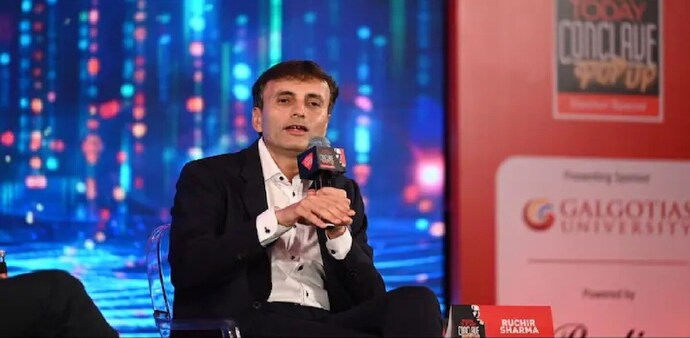
Gold prices are surging—and so is investor euphoria. But according to Breakout Capital CIO Ruchir Sharma, this “gold party” might be living on borrowed time, fueled less by fundamentals and more by a flood of excess liquidity.
Speaking to CNBC, Sharma warned that gold’s recent rally resembles 1979, not just in performance but in the conditions driving it—rampant liquidity, geopolitical stress, and now, speculative flows from retail and ETFs.
“Stocks are partying like it’s 1999 and gold is partying like it’s 1979,” Sharma said. “But unlike 1979’s inflation and geopolitical crisis, today’s boom is being driven by massive amounts of liquidity still sloshing around the system.”
Sharma, a long-time gold bull, says the metal’s rally initially made sense. After the 2022 sanctions on Russia, central banks began diversifying away from the dollar, driving strategic demand. But now, the narrative has shifted.
“The main demand for gold in the last few months has come from ETFs. In fact, ETF flows into gold last quarter were the highest ever,” he said. “And there’s no good story that too much money cannot spoil.”
Sharma pointed out that over $1.5 trillion in excess cash is still parked in U.S. money market funds—legacy liquidity from the pandemic—which continues to fuel momentum trades across asset classes, from gold and stocks to crypto and AI-related assets.
His concern? Gold is no longer behaving like a hedge—its traditional role in times of crisis. Instead, it’s moving in tandem with risk assets, driven by the same retail enthusiasm that has powered equities.
“This isn’t a hedge anymore—it’s a parallel trade,” Sharma said. “Everything is rising. We've never had a period where gold outperformed stocks during a bull market. That’s just never happened.”
He warns that if inflation resurfaces and the Federal Reserve is forced to withdraw liquidity, gold could lose its shine rapidly—and may no longer provide protection on the downside.
“On the downside, there’ll be a positive correlation. So be prepared—everyone could end up unhappy,” he said.
Still, Sharma remains long-term bullish on gold’s safe-haven status. But for now, he says the rally is running hot—and the only question left is: When does the gold party end?
Gold prices are surging—and so is investor euphoria. But according to Breakout Capital CIO Ruchir Sharma, this “gold party” might be living on borrowed time, fueled less by fundamentals and more by a flood of excess liquidity.
Speaking to CNBC, Sharma warned that gold’s recent rally resembles 1979, not just in performance but in the conditions driving it—rampant liquidity, geopolitical stress, and now, speculative flows from retail and ETFs.
“Stocks are partying like it’s 1999 and gold is partying like it’s 1979,” Sharma said. “But unlike 1979’s inflation and geopolitical crisis, today’s boom is being driven by massive amounts of liquidity still sloshing around the system.”
Sharma, a long-time gold bull, says the metal’s rally initially made sense. After the 2022 sanctions on Russia, central banks began diversifying away from the dollar, driving strategic demand. But now, the narrative has shifted.
“The main demand for gold in the last few months has come from ETFs. In fact, ETF flows into gold last quarter were the highest ever,” he said. “And there’s no good story that too much money cannot spoil.”
Sharma pointed out that over $1.5 trillion in excess cash is still parked in U.S. money market funds—legacy liquidity from the pandemic—which continues to fuel momentum trades across asset classes, from gold and stocks to crypto and AI-related assets.
His concern? Gold is no longer behaving like a hedge—its traditional role in times of crisis. Instead, it’s moving in tandem with risk assets, driven by the same retail enthusiasm that has powered equities.
“This isn’t a hedge anymore—it’s a parallel trade,” Sharma said. “Everything is rising. We've never had a period where gold outperformed stocks during a bull market. That’s just never happened.”
He warns that if inflation resurfaces and the Federal Reserve is forced to withdraw liquidity, gold could lose its shine rapidly—and may no longer provide protection on the downside.
“On the downside, there’ll be a positive correlation. So be prepared—everyone could end up unhappy,” he said.
Still, Sharma remains long-term bullish on gold’s safe-haven status. But for now, he says the rally is running hot—and the only question left is: When does the gold party end?