
Tax-saving FDs: Top banks offering up to 8.60% interest, eligibility, tax benefits and key rules explained
Tax-saving fixed deposits allow investors to claim deductions of up to ₹1.5 lakh under Section 80C while earning guaranteed returns. Here's a look at the latest interest rates, tax benefits, eligibility rules and the key factors to consider before investing.
- Jul 19, 2026,
- Updated Jul 19, 2026 6:35 AM IST
Tax-saving fixed deposits (FDs) remain one of the most popular investment options for conservative investors looking to reduce their tax liability while earning guaranteed returns. These deposits not only offer fixed interest but also qualify for a deduction of up to ₹1.5 lakh under Section 80C of the Income Tax Act, making them an attractive option for taxpayers opting for the old tax regime.
Interest rates on tax-saving FDs currently range from around 5% to 8.60% for general citizens, while senior citizens can earn up to 9.10% from select small finance banks. However, investors should compare interest rates, tax implications and lock-in conditions before investing.
Five-year lock-in with tax benefits
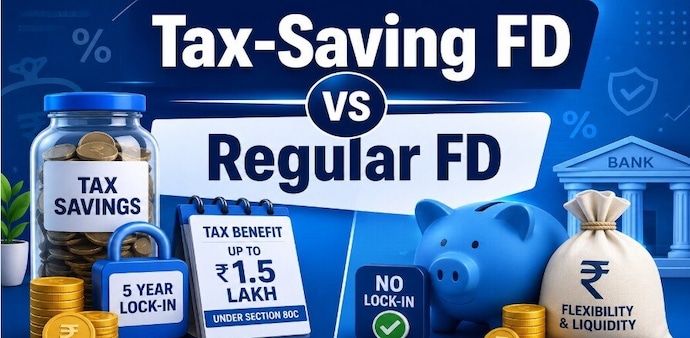
A tax-saving FD is a special fixed deposit with a mandatory five-year lock-in period. Unlike regular fixed deposits, investors cannot make premature withdrawals or avail of a loan against the deposit during this period.
The principal amount invested qualifies for a deduction of up to ₹1.5 lakh under Section 80C, subject to the overall annual limit under the provision. However, the interest earned remains fully taxable according to the investor's applicable income tax slab and must be reported while filing the income tax return.
Banks pay a fixed rate of interest throughout the tenure, offering predictable returns that are unaffected by market volatility.
MUST READ: Top FCNR(B) deposit rates: Banks raise returns on USD, GBP, EUR, CAD and AUD FDs
Small finance banks lead on interest rates
Among small finance banks, Suryoday Small Finance Bank currently offers the highest tax-saving FD rate of 8.60% for general citizens and 9.10% for senior citizens.
Other attractive options include Jana Small Finance Bank at 8.20%, North East Small Finance Bank at 8%, Utkarsh Small Finance Bank at 7.75%, and AU Small Finance Bank and Equitas Small Finance Bank at 7.25%.
While higher interest rates improve overall returns, investors should also consider factors such as deposit insurance limits, the financial strength of the bank and their liquidity requirements before choosing a lender.
CHECK THIS: PPF loan vs personal loan vs gold loan vs credit card EMI: Which borrowing option makes the most sense?
Private and public sector banks
Among private sector lenders, IDFC FIRST Bank and Jammu & Kashmir Bank offer 6.60% to general citizens, followed by Karur Vysya Bank (6.55%), ICICI Bank (6.50%), Axis Bank (6.45%), HDFC Bank (6.40%) and Federal Bank (6.40%).
Among public sector banks, Indian Overseas Bank offers the highest rate at 6.10%, while State Bank of India offers 6.05% to general citizens and 7.05% to senior citizens.
| Bank | General Citizens | Senior Citizens |
|---|---|---|
| Suryoday Small Finance Bank | 8.60% | 9.10% |
| Jana Small Finance Bank | 8.20% | 8.20% |
| North East Small Finance Bank | 8.00% | 8.50% |
| Utkarsh Small Finance Bank | 7.75% | 8.35% |
| AU Small Finance Bank | 7.25% | 7.75% |
| Equitas Small Finance Bank | 7.25% | 7.75% |
| IDFC FIRST Bank | 6.60% | 7.10% |
| ICICI Bank | 6.50% | 7.10% |
| State Bank of India | 6.05% | 7.05% |
| Indian Overseas Bank | 6.10% | 6.60% |
| Source: Bankbazaar |
Eligibility and tax rules
Tax-saving FDs are available to resident individuals, senior citizens, Non-Resident Indians (NRIs) and Hindu Undivided Families (HUFs), subject to the respective bank's eligibility criteria.
These deposits can be opened individually or jointly. However, in the case of joint deposits, the Section 80C deduction is available only to the first holder. Investors can also claim the deduction on eligible five-year Post Office Time Deposits.
Banks may deduct Tax Deducted at Source (TDS) on interest earned if the applicable threshold is crossed. The TDS deducted can be adjusted against the investor's overall tax liability while filing the income tax return.
ALSO READ: Tata Power offers 7.5% on five-year NCDs; here's how they compare with bank FDs
Things to consider before investing
Although tax-saving FDs provide assured returns and tax benefits, they are best suited for investors comfortable locking in their money for five years. Those seeking higher long-term growth may consider market-linked options such as Equity Linked Savings Schemes (ELSS), while investors prioritising capital protection may prefer tax-saving FDs.
Before investing, experts recommend comparing interest rates across banks, checking senior citizen benefits, understanding the taxation of interest income and ensuring that the product aligns with one's financial goals and liquidity needs.
Tax-saving fixed deposits (FDs) remain one of the most popular investment options for conservative investors looking to reduce their tax liability while earning guaranteed returns. These deposits not only offer fixed interest but also qualify for a deduction of up to ₹1.5 lakh under Section 80C of the Income Tax Act, making them an attractive option for taxpayers opting for the old tax regime.
Interest rates on tax-saving FDs currently range from around 5% to 8.60% for general citizens, while senior citizens can earn up to 9.10% from select small finance banks. However, investors should compare interest rates, tax implications and lock-in conditions before investing.
Five-year lock-in with tax benefits
A tax-saving FD is a special fixed deposit with a mandatory five-year lock-in period. Unlike regular fixed deposits, investors cannot make premature withdrawals or avail of a loan against the deposit during this period.
The principal amount invested qualifies for a deduction of up to ₹1.5 lakh under Section 80C, subject to the overall annual limit under the provision. However, the interest earned remains fully taxable according to the investor's applicable income tax slab and must be reported while filing the income tax return.
Banks pay a fixed rate of interest throughout the tenure, offering predictable returns that are unaffected by market volatility.
MUST READ: Top FCNR(B) deposit rates: Banks raise returns on USD, GBP, EUR, CAD and AUD FDs
Small finance banks lead on interest rates
Among small finance banks, Suryoday Small Finance Bank currently offers the highest tax-saving FD rate of 8.60% for general citizens and 9.10% for senior citizens.
Other attractive options include Jana Small Finance Bank at 8.20%, North East Small Finance Bank at 8%, Utkarsh Small Finance Bank at 7.75%, and AU Small Finance Bank and Equitas Small Finance Bank at 7.25%.
While higher interest rates improve overall returns, investors should also consider factors such as deposit insurance limits, the financial strength of the bank and their liquidity requirements before choosing a lender.
CHECK THIS: PPF loan vs personal loan vs gold loan vs credit card EMI: Which borrowing option makes the most sense?
Private and public sector banks
Among private sector lenders, IDFC FIRST Bank and Jammu & Kashmir Bank offer 6.60% to general citizens, followed by Karur Vysya Bank (6.55%), ICICI Bank (6.50%), Axis Bank (6.45%), HDFC Bank (6.40%) and Federal Bank (6.40%).
Among public sector banks, Indian Overseas Bank offers the highest rate at 6.10%, while State Bank of India offers 6.05% to general citizens and 7.05% to senior citizens.
| Bank | General Citizens | Senior Citizens |
|---|---|---|
| Suryoday Small Finance Bank | 8.60% | 9.10% |
| Jana Small Finance Bank | 8.20% | 8.20% |
| North East Small Finance Bank | 8.00% | 8.50% |
| Utkarsh Small Finance Bank | 7.75% | 8.35% |
| AU Small Finance Bank | 7.25% | 7.75% |
| Equitas Small Finance Bank | 7.25% | 7.75% |
| IDFC FIRST Bank | 6.60% | 7.10% |
| ICICI Bank | 6.50% | 7.10% |
| State Bank of India | 6.05% | 7.05% |
| Indian Overseas Bank | 6.10% | 6.60% |
| Source: Bankbazaar |
Eligibility and tax rules
Tax-saving FDs are available to resident individuals, senior citizens, Non-Resident Indians (NRIs) and Hindu Undivided Families (HUFs), subject to the respective bank's eligibility criteria.
These deposits can be opened individually or jointly. However, in the case of joint deposits, the Section 80C deduction is available only to the first holder. Investors can also claim the deduction on eligible five-year Post Office Time Deposits.
Banks may deduct Tax Deducted at Source (TDS) on interest earned if the applicable threshold is crossed. The TDS deducted can be adjusted against the investor's overall tax liability while filing the income tax return.
ALSO READ: Tata Power offers 7.5% on five-year NCDs; here's how they compare with bank FDs
Things to consider before investing
Although tax-saving FDs provide assured returns and tax benefits, they are best suited for investors comfortable locking in their money for five years. Those seeking higher long-term growth may consider market-linked options such as Equity Linked Savings Schemes (ELSS), while investors prioritising capital protection may prefer tax-saving FDs.
Before investing, experts recommend comparing interest rates across banks, checking senior citizen benefits, understanding the taxation of interest income and ensuring that the product aligns with one's financial goals and liquidity needs.