
Why are idle gold ornaments in lockers returning to market? Expert explains shift
Rising gold prices and changing consumer behaviour are bringing old jewellery back into circulation, with more Indians opting to recycle idle ornaments stored in lockers. Industry experts say consumers are increasingly viewing inactive gold as a financial asset rather than just an emotional possession.
- May 17, 2026,
- Updated May 17, 2026 7:30 AM IST
Gold recycling is rapidly gaining traction in India as consumers increasingly rethink the value of idle jewellery amid soaring bullion prices and rising import costs. With major jewellery brands promoting exchange and recycling programmes, industry experts believe changing consumer behaviour and a stronger focus on financial value are reshaping how Indians view their gold holdings.
The growing interest comes after higher import duties on gold and broader efforts to reduce dependence on imports. Leading jewellery players including Kalyan Jewellers, Malabar Gold & Diamonds, Muthoot Exim, MMTC-PAMP and Tanishq have launched or expanded gold exchange initiatives, allowing customers to convert old ornaments into cash or new jewellery.
According to Dishi Somani, founder of Dishis Designer Jewellery, rising gold prices are changing consumer attitudes toward unused jewellery.
“As gold prices are taking a steep rise lately, people are now viewing their inactive jewellery not as an emotional asset but as a financial one. Gold recycling has become very popular since this gives an opportunity to the customers to get some money out of their old, broken, or inactive jewellery without spending a penny,” Somani said.
Emotional to financial thinking
Traditionally, gold jewellery in India has carried emotional and cultural significance. However, according to Somani, consumers are increasingly making practical decisions around old ornaments that remain locked away for years.
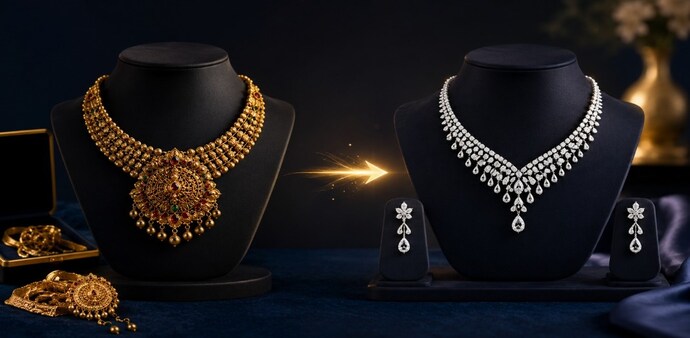
She noted that instead of leaving unused jewellery in lockers or vaults, many consumers now prefer exchanging it for modern designs or redirecting the value into other financial goals. Somani believes this behavioural shift is likely to make recycling programmes a more important part of organised jewellery retail in the future.
Industry participants believe this trend can also support broader economic objectives by reducing fresh gold imports and strengthening domestic gold circulation.
MUST READ: Big change in gold import rules: After 15% duty hike, govt caps duty-free imports at 100 kg
Understanding the process
As customer participation rises, Somani emphasised the importance of understanding the gold evaluation process before proceeding with an exchange.
“Before going ahead with any gold exchange or recycling, customers need to be aware of how the process is carried out. Firstly, the customer needs to get the purity testing done,” she said. According to her, jewellers increasingly use technologies such as karat meters and XRF machines to determine purity and assess the true gold content before calculating value based on prevailing market rates.
Across the industry, technology-driven evaluation systems are becoming more common, helping improve accuracy and customer confidence.
MUST READ: After Rs 3 fuel hike, can petrol and diesel prices rise further? Experts decode
Resale value
Somani also pointed to a major area of confusion for many buyers: resale expectations.
“As per Somani, many consumers find themselves taken aback to discover that the resale value does not equal the initial buying price.” She explained that the original purchase cost often includes charges related to craftsmanship, design, branding, taxes and making charges. During resale or recycling, however, only the value of the metal is typically considered unless additional elements are separately appraised.
Transparency now key
Another trend shaping the industry is increasing consumer awareness around transparency. Somani said buyers are paying closer attention to billing practices, live gold rates and purity verification.
“Customers are becoming more discerning about their jewellery and are increasingly looking for proper billing, accurate gold pricing at live rates, and purity testing,” she said.
As gold prices remain elevated, industry observers believe consumer awareness, technological transparency and changing attitudes toward jewellery ownership could continue accelerating India's gold recycling trend.
Gold recycling is rapidly gaining traction in India as consumers increasingly rethink the value of idle jewellery amid soaring bullion prices and rising import costs. With major jewellery brands promoting exchange and recycling programmes, industry experts believe changing consumer behaviour and a stronger focus on financial value are reshaping how Indians view their gold holdings.
The growing interest comes after higher import duties on gold and broader efforts to reduce dependence on imports. Leading jewellery players including Kalyan Jewellers, Malabar Gold & Diamonds, Muthoot Exim, MMTC-PAMP and Tanishq have launched or expanded gold exchange initiatives, allowing customers to convert old ornaments into cash or new jewellery.
According to Dishi Somani, founder of Dishis Designer Jewellery, rising gold prices are changing consumer attitudes toward unused jewellery.
“As gold prices are taking a steep rise lately, people are now viewing their inactive jewellery not as an emotional asset but as a financial one. Gold recycling has become very popular since this gives an opportunity to the customers to get some money out of their old, broken, or inactive jewellery without spending a penny,” Somani said.
Emotional to financial thinking
Traditionally, gold jewellery in India has carried emotional and cultural significance. However, according to Somani, consumers are increasingly making practical decisions around old ornaments that remain locked away for years.
She noted that instead of leaving unused jewellery in lockers or vaults, many consumers now prefer exchanging it for modern designs or redirecting the value into other financial goals. Somani believes this behavioural shift is likely to make recycling programmes a more important part of organised jewellery retail in the future.
Industry participants believe this trend can also support broader economic objectives by reducing fresh gold imports and strengthening domestic gold circulation.
MUST READ: Big change in gold import rules: After 15% duty hike, govt caps duty-free imports at 100 kg
Understanding the process
As customer participation rises, Somani emphasised the importance of understanding the gold evaluation process before proceeding with an exchange.
“Before going ahead with any gold exchange or recycling, customers need to be aware of how the process is carried out. Firstly, the customer needs to get the purity testing done,” she said. According to her, jewellers increasingly use technologies such as karat meters and XRF machines to determine purity and assess the true gold content before calculating value based on prevailing market rates.
Across the industry, technology-driven evaluation systems are becoming more common, helping improve accuracy and customer confidence.
MUST READ: After Rs 3 fuel hike, can petrol and diesel prices rise further? Experts decode
Resale value
Somani also pointed to a major area of confusion for many buyers: resale expectations.
“As per Somani, many consumers find themselves taken aback to discover that the resale value does not equal the initial buying price.” She explained that the original purchase cost often includes charges related to craftsmanship, design, branding, taxes and making charges. During resale or recycling, however, only the value of the metal is typically considered unless additional elements are separately appraised.
Transparency now key
Another trend shaping the industry is increasing consumer awareness around transparency. Somani said buyers are paying closer attention to billing practices, live gold rates and purity verification.
“Customers are becoming more discerning about their jewellery and are increasingly looking for proper billing, accurate gold pricing at live rates, and purity testing,” she said.
As gold prices remain elevated, industry observers believe consumer awareness, technological transparency and changing attitudes toward jewellery ownership could continue accelerating India's gold recycling trend.