
Gold's worst week in eight months: Why Goldman Sachs still sees prices reaching $4,560 in 2027
Gold's worst week in eight months: Why Goldman Sachs still sees prices reaching $4,560 in 2027
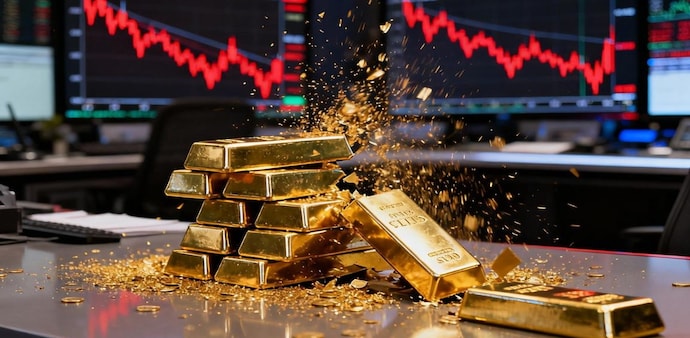
Gold prices have plunged nearly 10% in a week, hitting a 14-month low as a stronger US dollar, rising interest rate expectations and a global stock market sell-off weigh on bullion. Yet Goldman Sachs' $4,560 target for 2027 suggests the precious metal could recover sharply if longer-term demand remains resilient.
Basudha Das
- Nov 21, 2026,
- Updated Nov 21, 2026 4:37 PM IST
International gold prices extended their losses on Friday, November 20, recording their worst weekly performance in eight months as investors reassessed the outlook for US monetary policy and sought liquidity amid a broader market downturn.
According to Reuters, spot gold declined 2.8% to $3,518.50 per ounce on Friday, after touching $3,513.54, its lowest level since September 2025. US gold futures for December delivery dropped 4.5% to $3,519.10.
Advertisement
The weekly correction of approximately 9.5% contrasts sharply with Goldman Sachs' reported 2027 gold price target of $4,560 per ounce, implying potential upside of nearly 30% from Friday's closing levels.
Why are gold prices crashing?
The immediate pressure comes from a stronger US dollar and expectations that the Federal Reserve could raise interest rates further.
Gold is priced internationally in dollars, making it more expensive for buyers using other currencies when the greenback strengthens.
Higher interest rates also increase the opportunity cost of holding bullion, which does not generate interest or dividends.
According to the Reuters-based report, market participants were pricing in a 96% probability of a 25-basis-point Federal Reserve rate increase in December.
Another factor is the global technology-led stock market sell-off. Investors facing losses in equities may liquidate profitable or liquid gold positions to meet margin requirements or raise cash.
Advertisement
This helps explain why gold can decline even when financial markets experience heightened uncertainty.
MUST READ: Gold, silver prices on November 21: Check latest rates in Delhi, Mumbai, Kolkata, other cities
Why is Goldman Sachs still bullish on gold?
Goldman Sachs' reported $4,560 target suggests that short-term selling pressure may not necessarily undermine the longer-term investment case.
One important consideration is central-bank demand.
Central banks have increasingly used gold to diversify reserves and reduce dependence on dollar-denominated assets. Sustained official-sector purchases could provide support even when speculative investors reduce exposure.
Advertisement
Another potential recovery driver is monetary policy.
If inflation moderates and the Federal Reserve eventually shifts towards lower interest rates, declining real yields could improve gold's relative attractiveness.
A weaker dollar would also make bullion more affordable for international buyers.
However, these are potential supporting factors rather than guarantees that the price target will be achieved.
Can ETF inflows trigger the next rally?
Gold-backed exchange-traded funds could play an important role in determining whether prices recover.
When investors increase allocations to gold ETFs, additional investment demand can support bullion prices. Conversely, sustained ETF outflows can intensify corrections.
A durable recovery would likely require stabilising interest rate expectations, renewed investor inflows and continued central-bank accumulation.
DO READ: Old gold accounts for up to 60% of jewellery sales: Should you exchange or sell your jewellery?
Should investors buy gold after the correction?
For Indian investors, the sharp fall presents an opportunity to reassess gold allocations rather than automatically increase exposure.
Domestic gold prices also depend on the rupee-dollar exchange rate, meaning international declines may not translate proportionately into Indian prices.
Advertisement
Investors considering gold ETFs or gold mutual funds may prefer staggered purchases instead of committing large lump sums during heightened volatility.
MUST READ: Gold ETFs attract ₹3,500 crore despite price correction: Should you increase your allocation?
Read more!