
Heirs’ checklist: How to claim property, EPF, FDs, mutual funds and lockers after death of near ones
The death of a loved one often leaves families struggling not just emotionally, but also administratively. In India, transferring assets after a person’s death involves multiple authorities and legal procedures. Knowing how to claim assets like property, FDs, EPF, and mutual funds can make the process smoother and less stressful.
- Nov 8, 2025,
- Updated Nov 8, 2025 2:13 PM IST
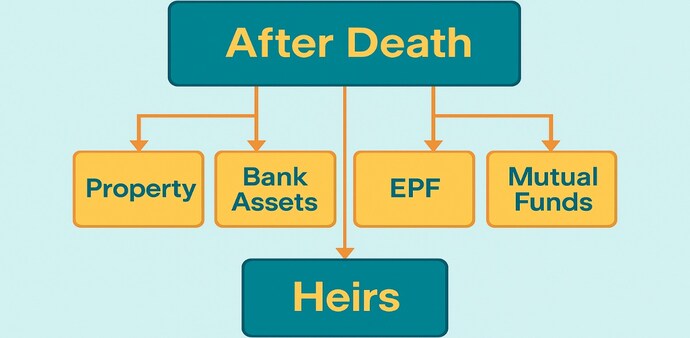
Settling the financial affairs of a deceased family member often turns into a maze of paperwork, court procedures, and verification steps. In India, heirs and executors must navigate separate processes for each asset — property, provident fund, fixed deposits, mutual funds, or even bank lockers — each governed by its own documentation and legal framework.
Bank accounts and fixed deposits (FDs)
When it comes to bank accounts and FDs, the process is generally smooth if the deceased had a joint holder or nominee. The surviving holder can continue to operate the account after removing the deceased’s name, while nominees can claim the balance after submitting the death certificate, KYC, and claim forms.
Problems arise when neither exists. In such cases, the bank releases the funds only after heirs produce a succession certificate or similar court order verifying their legal entitlement.
“A succession certificate is a formal recognition by the civil court that certifies the rightful successors of the deceased’s debts and securities,” explains Manmeet Kaur, Partner at Karanjawala & Co. “It only gives the right to collect these assets — not to manage or distribute the entire estate. For that, families should seek probate or a Letter of Administration from the competent court.”
Property transfer and mutation
For property, heirs must apply for a mutation — the official transfer of ownership in local land or municipal records. The process requires submission of the death certificate, KYC of the heirs, the original title deed, and proof of inheritance. Only after mutation can the property be legally transferred or sold.
According to Soniya Putta, Partner at Solomon & Co., incomplete documentation is the most common reason for delays. “Many applications for mutation get rejected because heirs miss out key documents like title papers, ID proofs, or updated property tax receipts,” she says. “If there are multiple heirs, obtaining a No Objection Certificate (NOC) from those not being added to the records helps ensure a smoother process.”
Bank lockers
Accessing a bank locker can also be complex. Heirs must submit the death certificate, KYC, and a claim form. If the deceased left a Will and a court-appointed executor, the bank will act as per the court’s direction. Where no Will exists, the bank may insist on a succession certificate or legal heir certificate.
“In cases where no nominee or joint holder exists for a bank locker or FD, banks can ask for a succession certificate, an indemnity bond, and NOCs from other heirs,” says Putta. “That’s why it’s always advisable to nominate someone for every bank account or locker to avoid delays.”
If the locker keys are missing, banks arrange to break open the locker in the presence of witnesses, record the contents, and release them to the rightful claimant after settling dues.
Employees’ Provident Fund (EPF)
Managing EPF accounts after the death of a member involves consolidating balances and filing claims through the UMANG app or directly at the EPF office. The nominee or legal heir can claim the provident fund balance, pension, and insurance benefits under the Employees’ Deposit Linked Insurance (EDLI) scheme.
However, locating older EPF accounts — particularly those created before the introduction of the Universal Account Number (UAN) — can be challenging. Missing employment details or unlinked PF accounts often delay settlements, so families are advised to maintain detailed employment records and UAN details for smoother claims.
Mutual funds
Mutual fund transmission follows a similar principle — the nominee can submit a claim form and death certificate to the fund house for redemption or transmission of units. However, when no nominee exists, additional documentation is required.
“Mutual funds operate differently from bank accounts,” explains Putta. “Without a nominee, the heir must apply for transmission, submitting an indemnity bond, individual affidavits, and sometimes a notarised copy of the probate or succession certificate. Only then will the units be transferred.”
In the absence of a Will, asset distribution follows personal laws such as the Hindu Succession Act or Indian Succession Act. “Families can avoid future disputes by entering into a mutual settlement that divides both tangible and intangible assets among heirs,” says Kaur. “This helps prevent long legal battles and ensures clarity in ownership.”
Executor responsibilities and proactive planning
Executors, meanwhile, play a key role in securing and distributing the deceased’s estate. “An executor’s duty is to secure the estate and ensure that assets are distributed as per the Will. The right step is to file a petition for probate and then administer the estate in accordance with the court’s approval,” Kaur explains. This formalises the executor’s authority and protects them from future disputes among heirs.
Experts say proactive planning can prevent most complications. “In today’s digital era, assets are scattered across platforms — from mutual funds to online deposits, insurance, and even digital wallets,” notes Putta. “Individuals should maintain a spreadsheet of all assets and nominations, update it regularly, and inform family members where it’s kept. This one step saves months of confusion later.”
Ultimately, clear nominations, proper documentation, and timely legal action ensure that wealth passes smoothly — sparing families prolonged distress and disputes.
Settling the financial affairs of a deceased family member often turns into a maze of paperwork, court procedures, and verification steps. In India, heirs and executors must navigate separate processes for each asset — property, provident fund, fixed deposits, mutual funds, or even bank lockers — each governed by its own documentation and legal framework.
Bank accounts and fixed deposits (FDs)
When it comes to bank accounts and FDs, the process is generally smooth if the deceased had a joint holder or nominee. The surviving holder can continue to operate the account after removing the deceased’s name, while nominees can claim the balance after submitting the death certificate, KYC, and claim forms.
Problems arise when neither exists. In such cases, the bank releases the funds only after heirs produce a succession certificate or similar court order verifying their legal entitlement.
“A succession certificate is a formal recognition by the civil court that certifies the rightful successors of the deceased’s debts and securities,” explains Manmeet Kaur, Partner at Karanjawala & Co. “It only gives the right to collect these assets — not to manage or distribute the entire estate. For that, families should seek probate or a Letter of Administration from the competent court.”
Property transfer and mutation
For property, heirs must apply for a mutation — the official transfer of ownership in local land or municipal records. The process requires submission of the death certificate, KYC of the heirs, the original title deed, and proof of inheritance. Only after mutation can the property be legally transferred or sold.
According to Soniya Putta, Partner at Solomon & Co., incomplete documentation is the most common reason for delays. “Many applications for mutation get rejected because heirs miss out key documents like title papers, ID proofs, or updated property tax receipts,” she says. “If there are multiple heirs, obtaining a No Objection Certificate (NOC) from those not being added to the records helps ensure a smoother process.”
Bank lockers
Accessing a bank locker can also be complex. Heirs must submit the death certificate, KYC, and a claim form. If the deceased left a Will and a court-appointed executor, the bank will act as per the court’s direction. Where no Will exists, the bank may insist on a succession certificate or legal heir certificate.
“In cases where no nominee or joint holder exists for a bank locker or FD, banks can ask for a succession certificate, an indemnity bond, and NOCs from other heirs,” says Putta. “That’s why it’s always advisable to nominate someone for every bank account or locker to avoid delays.”
If the locker keys are missing, banks arrange to break open the locker in the presence of witnesses, record the contents, and release them to the rightful claimant after settling dues.
Employees’ Provident Fund (EPF)
Managing EPF accounts after the death of a member involves consolidating balances and filing claims through the UMANG app or directly at the EPF office. The nominee or legal heir can claim the provident fund balance, pension, and insurance benefits under the Employees’ Deposit Linked Insurance (EDLI) scheme.
However, locating older EPF accounts — particularly those created before the introduction of the Universal Account Number (UAN) — can be challenging. Missing employment details or unlinked PF accounts often delay settlements, so families are advised to maintain detailed employment records and UAN details for smoother claims.
Mutual funds
Mutual fund transmission follows a similar principle — the nominee can submit a claim form and death certificate to the fund house for redemption or transmission of units. However, when no nominee exists, additional documentation is required.
“Mutual funds operate differently from bank accounts,” explains Putta. “Without a nominee, the heir must apply for transmission, submitting an indemnity bond, individual affidavits, and sometimes a notarised copy of the probate or succession certificate. Only then will the units be transferred.”
In the absence of a Will, asset distribution follows personal laws such as the Hindu Succession Act or Indian Succession Act. “Families can avoid future disputes by entering into a mutual settlement that divides both tangible and intangible assets among heirs,” says Kaur. “This helps prevent long legal battles and ensures clarity in ownership.”
Executor responsibilities and proactive planning
Executors, meanwhile, play a key role in securing and distributing the deceased’s estate. “An executor’s duty is to secure the estate and ensure that assets are distributed as per the Will. The right step is to file a petition for probate and then administer the estate in accordance with the court’s approval,” Kaur explains. This formalises the executor’s authority and protects them from future disputes among heirs.
Experts say proactive planning can prevent most complications. “In today’s digital era, assets are scattered across platforms — from mutual funds to online deposits, insurance, and even digital wallets,” notes Putta. “Individuals should maintain a spreadsheet of all assets and nominations, update it regularly, and inform family members where it’s kept. This one step saves months of confusion later.”
Ultimately, clear nominations, proper documentation, and timely legal action ensure that wealth passes smoothly — sparing families prolonged distress and disputes.