
MMR overtakes NCR as India’s biggest housing market: Mumbai region takes 26% share
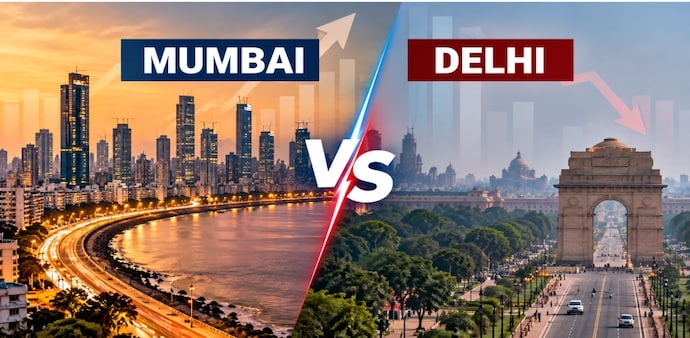
India’s housing market saw a clear shift in H1 2026, with Mumbai Metropolitan Region emerging as the largest market by sales value. While MMR benefited from stronger volumes, NCR saw a sharp correction in sales, particularly across its premium and luxury housing segments.
- Sep 26, 2026,
- Updated Sep 26, 2026 2:51 PM IST
Mumbai Metropolitan Region (MMR) has emerged as India’s largest Tier-1 housing market, overtaking the National Capital Region (NCR) in terms of primary housing sales value in the first half of 2026, according to the India Housing Report by NAR and CRE Matrix.
MMR accounted for 26% of primary housing sales value across Tier-1 cities in H1 2026, compared with 19% for NCR. The Mumbai region recorded housing sales worth around ₹93,800 crore, up 8% from a year earlier, with sales volumes rising around 9%.
The shift comes as the broader Indian housing market enters a period of slower growth. Across Tier-1 cities, primary housing sales were worth around ₹3.63 lakh crore in H1 2026, broadly unchanged from the record level seen in H1 2025. Volumes, however, declined around 2% to approximately 2.58 lakh units.
MMR growth gets a volume boost
The MMR market was supported by stronger sales activity across several locations. In Mumbai, primary housing sales value increased around 4% to ₹58,362 crore, while volumes remained broadly flat at around 24,500 units.
The average ticket size in Mumbai rose 4% to a record ₹2.38 crore, making price growth the main contributor to the increase in sales value. Homes priced at ₹5 crore and above accounted for around 40% of sales value, up from 38% a year earlier.
MUST READ: Mumbai prime home prices rise 6.2% in Q2 2026, ranks 8th globally: Knight Frank
Outside Mumbai, Navi Mumbai and Raigad stood out as a major growth engine. Sales value in the region jumped around 29% to ₹12,292 crore in H1 2026. Volumes increased 20% to approximately 17,300 units, while the average ticket size rose 8% to ₹71 lakh. New launches also surged 29% to around 25,800 units.
NCR loses ground
NCR's housing market moved in the opposite direction. Primary housing sales value declined 24% to ₹68,217 crore in H1 2026, while volumes fell around 9% to 24,600 units.
The average ticket size also dropped 16% to ₹2.77 crore, from ₹3.31 crore in H1 2025. At the same time, developers launched around 35,000 units, up 10% and the highest half-year level in the report's series.
MMR vs NCR in H1 2026
| Metric | MMR | NCR |
|---|---|---|
| Share of Tier-1 housing sales value | 26% | 19% |
| Primary housing sales value | ₹93,800 crore | ₹68,217 crore |
| YoY change in sales value | +8% | -24% |
| Units sold | ~83,600 | ~24,600 |
| YoY change in volumes | +9% | -9% |
| Average ticket size | ₹1.12 crore | ₹2.77 crore |
| YoY change in ticket size | Flat | -16% |
| Units launched | ~86,500 | ~35,000 |
| YoY change in launches | +14% | +10% |
| Key trend | Volume-led growth | Luxury-market correction |
Source: NAR–CRE Matrix, India Housing Report, September 2026.
Gurugram accounted for a significant part of the correction. Sales value there fell around 33% to ₹37,726 crore, even as volumes remained broadly stable at about 12,000 units. The average ticket size fell 32% to ₹3.15 crore from its H1 2025 peak of ₹4.65 crore.
MUST READ: Mumbai breaks into the world's Top 15 data centre markets: Can it enter the Top 10?
The luxury segment also lost some share in Gurugram. Homes priced at ₹5 crore and above accounted for 52% of sales value, down from 66% in H1 2025, while the ₹2-5 crore segment increased its share.
The report also highlights that housing supply is picking up faster than absorption nationally. Developers launched around 2.98 lakh units in H1 2026, up 7% year-on-year, while the average ticket size was broadly stable at ₹1.41 crore.
With sales value no longer accelerating despite higher supply, the report suggests that the next phase of housing growth will depend increasingly on actual volume absorption and end-user demand, rather than continued price escalation.
ALSO READ: Faridabad vs Gurugram: Can affordability make it NCR’s next big housing market?
Mumbai Metropolitan Region (MMR) has emerged as India’s largest Tier-1 housing market, overtaking the National Capital Region (NCR) in terms of primary housing sales value in the first half of 2026, according to the India Housing Report by NAR and CRE Matrix.
MMR accounted for 26% of primary housing sales value across Tier-1 cities in H1 2026, compared with 19% for NCR. The Mumbai region recorded housing sales worth around ₹93,800 crore, up 8% from a year earlier, with sales volumes rising around 9%.
The shift comes as the broader Indian housing market enters a period of slower growth. Across Tier-1 cities, primary housing sales were worth around ₹3.63 lakh crore in H1 2026, broadly unchanged from the record level seen in H1 2025. Volumes, however, declined around 2% to approximately 2.58 lakh units.
MMR growth gets a volume boost
The MMR market was supported by stronger sales activity across several locations. In Mumbai, primary housing sales value increased around 4% to ₹58,362 crore, while volumes remained broadly flat at around 24,500 units.
The average ticket size in Mumbai rose 4% to a record ₹2.38 crore, making price growth the main contributor to the increase in sales value. Homes priced at ₹5 crore and above accounted for around 40% of sales value, up from 38% a year earlier.
MUST READ: Mumbai prime home prices rise 6.2% in Q2 2026, ranks 8th globally: Knight Frank
Outside Mumbai, Navi Mumbai and Raigad stood out as a major growth engine. Sales value in the region jumped around 29% to ₹12,292 crore in H1 2026. Volumes increased 20% to approximately 17,300 units, while the average ticket size rose 8% to ₹71 lakh. New launches also surged 29% to around 25,800 units.
NCR loses ground
NCR's housing market moved in the opposite direction. Primary housing sales value declined 24% to ₹68,217 crore in H1 2026, while volumes fell around 9% to 24,600 units.
The average ticket size also dropped 16% to ₹2.77 crore, from ₹3.31 crore in H1 2025. At the same time, developers launched around 35,000 units, up 10% and the highest half-year level in the report's series.
MMR vs NCR in H1 2026
| Metric | MMR | NCR |
|---|---|---|
| Share of Tier-1 housing sales value | 26% | 19% |
| Primary housing sales value | ₹93,800 crore | ₹68,217 crore |
| YoY change in sales value | +8% | -24% |
| Units sold | ~83,600 | ~24,600 |
| YoY change in volumes | +9% | -9% |
| Average ticket size | ₹1.12 crore | ₹2.77 crore |
| YoY change in ticket size | Flat | -16% |
| Units launched | ~86,500 | ~35,000 |
| YoY change in launches | +14% | +10% |
| Key trend | Volume-led growth | Luxury-market correction |
Source: NAR–CRE Matrix, India Housing Report, September 2026.
Gurugram accounted for a significant part of the correction. Sales value there fell around 33% to ₹37,726 crore, even as volumes remained broadly stable at about 12,000 units. The average ticket size fell 32% to ₹3.15 crore from its H1 2025 peak of ₹4.65 crore.
MUST READ: Mumbai breaks into the world's Top 15 data centre markets: Can it enter the Top 10?
The luxury segment also lost some share in Gurugram. Homes priced at ₹5 crore and above accounted for 52% of sales value, down from 66% in H1 2025, while the ₹2-5 crore segment increased its share.
The report also highlights that housing supply is picking up faster than absorption nationally. Developers launched around 2.98 lakh units in H1 2026, up 7% year-on-year, while the average ticket size was broadly stable at ₹1.41 crore.
With sales value no longer accelerating despite higher supply, the report suggests that the next phase of housing growth will depend increasingly on actual volume absorption and end-user demand, rather than continued price escalation.
ALSO READ: Faridabad vs Gurugram: Can affordability make it NCR’s next big housing market?