
Antarctica ice melt is speeding up: How it threatens sea levels, storms and global climate
Several recent studies also suggest that Antarctic sea ice and ice shelves are becoming more unstable because of trapped subsurface heat and changing wind patterns around the Southern Ocean.
- May 8, 2026,
- Updated May 15, 2026 9:57 PM IST
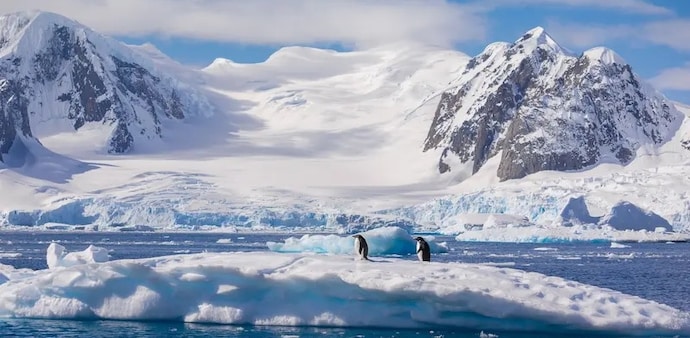
The rapid collapse and thinning of Antarctic ice shelves is no longer just a regional climate concern. Scientists now warn that the accelerating melt around Earth’s southernmost continent could disrupt global ocean circulation systems that regulate weather, sea levels and temperatures worldwide.
Must read | BT Explainer: Why scientists are warning against Antarctica tourism after Hantavirus outbreak
Researchers studying Antarctica say warmer ocean waters are eating away at floating ice shelves from below, weakening the natural barriers that hold back massive glaciers on land. Once these ice shelves destabilise, glaciers can flow faster into the ocean, contributing to sea-level rise and altering the delicate balance of ocean currents.
Why Antarctic Ice shelves matter
Ice shelves are giant floating extensions of glaciers attached to Antarctica’s coastline. Although they already float on seawater and do not directly raise sea levels when they melt, they act as “brakes” that slow the movement of inland ice into the ocean.
Scientists say these shelves are being eroded by increasingly warm ocean currents, especially a mass of deep, salty water known as Circumpolar Deep Water. Over the past two decades, this warmer water has moved closer to Antarctica’s continental shelf, increasing melt rates beneath the ice.
Don't miss | Is Hantavirus outbreak the new Covid-19? Check symptoms, vaccine, how to stay safe
Several recent studies also suggest that Antarctic sea ice and ice shelves are becoming more unstable because of trapped subsurface heat and changing wind patterns around the Southern Ocean.
Threat to global ocean circulation
Climate researchers are particularly concerned about the impact on major ocean circulation systems, which help distribute heat across the planet.
Freshwater released from melting Antarctic ice can dilute salty ocean water, affecting the sinking and rising motions that drive deep ocean currents. Scientists warn that such disruptions could weaken critical circulation systems, including the Atlantic Meridional Overturning Circulation (AMOC), often described as a planetary “conveyor belt” for heat.
Must read | Hantavirus outbreak: Is India at risk from the Andes strain spreading globally?
A weaker circulation system could trigger widespread consequences, including shifting rainfall patterns, stronger storms, colder winters in parts of Europe and rising sea levels along Atlantic coastlines.
Recent research suggests the AMOC may be more vulnerable to collapse than previously believed, with some scientists warning that the system is already showing signs of significant weakening.
Antarctica’s rapid changes
For years, Antarctic sea ice behaved differently from the Arctic, occasionally showing periods of expansion despite global warming. But since 2015, scientists have recorded dramatic declines in Antarctic sea ice coverage.
Studies now indicate that warming ocean waters hidden beneath the surface may have played a major role. Researchers found that freshwater near the surface trapped heat deeper in the ocean for years before stronger winds released that heat upward, rapidly melting sea ice.
Although Antarctic sea ice showed signs of partial recovery in early 2026 compared with record lows in previous years, scientists caution that the long-term trend remains worrying and highly volatile.
Global consequences could intensify
Experts say Antarctica’s transformation could reshape global climate systems over coming decades.
Beyond sea-level rise, changing Antarctic conditions may influence fisheries, marine ecosystems and weather systems across the Southern Hemisphere. Reduced sea ice also means darker ocean surfaces absorb more heat instead of reflecting sunlight back into space, further accelerating warming.
Scientists stress that Antarctica is not an isolated system. Changes occurring thousands of kilometers away could eventually affect food production, coastal infrastructure and weather extremes worldwide.
The rapid collapse and thinning of Antarctic ice shelves is no longer just a regional climate concern. Scientists now warn that the accelerating melt around Earth’s southernmost continent could disrupt global ocean circulation systems that regulate weather, sea levels and temperatures worldwide.
Must read | BT Explainer: Why scientists are warning against Antarctica tourism after Hantavirus outbreak
Researchers studying Antarctica say warmer ocean waters are eating away at floating ice shelves from below, weakening the natural barriers that hold back massive glaciers on land. Once these ice shelves destabilise, glaciers can flow faster into the ocean, contributing to sea-level rise and altering the delicate balance of ocean currents.
Why Antarctic Ice shelves matter
Ice shelves are giant floating extensions of glaciers attached to Antarctica’s coastline. Although they already float on seawater and do not directly raise sea levels when they melt, they act as “brakes” that slow the movement of inland ice into the ocean.
Scientists say these shelves are being eroded by increasingly warm ocean currents, especially a mass of deep, salty water known as Circumpolar Deep Water. Over the past two decades, this warmer water has moved closer to Antarctica’s continental shelf, increasing melt rates beneath the ice.
Don't miss | Is Hantavirus outbreak the new Covid-19? Check symptoms, vaccine, how to stay safe
Several recent studies also suggest that Antarctic sea ice and ice shelves are becoming more unstable because of trapped subsurface heat and changing wind patterns around the Southern Ocean.
Threat to global ocean circulation
Climate researchers are particularly concerned about the impact on major ocean circulation systems, which help distribute heat across the planet.
Freshwater released from melting Antarctic ice can dilute salty ocean water, affecting the sinking and rising motions that drive deep ocean currents. Scientists warn that such disruptions could weaken critical circulation systems, including the Atlantic Meridional Overturning Circulation (AMOC), often described as a planetary “conveyor belt” for heat.
Must read | Hantavirus outbreak: Is India at risk from the Andes strain spreading globally?
A weaker circulation system could trigger widespread consequences, including shifting rainfall patterns, stronger storms, colder winters in parts of Europe and rising sea levels along Atlantic coastlines.
Recent research suggests the AMOC may be more vulnerable to collapse than previously believed, with some scientists warning that the system is already showing signs of significant weakening.
Antarctica’s rapid changes
For years, Antarctic sea ice behaved differently from the Arctic, occasionally showing periods of expansion despite global warming. But since 2015, scientists have recorded dramatic declines in Antarctic sea ice coverage.
Studies now indicate that warming ocean waters hidden beneath the surface may have played a major role. Researchers found that freshwater near the surface trapped heat deeper in the ocean for years before stronger winds released that heat upward, rapidly melting sea ice.
Although Antarctic sea ice showed signs of partial recovery in early 2026 compared with record lows in previous years, scientists caution that the long-term trend remains worrying and highly volatile.
Global consequences could intensify
Experts say Antarctica’s transformation could reshape global climate systems over coming decades.
Beyond sea-level rise, changing Antarctic conditions may influence fisheries, marine ecosystems and weather systems across the Southern Hemisphere. Reduced sea ice also means darker ocean surfaces absorb more heat instead of reflecting sunlight back into space, further accelerating warming.
Scientists stress that Antarctica is not an isolated system. Changes occurring thousands of kilometers away could eventually affect food production, coastal infrastructure and weather extremes worldwide.