
Antarctica's 'Doomsday Glacier' is weakening fast. What the loss means for the world
Located in West Antarctica, Thwaites is one of the largest and fastest-changing glaciers on Earth. Roughly the size of Great Britain — or the US state of Florida — it already contributes around 4% of global sea-level rise.
- Jun 28, 2026,
- Updated Jun 28, 2026 5:00 AM IST
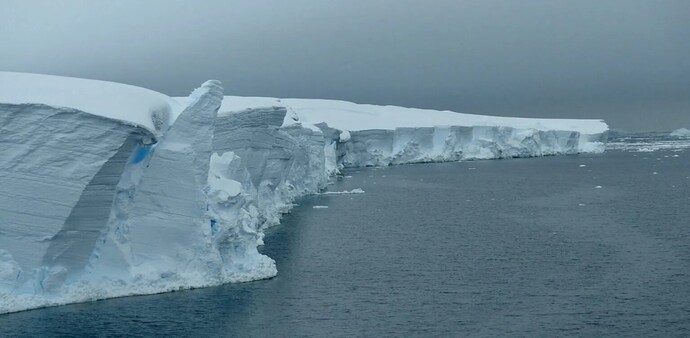
A vast wall of Antarctic ice that has long acted as a natural barrier against rising seas is showing signs of imminent failure. Scientists now warn that the eastern ice shelf of the Thwaites Glacier — often called the "Doomsday Glacier" — could break apart as early as next year, removing one of the glacier's last remaining stabilising forces and accelerating the flow of ice into the ocean.
The warning does not mean the glacier will disappear overnight or that coastal cities will suddenly be underwater. Instead, researchers say the loss of the floating ice shelf would mark a critical turning point in a process that has been unfolding for decades, potentially locking in faster sea-level rise over the coming decades and centuries.
Why it is called the 'Doomsday Glacier'?
Located in West Antarctica, Thwaites is one of the largest and fastest-changing glaciers on Earth. Roughly the size of Great Britain — or the US state of Florida — it already contributes around 4% of global sea-level rise.
MUST READ | Heatwave in Antarctica? Temperatures soar 20°C above normal alarming scientists
Scientists often describe it as a "cork in the bottle." Its massive ice body helps restrain the broader West Antarctic Ice Sheet. If Thwaites weakens significantly, neighbouring glaciers could also become unstable, amplifying sea-level rise far beyond the glacier itself.
What's happening now?
The focus of concern is the glacier's eastern floating ice shelf. Unlike the grounded glacier behind it, this shelf extends over the ocean and acts like a natural brake, slowing the movement of inland ice.
Satellite observations and field measurements show the shelf is rapidly fracturing. Scientists say warm ocean water flowing beneath the ice has thinned it from below, while widening cracks have weakened its structural integrity. In some sections, ice movement has accelerated dramatically, indicating the shelf is losing its ability to hold back the glacier.
Researchers now believe the eastern ice shelf could disintegrate within the near future, setting the stage for faster ice loss from the glacier behind it.
Will sea levels rise immediately?
Not dramatically. Experts stress that the collapse of the ice shelf would not instantly raise sea levels because the shelf is already floating. The real concern is what happens next.
DON'T MISS | Antarctica ice melt is speeding up: How it threatens sea levels, storms and global climate
Without this protective barrier, the grounded glacier could flow into the Southern Ocean much faster. Over time, Thwaites alone contains enough ice to contribute roughly 65 centimetres (about 2 feet) to global sea levels. More importantly, its destabilisation could trigger changes across parts of the West Antarctic Ice Sheet, which together hold enough ice to raise sea levels by more than 3 metres if lost over centuries.
Why is it melting?
Scientists point to warming ocean waters rather than rising air temperatures as the primary driver.
Changes in Southern Hemisphere wind patterns are drawing relatively warm deep ocean water beneath the glacier, where it melts the ice from below. This hidden process gradually weakens the ice shelf, allowing cracks to spread and reducing its ability to support the enormous glacier behind it.
DO CHECKOUT | BT Explainer: Why scientists are warning against Antarctica tourism after Hantavirus outbreak
The latest warning is less about an imminent catastrophe than about crossing another climate threshold. Once an ice shelf collapses, rebuilding it is virtually impossible under current climate conditions.
For low-lying coastal cities, island nations and delta regions already grappling with rising seas, every acceleration in Antarctic ice loss adds to long-term flood risks, coastal erosion and the cost of adaptation. While the full consequences may unfold over generations rather than years, scientists say the changes now underway could shape coastlines for centuries to come.
A vast wall of Antarctic ice that has long acted as a natural barrier against rising seas is showing signs of imminent failure. Scientists now warn that the eastern ice shelf of the Thwaites Glacier — often called the "Doomsday Glacier" — could break apart as early as next year, removing one of the glacier's last remaining stabilising forces and accelerating the flow of ice into the ocean.
The warning does not mean the glacier will disappear overnight or that coastal cities will suddenly be underwater. Instead, researchers say the loss of the floating ice shelf would mark a critical turning point in a process that has been unfolding for decades, potentially locking in faster sea-level rise over the coming decades and centuries.
Why it is called the 'Doomsday Glacier'?
Located in West Antarctica, Thwaites is one of the largest and fastest-changing glaciers on Earth. Roughly the size of Great Britain — or the US state of Florida — it already contributes around 4% of global sea-level rise.
MUST READ | Heatwave in Antarctica? Temperatures soar 20°C above normal alarming scientists
Scientists often describe it as a "cork in the bottle." Its massive ice body helps restrain the broader West Antarctic Ice Sheet. If Thwaites weakens significantly, neighbouring glaciers could also become unstable, amplifying sea-level rise far beyond the glacier itself.
What's happening now?
The focus of concern is the glacier's eastern floating ice shelf. Unlike the grounded glacier behind it, this shelf extends over the ocean and acts like a natural brake, slowing the movement of inland ice.
Satellite observations and field measurements show the shelf is rapidly fracturing. Scientists say warm ocean water flowing beneath the ice has thinned it from below, while widening cracks have weakened its structural integrity. In some sections, ice movement has accelerated dramatically, indicating the shelf is losing its ability to hold back the glacier.
Researchers now believe the eastern ice shelf could disintegrate within the near future, setting the stage for faster ice loss from the glacier behind it.
Will sea levels rise immediately?
Not dramatically. Experts stress that the collapse of the ice shelf would not instantly raise sea levels because the shelf is already floating. The real concern is what happens next.
DON'T MISS | Antarctica ice melt is speeding up: How it threatens sea levels, storms and global climate
Without this protective barrier, the grounded glacier could flow into the Southern Ocean much faster. Over time, Thwaites alone contains enough ice to contribute roughly 65 centimetres (about 2 feet) to global sea levels. More importantly, its destabilisation could trigger changes across parts of the West Antarctic Ice Sheet, which together hold enough ice to raise sea levels by more than 3 metres if lost over centuries.
Why is it melting?
Scientists point to warming ocean waters rather than rising air temperatures as the primary driver.
Changes in Southern Hemisphere wind patterns are drawing relatively warm deep ocean water beneath the glacier, where it melts the ice from below. This hidden process gradually weakens the ice shelf, allowing cracks to spread and reducing its ability to support the enormous glacier behind it.
DO CHECKOUT | BT Explainer: Why scientists are warning against Antarctica tourism after Hantavirus outbreak
The latest warning is less about an imminent catastrophe than about crossing another climate threshold. Once an ice shelf collapses, rebuilding it is virtually impossible under current climate conditions.
For low-lying coastal cities, island nations and delta regions already grappling with rising seas, every acceleration in Antarctic ice loss adds to long-term flood risks, coastal erosion and the cost of adaptation. While the full consequences may unfold over generations rather than years, scientists say the changes now underway could shape coastlines for centuries to come.