
NASA's orange lifeline in space: All about Artemis astronauts' 6-day survival suit
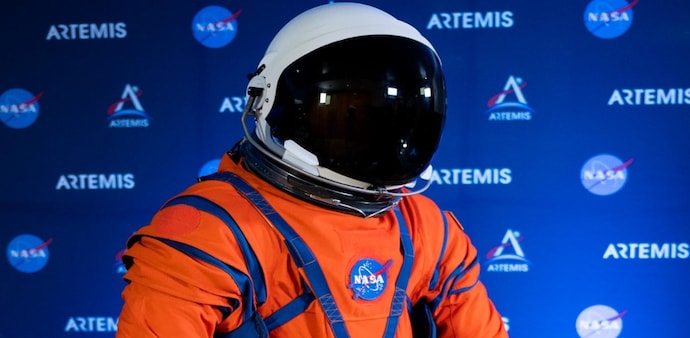
The Orion suit - often referred to as a launch and entry suit - is an upgraded version of those used during the space shuttle era. It has been redesigned across multiple components to improve safety, mobility, and endurance during long-duration missions.
- Apr 1, 2026,
- Updated Apr 1, 2026 9:26 PM IST
As NASA prepares to launch the Artemis II mission, astronauts will step into a critical layer of protection before liftoff - the Orion Crew Survival System spacesuit, designed to sustain them in emergencies, including a loss of cabin pressure for up to six days.
Must Read: NASA's Artemis II mission: Why the astronauts won't be landing on the Lunar surface and more
The suit, worn inside the Orion spacecraft during launch and reentry, is central to mission safety as four astronauts begin an approximately 10-day journey around the Moon. Unlike spacesuits used for spacewalks, this system is built for survival during high-risk phases of flight.
Must Read: Worth a risk? Artemis II astronauts will lose contact with Earth for nearly an hour - NASA
In a blog post, NASA said this spacesuit, worn inside NASA's Orion spacecraft, is "designed for a custom fit and equipped with technology features to help protect astronauts on launch day, in emergency situations, throughout high-risk parts of missions near the Moon, and during the high-speed return to Earth."
The Orion suit - often referred to as a launch and entry suit - is an upgraded version of those used during the space shuttle era. It has been redesigned across multiple components to improve safety, mobility, and endurance during long-duration missions.
Must Read: How much does Artemis II cost—and who pays for it?
The outer layer, coloured orange to ensure visibility during ocean recovery, is fire-resistant and allows greater shoulder movement. The suit functions as a pressure garment, helping maintain its structure while enabling astronauts to move. A reinforced zipper improves durability and allows quicker wear, while new systems regulate airflow and remove carbon dioxide, according to the post.
Thermal control has also been upgraded. A liquid cooling garment worn underneath the suit has been redesigned to improve breathability and temperature regulation, helping astronauts remain stable during extended use.
The helmet has been made lighter and stronger, with improved noise reduction and easier integration with onboard communication systems. Gloves have been reinforced to handle wear and are compatible with touchscreens, while redesigned boots improve mobility and offer protection in case of fire.
Unlike earlier suits that came in standard sizes, Orion suits are custom-built for each astronaut, reducing pressure points and discomfort during long periods of use.
NASA notes that most missions require two types of suits - one for use inside the spacecraft during dynamic phases such as launch and reentry, and another for spacewalks that function independently. The Orion suit is not designed for spacewalks but for survival and protection inside the vehicle.
Its most critical function comes into play during emergencies. If the Orion spacecraft were to lose cabin pressure during the mission - whether en route to the Moon, during orbital adjustments, or on return - astronauts can remain inside the suit and survive for extended periods.
According to NASA, astronauts could survive inside the suit for up to six days as they make their way back to Earth.
Each suit is also equipped with survival gear in case astronauts need to exit the spacecraft after splashdown before recovery teams arrive. This includes a life preserver with a locator beacon, a rescue knife and a signalling kit containing a mirror, strobe light, flashlight, whistle and light sticks.
The Orion Crew Survival System is part of broader upgrades under the Artemis programme, which aims to return humans to the Moon, including landing the first woman and the first person of colour on the lunar surface, while preparing for future missions to Mars.
As NASA prepares to launch the Artemis II mission, astronauts will step into a critical layer of protection before liftoff - the Orion Crew Survival System spacesuit, designed to sustain them in emergencies, including a loss of cabin pressure for up to six days.
Must Read: NASA's Artemis II mission: Why the astronauts won't be landing on the Lunar surface and more
The suit, worn inside the Orion spacecraft during launch and reentry, is central to mission safety as four astronauts begin an approximately 10-day journey around the Moon. Unlike spacesuits used for spacewalks, this system is built for survival during high-risk phases of flight.
Must Read: Worth a risk? Artemis II astronauts will lose contact with Earth for nearly an hour - NASA
In a blog post, NASA said this spacesuit, worn inside NASA's Orion spacecraft, is "designed for a custom fit and equipped with technology features to help protect astronauts on launch day, in emergency situations, throughout high-risk parts of missions near the Moon, and during the high-speed return to Earth."
The Orion suit - often referred to as a launch and entry suit - is an upgraded version of those used during the space shuttle era. It has been redesigned across multiple components to improve safety, mobility, and endurance during long-duration missions.
Must Read: How much does Artemis II cost—and who pays for it?
The outer layer, coloured orange to ensure visibility during ocean recovery, is fire-resistant and allows greater shoulder movement. The suit functions as a pressure garment, helping maintain its structure while enabling astronauts to move. A reinforced zipper improves durability and allows quicker wear, while new systems regulate airflow and remove carbon dioxide, according to the post.
Thermal control has also been upgraded. A liquid cooling garment worn underneath the suit has been redesigned to improve breathability and temperature regulation, helping astronauts remain stable during extended use.
The helmet has been made lighter and stronger, with improved noise reduction and easier integration with onboard communication systems. Gloves have been reinforced to handle wear and are compatible with touchscreens, while redesigned boots improve mobility and offer protection in case of fire.
Unlike earlier suits that came in standard sizes, Orion suits are custom-built for each astronaut, reducing pressure points and discomfort during long periods of use.
NASA notes that most missions require two types of suits - one for use inside the spacecraft during dynamic phases such as launch and reentry, and another for spacewalks that function independently. The Orion suit is not designed for spacewalks but for survival and protection inside the vehicle.
Its most critical function comes into play during emergencies. If the Orion spacecraft were to lose cabin pressure during the mission - whether en route to the Moon, during orbital adjustments, or on return - astronauts can remain inside the suit and survive for extended periods.
According to NASA, astronauts could survive inside the suit for up to six days as they make their way back to Earth.
Each suit is also equipped with survival gear in case astronauts need to exit the spacecraft after splashdown before recovery teams arrive. This includes a life preserver with a locator beacon, a rescue knife and a signalling kit containing a mirror, strobe light, flashlight, whistle and light sticks.
The Orion Crew Survival System is part of broader upgrades under the Artemis programme, which aims to return humans to the Moon, including landing the first woman and the first person of colour on the lunar surface, while preparing for future missions to Mars.