


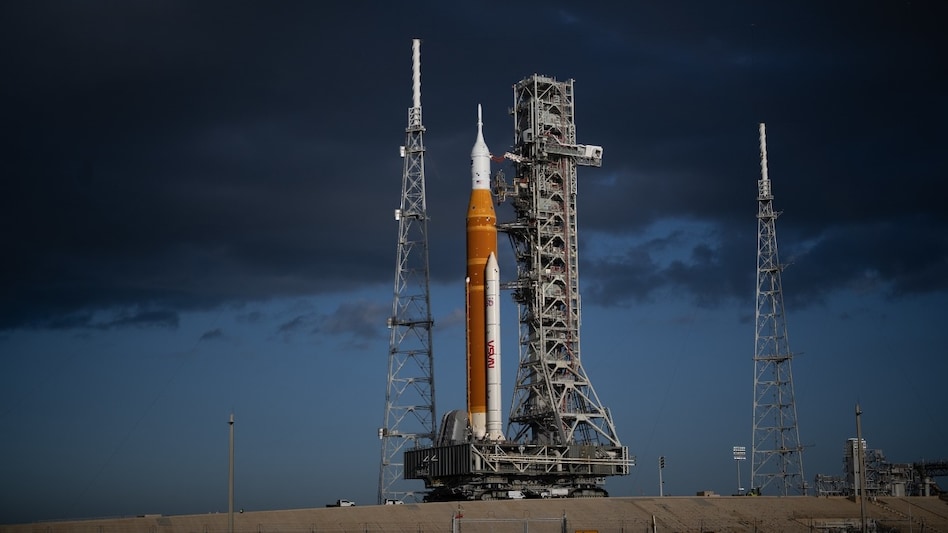
 Artemis II is a critical test flight designed to prove that NASA's new spacecraft and rocket are truly ready for deep space.
 NASA's Artemis II mission is making history, as this is the first time in over 50 years that astronauts will travel to the Moon. But unlike the iconic Apollo landings, this crew won't be stepping onto the lunar surface. Artemis II is a critical test flight designed to prove that NASA's new spacecraft and rocket are truly ready for deep space. Think of it as a dress rehearsal before the main event. Curious about who's going, how far they'll travel, and why landing isn't part of the plan? We've got all the answers right here.
DON'T MISS | Worth a risk? Artemis II astronauts will lose contact with Earth for nearly an hour - NASA

 TCS to acquire Porsche’s IT consulting arm MHP for €320 million, signs five-year strategic deal
 Tata Sons board likely to meet on September 17, Chandrasekaran exit may take center stage
 'Our trade is growing again, thanks to PM Modi': Putin tells EAM Jaishankar
 Trade war escalates: Trump announces 50% tariffs on Canadian autos & steel from Jan 1
 Saudi attacked by Houthis, Turkey targeted by Israel: So what is the Mecca Pact doing?
 Market Masters | Aniruddha Sarkar On Top Sectors, Market Outlook & Where To Invest
 Daily Calls: Ask Your STOCK MARKET TODAY QUERIES | Market Update | Share Market News Today
 All About Debt Funds: Types Of Debt Funds & How To Invest | Mutual Fund Guide | Money Today
 “India Can Attract Global Space Talent Like A Magnet”: PM Modi To Startup CEOs
 CM Yogi Responds To Rahul Gandhi Over Manusmriti Remarks, India's Youth, And Heritage
 Tempsens Instruments IPO: Issue subscribed over 184 times on final day; check latest GMP
 Cupid's Aditya Kumar Halwasiya ups stake to 33.53%; buys 11 lakh shares
 Auto, auto ancillary stocks: Is it time to book profits? What Centrum's Nilesh Jain says
 This mid-cap metal stock zooms 15% on Rs 2,700 crore order announcement; do you own?
 RVNL shares a buy? Accumulate railway stock as valuations cool, says Kranthi BathiniTrade war escalates: Trump announces 50% tariffs on Canadian autos & steel from Jan 1
 NEET-PG 2026: Admit cards to be released on Tuesday, August 25TCS to acquire Porsche’s IT consulting arm MHP for €320 million, signs five-year strategic deal'Our trade is growing again, thanks to PM Modi': Putin tells EAM JaishankarTata Sons board likely to meet on September 17, Chandrasekaran exit may take center stage












