
Gnani.ai launches multilingual speech model Vachana STT as India pushes sovereign AI
The model, called Vachana STT, has been trained on more than 1 million hours of real-world voice data across 1,056 domains and is intended for large-scale deployments across businesses and government services. Vachana STT is the first model releases under Inya VoiceOS, the startups sovereign AI stack.
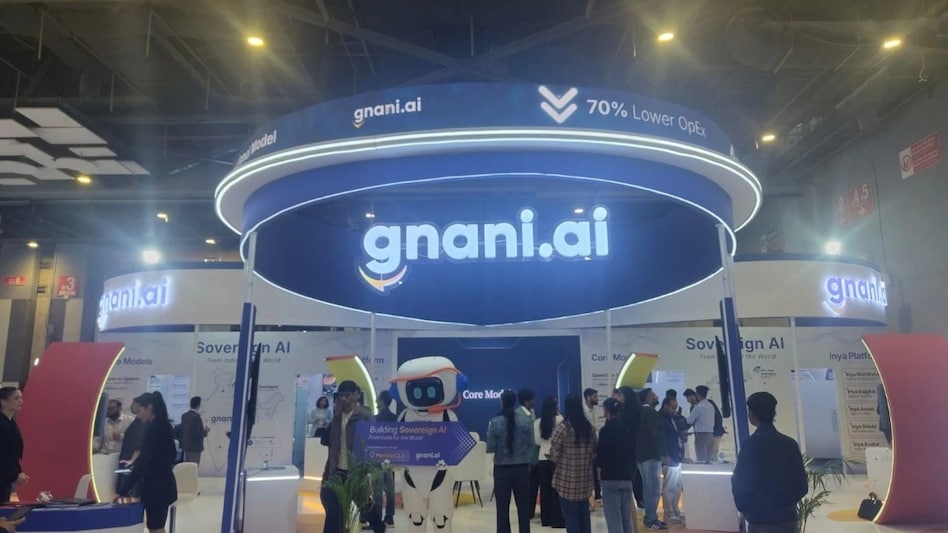
- Feb 18, 2026,
- Updated Feb 18, 2026 2:48 PM IST
Artificial intelligence (AI) startup Gnani.ai on 18 February launched an enterprise-grade speech recognition model designed for multiple Indian languages, as the country pushes to build domestic AI capabilities under the government’s India AI Mission.
The model, called Vachana STT, has been trained on more than 1 million hours of real-world voice data across 1,056 domains and is intended for large-scale deployments across businesses and government services. Vachana STT is the first model releases under Inya VoiceOS, the startups sovereign AI stack.
Gnani.ai said the system is already operating at national scale, processing about 10 million calls a day with a 95th-percentile latency of 200 milliseconds.
The company, one of four selected under the India AI Mission to build sovereign AI models, said the technology is designed to handle India’s linguistic diversity, accents and noisy audio environments.
“Speech recognition in India is not a localisation problem. It is a foundational systems problem,” said Ganesh Gopalan, co-founder and chief executive of Gnani.ai.
“Vachana STT is built as a core infrastructure, trained on how India actually speaks, and designed to operate across channels at a national scale,” he said.
The model supports real-time and batch transcription and can be deployed across telephony systems, mobile apps, web platforms and internet-connected devices, the company said.
It is already being used across sectors such as banking, telecom, insurance, retail and healthcare, where speech accuracy affects automation and compliance, the startup said.
Gnani.ai said the system could also enable voice-based access to government services for citizens with low digital literacy, while reducing call-centre costs by 40% to 60%.
The company added that the model was built and deployed entirely within India, with all data stored in domestic data centres to ensure sovereignty and compliance requirements.
Artificial intelligence (AI) startup Gnani.ai on 18 February launched an enterprise-grade speech recognition model designed for multiple Indian languages, as the country pushes to build domestic AI capabilities under the government’s India AI Mission.
The model, called Vachana STT, has been trained on more than 1 million hours of real-world voice data across 1,056 domains and is intended for large-scale deployments across businesses and government services. Vachana STT is the first model releases under Inya VoiceOS, the startups sovereign AI stack.
Gnani.ai said the system is already operating at national scale, processing about 10 million calls a day with a 95th-percentile latency of 200 milliseconds.
The company, one of four selected under the India AI Mission to build sovereign AI models, said the technology is designed to handle India’s linguistic diversity, accents and noisy audio environments.
“Speech recognition in India is not a localisation problem. It is a foundational systems problem,” said Ganesh Gopalan, co-founder and chief executive of Gnani.ai.
“Vachana STT is built as a core infrastructure, trained on how India actually speaks, and designed to operate across channels at a national scale,” he said.
The model supports real-time and batch transcription and can be deployed across telephony systems, mobile apps, web platforms and internet-connected devices, the company said.
It is already being used across sectors such as banking, telecom, insurance, retail and healthcare, where speech accuracy affects automation and compliance, the startup said.
Gnani.ai said the system could also enable voice-based access to government services for citizens with low digital literacy, while reducing call-centre costs by 40% to 60%.
The company added that the model was built and deployed entirely within India, with all data stored in domestic data centres to ensure sovereignty and compliance requirements.