
India Inc has 5–10 years of AI implementation runway even if innovation stops today: Nasscom chief
AI's shift from capital expenditure to operating expenditure could accelerate adoption in India, but enterprises still face significant implementation and governance challenges
- Sep 24, 2026,
- Updated Sep 24, 2026 9:22 PM IST
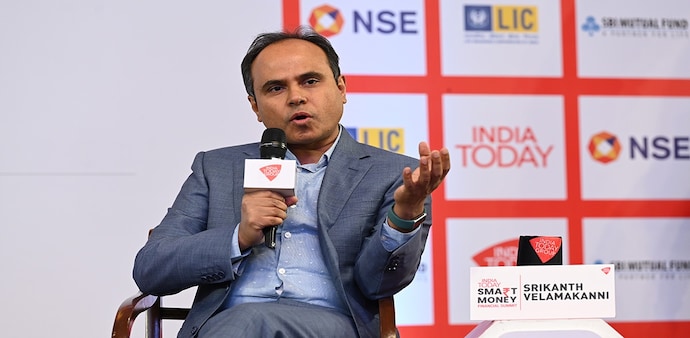
Indian enterprises could take another five to ten years to implement the full potential of Artificial Intelligence (AI) available today, even if there were no further advances in the technology, said Srikanth Velamakanni, chairperson of NASSCOM and Group Chief Executive Officer of Fractal.
Speaking about enterprise adoption of AI on the sidelines of NASSCOM’s Agentic AI Confluence 2026, Velamakanni said the gap between what the technology is currently capable of and what companies have actually implemented remains significant. While AI adoption has generated considerable interest among CEOs and boards, Indian enterprises continue to face several barriers before they can deploy the technology at scale.
“Once, let's say all AI stopped today... we still have five to ten years to implement the best AI right now, if we even stop progress,” Velamakanni said.
READ THIS: Why there are clear signs of a reset in India's quick-commerce sector
More than a decade after entering India, Amazon is putting boots on the ground to tackle counterfeits.
His comments come at a time when concerns over the pace and direction of AI development are intensifying globally. According to a Reuters report, leading AI companies warned the United Nations Security Council about the potential risks posed by increasingly powerful AI systems and called for greater international coordination on managing the technology. At the same time, executives across the industry remain divided over whether AI development should continue at its current pace, with some leaders like Anthropic's Dario Amodei, Sam Altman from OpenAI and Elon Musk calling for a slowdown.
Against this backdrop, Velamakanni said the immediate challenge for enterprises is less about the speed of new AI breakthroughs and more about their ability to absorb technologies that already exist.
He attributed the implementation gap to what he described as “enterprise friction”, a combination of budget constraints, data readiness, talent shortages, legal considerations, concerns around accuracy and reputational risks.
According to Velamakanni, this friction is not unique to India and has slowed enterprise AI adoption globally. However, Indian companies may have a structural advantage this time around because AI is increasingly being consumed as an operating expense rather than requiring large upfront capital expenditure, where enterprises historically have been hesitant.
“For the first time, we have an opportunity to not face that problem, because today, AI is coming as an opex, rather than capex for most organisations,” Velamakanni said.
Historically, Indian businesses have been relatively cautious about technology investments because capital has been expensive while labour costs have remained comparatively low. AI's shift towards an opex-led model could therefore make adoption more economically attractive for Indian enterprises.
ALSO READ: Q-commerce will become ‘much bigger’, says Amazon India VP and Country Manager Samir Kumar
The adoption pattern is also beginning to differ between large companies and smaller businesses. While large enterprises have to contend with annual budgeting cycles, regulatory requirements and legacy data systems, small and mid-sized businesses can increasingly plug into commercially available AI models and use them for specific business functions.
“In large companies, the opportunity is very big, but so is the friction,” Velamakanni said.
He added that Indian enterprises are still not at par with the fastest-adopting markets, including the US, but said interest in AI has spread rapidly across Indian businesses.
For Indian companies, the near-term opportunity, he suggested, may therefore lie not only in waiting for the next AI breakthrough, but in closing the gap between existing AI capabilities, data readiness, and actual enterprise deployment.
For Unparalleled coverage of India's Businesses and Economy – Subscribe to Business Today Magazine
Indian enterprises could take another five to ten years to implement the full potential of Artificial Intelligence (AI) available today, even if there were no further advances in the technology, said Srikanth Velamakanni, chairperson of NASSCOM and Group Chief Executive Officer of Fractal.
Speaking about enterprise adoption of AI on the sidelines of NASSCOM’s Agentic AI Confluence 2026, Velamakanni said the gap between what the technology is currently capable of and what companies have actually implemented remains significant. While AI adoption has generated considerable interest among CEOs and boards, Indian enterprises continue to face several barriers before they can deploy the technology at scale.
“Once, let's say all AI stopped today... we still have five to ten years to implement the best AI right now, if we even stop progress,” Velamakanni said.
READ THIS: Why there are clear signs of a reset in India's quick-commerce sector
More than a decade after entering India, Amazon is putting boots on the ground to tackle counterfeits.
His comments come at a time when concerns over the pace and direction of AI development are intensifying globally. According to a Reuters report, leading AI companies warned the United Nations Security Council about the potential risks posed by increasingly powerful AI systems and called for greater international coordination on managing the technology. At the same time, executives across the industry remain divided over whether AI development should continue at its current pace, with some leaders like Anthropic's Dario Amodei, Sam Altman from OpenAI and Elon Musk calling for a slowdown.
Against this backdrop, Velamakanni said the immediate challenge for enterprises is less about the speed of new AI breakthroughs and more about their ability to absorb technologies that already exist.
He attributed the implementation gap to what he described as “enterprise friction”, a combination of budget constraints, data readiness, talent shortages, legal considerations, concerns around accuracy and reputational risks.
According to Velamakanni, this friction is not unique to India and has slowed enterprise AI adoption globally. However, Indian companies may have a structural advantage this time around because AI is increasingly being consumed as an operating expense rather than requiring large upfront capital expenditure, where enterprises historically have been hesitant.
“For the first time, we have an opportunity to not face that problem, because today, AI is coming as an opex, rather than capex for most organisations,” Velamakanni said.
Historically, Indian businesses have been relatively cautious about technology investments because capital has been expensive while labour costs have remained comparatively low. AI's shift towards an opex-led model could therefore make adoption more economically attractive for Indian enterprises.
ALSO READ: Q-commerce will become ‘much bigger’, says Amazon India VP and Country Manager Samir Kumar
The adoption pattern is also beginning to differ between large companies and smaller businesses. While large enterprises have to contend with annual budgeting cycles, regulatory requirements and legacy data systems, small and mid-sized businesses can increasingly plug into commercially available AI models and use them for specific business functions.
“In large companies, the opportunity is very big, but so is the friction,” Velamakanni said.
He added that Indian enterprises are still not at par with the fastest-adopting markets, including the US, but said interest in AI has spread rapidly across Indian businesses.
For Indian companies, the near-term opportunity, he suggested, may therefore lie not only in waiting for the next AI breakthrough, but in closing the gap between existing AI capabilities, data readiness, and actual enterprise deployment.
For Unparalleled coverage of India's Businesses and Economy – Subscribe to Business Today Magazine