
AI is now a foundation of governance and growth, says Nasscom’s Rajesh Nambiar
Nasscom’s Rajesh Nambiar said AI systems are already being deployed in real markets, real countries and real democracies, far beyond research labs and pilot projects.
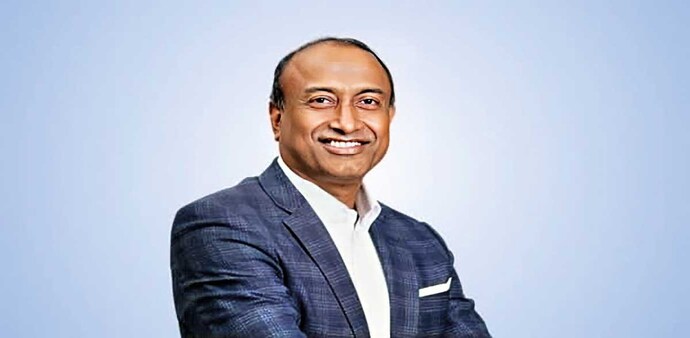
- Jan 22, 2026,
- Updated Jan 22, 2026 10:57 AM IST
Artificial intelligence (AI) has moved beyond experimentation and is now becoming a foundational layer of governance, economic growth and national capability, Nasscom President Rajesh Nambiar said, warning that the technology’s rapid deployment has made responsibility and trust a present-day necessity.
Speaking at the Nasscom Responsible Intelligence Confluence (RICON) 2026, Nambiar said AI systems are already being deployed in real markets, real countries and real democracies, far beyond research labs and pilot projects.
“We are deploying systems that can learn, certainly decide for itself, persuade all of you and then act at a much harsher scale than what the human brains can, human judgment can cope up with,” Nambiar said. “And we are doing this right now. It’s not just the theory, it’s not in the newspaper, it’s not on the research papers. It’s in real life, real markets, real situations, real countries, real democracies.”
AI has shifted from experimentation to becoming embedded in how governments deliver public services, how enterprises operate and how citizens are engaged at scale, he said.
“AI has moved from a bunch of experimentation to becoming about the foundational layer of governance, economic growth and national capability and capacity,” Nambiar said. “Scale is no longer the question. The question is responsibility and then how do you really do this in the right way.”
Without strong governance, AI does not just scale efficiency but also scales harm, he warned.
“Without the responsibility, AI does not just scale efficiently, but it also scales harm in many ways,” he said. “Bias becomes really invisible. Decisions become very unexplainable, untraceable, and errors become very systemic. And most of all, accountability becomes unclear.”
Nambiar pointed to AI-powered misinformation and deepfakes as growing risks, especially in India.
“We’ve seen some of these deepfakes blurring the lines between reality and fabrication,” he said. “Automated systems are making life-changing, life-altering decisions with very little transparency or recourse if something goes wrong.”
The global AI debate has also evolved beyond model size and parameter counts, he said.
“Today, it’s no longer about innovation,” Nambiar said. “The debate has shifted from that discussion about innovation and how much can you create technology in a billion parameters or a trillion parameters. The debate is today about trust, accountability and readiness.”
Trust, he said, has become central to adoption.
“Trust has almost become the currency of adoption of systems as we move forward,” Nambiar said. “Trust cannot be assumed in AI systems. It must be engineered by design.”
He rejected the argument that responsible AI slows innovation.
“Responsible AI is not to break innovation,” Nambiar said. “Some people say regulation will kill innovation. But actually, it will enable it even better.”
The next phase of AI must move from intent to execution, he said.
“Responsible AI must move from principles to production,” Nambiar said. “We really want to make it in action.”
India, he added, has the opportunity to lead globally by building trusted AI at scale.
“India can actually lead the world by not just building AI, but truly building a very responsible, trusted and globally relevant AI,” he said.
For Unparalleled coverage of India's Businesses and Economy – Subscribe to Business Today Magazine
Artificial intelligence (AI) has moved beyond experimentation and is now becoming a foundational layer of governance, economic growth and national capability, Nasscom President Rajesh Nambiar said, warning that the technology’s rapid deployment has made responsibility and trust a present-day necessity.
Speaking at the Nasscom Responsible Intelligence Confluence (RICON) 2026, Nambiar said AI systems are already being deployed in real markets, real countries and real democracies, far beyond research labs and pilot projects.
“We are deploying systems that can learn, certainly decide for itself, persuade all of you and then act at a much harsher scale than what the human brains can, human judgment can cope up with,” Nambiar said. “And we are doing this right now. It’s not just the theory, it’s not in the newspaper, it’s not on the research papers. It’s in real life, real markets, real situations, real countries, real democracies.”
AI has shifted from experimentation to becoming embedded in how governments deliver public services, how enterprises operate and how citizens are engaged at scale, he said.
“AI has moved from a bunch of experimentation to becoming about the foundational layer of governance, economic growth and national capability and capacity,” Nambiar said. “Scale is no longer the question. The question is responsibility and then how do you really do this in the right way.”
Without strong governance, AI does not just scale efficiency but also scales harm, he warned.
“Without the responsibility, AI does not just scale efficiently, but it also scales harm in many ways,” he said. “Bias becomes really invisible. Decisions become very unexplainable, untraceable, and errors become very systemic. And most of all, accountability becomes unclear.”
Nambiar pointed to AI-powered misinformation and deepfakes as growing risks, especially in India.
“We’ve seen some of these deepfakes blurring the lines between reality and fabrication,” he said. “Automated systems are making life-changing, life-altering decisions with very little transparency or recourse if something goes wrong.”
The global AI debate has also evolved beyond model size and parameter counts, he said.
“Today, it’s no longer about innovation,” Nambiar said. “The debate has shifted from that discussion about innovation and how much can you create technology in a billion parameters or a trillion parameters. The debate is today about trust, accountability and readiness.”
Trust, he said, has become central to adoption.
“Trust has almost become the currency of adoption of systems as we move forward,” Nambiar said. “Trust cannot be assumed in AI systems. It must be engineered by design.”
He rejected the argument that responsible AI slows innovation.
“Responsible AI is not to break innovation,” Nambiar said. “Some people say regulation will kill innovation. But actually, it will enable it even better.”
The next phase of AI must move from intent to execution, he said.
“Responsible AI must move from principles to production,” Nambiar said. “We really want to make it in action.”
India, he added, has the opportunity to lead globally by building trusted AI at scale.
“India can actually lead the world by not just building AI, but truly building a very responsible, trusted and globally relevant AI,” he said.
For Unparalleled coverage of India's Businesses and Economy – Subscribe to Business Today Magazine