
Anno 117: Pax Romana review - A sumptuous Roman sandbox with teeth
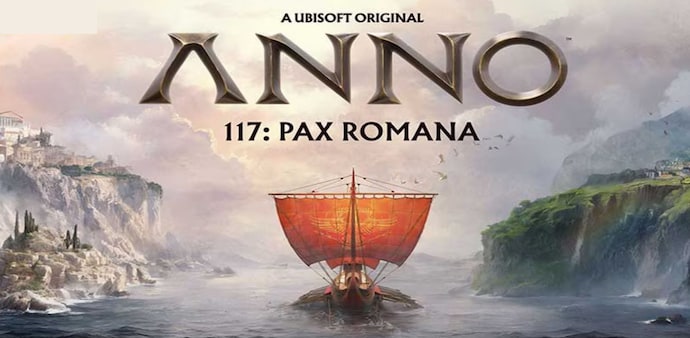
A city builder that wants you to feel like a Roman governor with an overstuffed ledger and a navy always one pirate attack away from panic.
Pranav Dixit
- Nov 17, 2025,
- Updated Nov 17, 2025 8:51 AM IST
The sun rises over Latium, spilling light across terracotta rooftops and busy market lanes. Sailors unload fish at the docks, merchants haggle under striped awnings, and my freed citizens stroll along the paved roads I spent hours perfecting. This is the moment Anno 117: Pax Romana finally clicked for me. After years of bouncing off this series, especially during the awkward 2205 era, I have finally found the entry that feels like a grand invitation rather than an intimidating chore. It is beautiful, involved, prickly, and occasionally overwhelming. Yet, it never stops rewarding you for your attention.
Advertisement
Ubisoft’s long-running city-building series returns to its most ambitious historical setting yet. Rome at its imperial height offers fertile ground for political drama, trade empires, cultural tension, and naval warfare. Anno 117 captures these systems with confident depth, turning every session into a lesson in logistics and civic pride.
This is a game that demands patience. It is also a game that pays you back tenfold when everything locks into place.
The Rhythm of an Empire
At its heart, Anno 117 follows the familiar loop that fans know well. Your first steps involve assembling modest rows of homes for liberti, the freed population that conveniently sidesteps how heavily Roman society relied on slavery. When their early needs are met, they climb the social ladder, eventually evolving into patricians who demand items like olive oil, amphorae, imported cheese, and other fineries.
Advertisement
Part of that progression is dependent on meeting consumption needs, but space matters too. Higher classes are drawn to prestigious buildings like theatres, temples, and public forums. Meanwhile, soot-belching charcoal burners and industrial workshops send property values into the mud. The natural result is a city that stratifies itself without you forcing it. Market avenues evolve into affluent districts, while the outskirts fill with busy workshops, fisheries, and farms.
It delivers an organic sense of place that many city builders chase but rarely achieve. Paving roads is especially satisfying. One upgrade and suddenly your theatre’s influence reaches across neighbourhoods, lifting homes into prosperity in real time.
Zooming in reinforces this immersion. Citizens in flowing togas bustle through plazas, musicians perform on corners, and lavender fields sway in the wind. Latium is a postcard brought to life. The only visual stumble is character cutscenes, where stiff animations and poor lip sync look like they were transported from a much older game.
Advertisement
Across the Sea to Albion
Eventually, your Roman ambitions stretch beyond the warmth of Italy. Ships can sail into the misty cliffs of Albion, a region with its own culture, economy, and identity. I was initially concerned Ubisoft might lean into tired Celtic mysticism, but Albion is grounded and respectful. The real tension is administrative. Do you honour local traditions or force Romanisation?
Each path reshapes your economy. Celtic loyalty offers ritualistic bonuses, while Romanisation unlocks new building efficiencies. Mixing both results in intriguing hybrid setups that feel like the heart of the game’s cultural storytelling.
Where Trade Becomes Theatre
Trade has always been an Anno trademark, but 117 elevates it into something closer to art. Satisfying patrician needs often requires crisscrossing supply chains that involve multiple islands. Perhaps your cheese comes from a distant settlement, olives from Latium, and amphora clay from a small riverside town. You assign ships to each trade route, watching them weave across the world map in a ballet of commerce.
Advertisement
I found myself micro-managing routes, not because I had to, but because I loved it. My cheese island sat frustratingly far from my urban hubs, so I created a tiny waystation colony beside it. That settlement became a dedicated cheese warehouse with fisheries to keep the locals happy. Instead of endless long-haul trips, my ships now zipped between nodes like an efficient courier network.
It becomes a logistics puzzle with incredible payoff. When your patricians level up instantly after a smooth delivery chain, you feel like the proud architect of a functioning empire rather than a spreadsheet overachiever.
War at Sea and Land
Anno 117 is not just a serene city builder. It is, quietly, a capable real-time strategy game. Naval battles in particular stand out. The difference between oar-driven ships and sail-powered vessels is tangible. Fights become about positioning, wind angles, and tight manoeuvres. The first time I trapped a pirate ship inside a narrow cove, cutting off every escape, I felt like a seasoned admiral.
Land combat is less remarkable but does its job. A decent mix of melee, ranged, and siege units makes for satisfying scrimmages when required. The best part is that you can skip ground warfare entirely if your navy is strong enough. Anno 117 never forces you into the parts you dislike.
Advertisement
A Shrewd Emperor and a Simple Diplomacy Layer
Diplomacy is serviceable rather than deep, with only one notable twist. The Emperor behaves differently from other factions. You cannot negotiate with him as an equal. Instead, he issues demands, and your responses influence your standing with Rome. Accepting earns bonuses. Defying him unlocks a path of rebellion.
Both extremes culminate in powerful rewards, either by becoming Consul with imperial favour or by seizing Proconsular authority with a raised eyebrow at Caesar’s expense.
It is not complex, but it adds flavour and suits the theme well.
Campaign: A Warm Up, Not a Main Course
The story campaign acts as a long tutorial. You can choose between Marcus or Marcia, with Marcia’s route leaning into dark comedy as she maintains a political ruse involving her absolutely-not-dead husband. It is fun, but short. I cleared it in under ten hours, and it only hints at the depth available in the main sandbox mode.
Endless mode is where the real game lives. Starting in either Latium or Albion, you pick difficulty, rivals, and the governor personalities you will clash or trade with. Their cities often defy logic, but they make spirited allies and adversaries.
Advertisement
When the Empire Wobbles
Anno’s classic flaws remain. Large economies can collapse into spirals if one resource is disrupted. A food shortage reduces population, which frees fewer workers to produce food, which deepens the shortage. You can occasionally save yourself with clever trade orders, but sometimes the mathematics of empire simply breaks.
I suffered one memorable catastrophe when I accidentally changed my city’s patron god, instantly losing a crucial agricultural bonus. Within minutes, a flourishing hub became a financial disaster. I restarted soon after.
It is harsh, but that tension keeps the game alive.
Verdict
Anno 117: Pax Romana is a triumph of atmosphere and systems, a city builder that respects both history and the player’s intelligence. Its trade mechanics are outstanding. Its naval combat is genuinely exciting. Its cities feel alive, colourful, and deeply personal. Even with the occasional economic death spiral and a forgettable campaign, the endless mode provides a playground with almost endless possibilities.
If older entries never clicked for you, this one might be the breakthrough. It certainly was for me. Anno 117 is not perfect, but it is generous, thoughtful, and irresistibly engrossing. The empire you build here feels like your own, and watching it thrive is nothing short of glorious.
For Unparalleled coverage of India's Businesses and Economy – Subscribe to Business Today Magazine
The sun rises over Latium, spilling light across terracotta rooftops and busy market lanes. Sailors unload fish at the docks, merchants haggle under striped awnings, and my freed citizens stroll along the paved roads I spent hours perfecting. This is the moment Anno 117: Pax Romana finally clicked for me. After years of bouncing off this series, especially during the awkward 2205 era, I have finally found the entry that feels like a grand invitation rather than an intimidating chore. It is beautiful, involved, prickly, and occasionally overwhelming. Yet, it never stops rewarding you for your attention.
Advertisement
Ubisoft’s long-running city-building series returns to its most ambitious historical setting yet. Rome at its imperial height offers fertile ground for political drama, trade empires, cultural tension, and naval warfare. Anno 117 captures these systems with confident depth, turning every session into a lesson in logistics and civic pride.
This is a game that demands patience. It is also a game that pays you back tenfold when everything locks into place.
The Rhythm of an Empire
At its heart, Anno 117 follows the familiar loop that fans know well. Your first steps involve assembling modest rows of homes for liberti, the freed population that conveniently sidesteps how heavily Roman society relied on slavery. When their early needs are met, they climb the social ladder, eventually evolving into patricians who demand items like olive oil, amphorae, imported cheese, and other fineries.
Advertisement
Part of that progression is dependent on meeting consumption needs, but space matters too. Higher classes are drawn to prestigious buildings like theatres, temples, and public forums. Meanwhile, soot-belching charcoal burners and industrial workshops send property values into the mud. The natural result is a city that stratifies itself without you forcing it. Market avenues evolve into affluent districts, while the outskirts fill with busy workshops, fisheries, and farms.
It delivers an organic sense of place that many city builders chase but rarely achieve. Paving roads is especially satisfying. One upgrade and suddenly your theatre’s influence reaches across neighbourhoods, lifting homes into prosperity in real time.
Zooming in reinforces this immersion. Citizens in flowing togas bustle through plazas, musicians perform on corners, and lavender fields sway in the wind. Latium is a postcard brought to life. The only visual stumble is character cutscenes, where stiff animations and poor lip sync look like they were transported from a much older game.
Advertisement
Across the Sea to Albion
Eventually, your Roman ambitions stretch beyond the warmth of Italy. Ships can sail into the misty cliffs of Albion, a region with its own culture, economy, and identity. I was initially concerned Ubisoft might lean into tired Celtic mysticism, but Albion is grounded and respectful. The real tension is administrative. Do you honour local traditions or force Romanisation?
Each path reshapes your economy. Celtic loyalty offers ritualistic bonuses, while Romanisation unlocks new building efficiencies. Mixing both results in intriguing hybrid setups that feel like the heart of the game’s cultural storytelling.
Where Trade Becomes Theatre
Trade has always been an Anno trademark, but 117 elevates it into something closer to art. Satisfying patrician needs often requires crisscrossing supply chains that involve multiple islands. Perhaps your cheese comes from a distant settlement, olives from Latium, and amphora clay from a small riverside town. You assign ships to each trade route, watching them weave across the world map in a ballet of commerce.
Advertisement
I found myself micro-managing routes, not because I had to, but because I loved it. My cheese island sat frustratingly far from my urban hubs, so I created a tiny waystation colony beside it. That settlement became a dedicated cheese warehouse with fisheries to keep the locals happy. Instead of endless long-haul trips, my ships now zipped between nodes like an efficient courier network.
It becomes a logistics puzzle with incredible payoff. When your patricians level up instantly after a smooth delivery chain, you feel like the proud architect of a functioning empire rather than a spreadsheet overachiever.
War at Sea and Land
Anno 117 is not just a serene city builder. It is, quietly, a capable real-time strategy game. Naval battles in particular stand out. The difference between oar-driven ships and sail-powered vessels is tangible. Fights become about positioning, wind angles, and tight manoeuvres. The first time I trapped a pirate ship inside a narrow cove, cutting off every escape, I felt like a seasoned admiral.
Land combat is less remarkable but does its job. A decent mix of melee, ranged, and siege units makes for satisfying scrimmages when required. The best part is that you can skip ground warfare entirely if your navy is strong enough. Anno 117 never forces you into the parts you dislike.
Advertisement
A Shrewd Emperor and a Simple Diplomacy Layer
Diplomacy is serviceable rather than deep, with only one notable twist. The Emperor behaves differently from other factions. You cannot negotiate with him as an equal. Instead, he issues demands, and your responses influence your standing with Rome. Accepting earns bonuses. Defying him unlocks a path of rebellion.
Both extremes culminate in powerful rewards, either by becoming Consul with imperial favour or by seizing Proconsular authority with a raised eyebrow at Caesar’s expense.
It is not complex, but it adds flavour and suits the theme well.
Campaign: A Warm Up, Not a Main Course
The story campaign acts as a long tutorial. You can choose between Marcus or Marcia, with Marcia’s route leaning into dark comedy as she maintains a political ruse involving her absolutely-not-dead husband. It is fun, but short. I cleared it in under ten hours, and it only hints at the depth available in the main sandbox mode.
Endless mode is where the real game lives. Starting in either Latium or Albion, you pick difficulty, rivals, and the governor personalities you will clash or trade with. Their cities often defy logic, but they make spirited allies and adversaries.
Advertisement
When the Empire Wobbles
Anno’s classic flaws remain. Large economies can collapse into spirals if one resource is disrupted. A food shortage reduces population, which frees fewer workers to produce food, which deepens the shortage. You can occasionally save yourself with clever trade orders, but sometimes the mathematics of empire simply breaks.
I suffered one memorable catastrophe when I accidentally changed my city’s patron god, instantly losing a crucial agricultural bonus. Within minutes, a flourishing hub became a financial disaster. I restarted soon after.
It is harsh, but that tension keeps the game alive.
Verdict
Anno 117: Pax Romana is a triumph of atmosphere and systems, a city builder that respects both history and the player’s intelligence. Its trade mechanics are outstanding. Its naval combat is genuinely exciting. Its cities feel alive, colourful, and deeply personal. Even with the occasional economic death spiral and a forgettable campaign, the endless mode provides a playground with almost endless possibilities.
If older entries never clicked for you, this one might be the breakthrough. It certainly was for me. Anno 117 is not perfect, but it is generous, thoughtful, and irresistibly engrossing. The empire you build here feels like your own, and watching it thrive is nothing short of glorious.
For Unparalleled coverage of India's Businesses and Economy – Subscribe to Business Today Magazine
Read more!