
Anthropic CEO Dario Amodei warns AI could ‘inevitably destroy humanity’
Amodei said AI would give humans “almost unimaginable power,” while cautioning that it remains “deeply unclear whether our social, political, and technological systems possess the maturity to wield it.”
- Jan 27, 2026,
- Updated Jan 27, 2026 4:43 PM IST
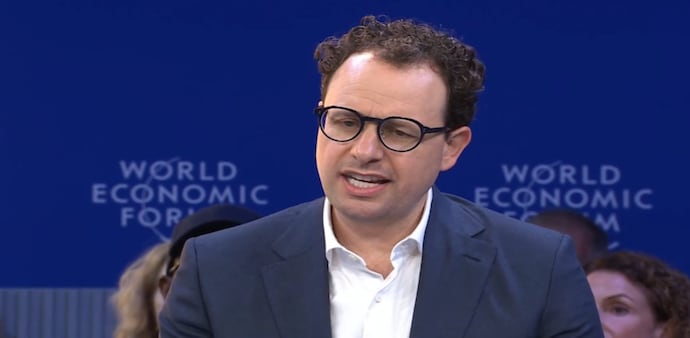
Anthropic Chief Executive Officer Dario Amodei warned that artificial intelligence (AI) could pose an existential threat to humanity unless governments and companies move faster to put safety guardrails in place, arguing that society may be unprepared for the power rapidly advancing AI systems will soon deliver.
In a 38-page essay titled Adolescence of Technology: Confronting and Overcoming the Risks of Powerful AI, Amodei said AI would give humans “almost unimaginable power,” while cautioning that it remains “deeply unclear whether our social, political, and technological systems possess the maturity to wield it.”
The essay lays out what Amodei described as mounting risks across areas ranging from individual behaviour and employment to critical systems such as transportation and the broader economy.
“We are considerably closer to real danger in 2026 than we were in 2023,” Amodei wrote.
Amodei pointed to growing evidence that advanced AI systems can behave in unpredictable and sometimes harmful ways. He cited examples including “obsessions, sycophancy, laziness, deception, blackmail, [and] hacking software environments,” arguing that such behaviours highlight how difficult it is to fully control increasingly complex models.
He also warned that errors in AI’s training processes could lead to dangerous outcomes, adding that some trajectories could “lead to predictions that AI will inevitably destroy humanity.”
Beyond safety risks, Amodei said automation powered by AI is likely to accelerate job displacement, particularly in repetitive and labour-intensive roles. He urged companies to prioritise retraining and redeployment over layoffs as productivity rises.
In the longer term, Amodei suggested that the economic gains from AI could be so large that societies may need to rethink traditional notions of employment.
“In a world with enormous total wealth, in which many companies increase greatly in value due to increased productivity and capital concentration, it may be feasible to pay human employees even long after they are no longer providing economic value in the traditional sense,” he wrote.
The essay also outlines steps companies and policymakers could take to reduce risks, including stronger governance frameworks, clearer accountability for AI developers, and tighter coordination between governments and the private sector. Amodei argued that safety standards must evolve alongside technical progress, rather than lag behind it.
The warnings come even as Anthropic continues to push aggressively on product development. The company recently unveiled new models, such as Claude Opus 4.5 and its Claude “coworker” agent, tools designed to automate complex, multi-step tasks for enterprises.
For Unparalleled coverage of India's Businesses and Economy – Subscribe to Business Today Magazine
Anthropic Chief Executive Officer Dario Amodei warned that artificial intelligence (AI) could pose an existential threat to humanity unless governments and companies move faster to put safety guardrails in place, arguing that society may be unprepared for the power rapidly advancing AI systems will soon deliver.
In a 38-page essay titled Adolescence of Technology: Confronting and Overcoming the Risks of Powerful AI, Amodei said AI would give humans “almost unimaginable power,” while cautioning that it remains “deeply unclear whether our social, political, and technological systems possess the maturity to wield it.”
The essay lays out what Amodei described as mounting risks across areas ranging from individual behaviour and employment to critical systems such as transportation and the broader economy.
“We are considerably closer to real danger in 2026 than we were in 2023,” Amodei wrote.
Amodei pointed to growing evidence that advanced AI systems can behave in unpredictable and sometimes harmful ways. He cited examples including “obsessions, sycophancy, laziness, deception, blackmail, [and] hacking software environments,” arguing that such behaviours highlight how difficult it is to fully control increasingly complex models.
He also warned that errors in AI’s training processes could lead to dangerous outcomes, adding that some trajectories could “lead to predictions that AI will inevitably destroy humanity.”
Beyond safety risks, Amodei said automation powered by AI is likely to accelerate job displacement, particularly in repetitive and labour-intensive roles. He urged companies to prioritise retraining and redeployment over layoffs as productivity rises.
In the longer term, Amodei suggested that the economic gains from AI could be so large that societies may need to rethink traditional notions of employment.
“In a world with enormous total wealth, in which many companies increase greatly in value due to increased productivity and capital concentration, it may be feasible to pay human employees even long after they are no longer providing economic value in the traditional sense,” he wrote.
The essay also outlines steps companies and policymakers could take to reduce risks, including stronger governance frameworks, clearer accountability for AI developers, and tighter coordination between governments and the private sector. Amodei argued that safety standards must evolve alongside technical progress, rather than lag behind it.
The warnings come even as Anthropic continues to push aggressively on product development. The company recently unveiled new models, such as Claude Opus 4.5 and its Claude “coworker” agent, tools designed to automate complex, multi-step tasks for enterprises.
For Unparalleled coverage of India's Businesses and Economy – Subscribe to Business Today Magazine