
AWS CEO Matt Garman: Space data centres 'pretty far' from reality
The concept of hosting data centres in space has gained traction recently, driven by the belief that orbital facilities could bypass the terrestrial constraints of land use and cooling requirements, but AWS CEO Matt Garman believes in a more grounded stance, asserting that the economic and technical hurdles currently outweigh the benefits.
- Feb 4, 2026,
- Updated Feb 4, 2026 3:30 PM IST
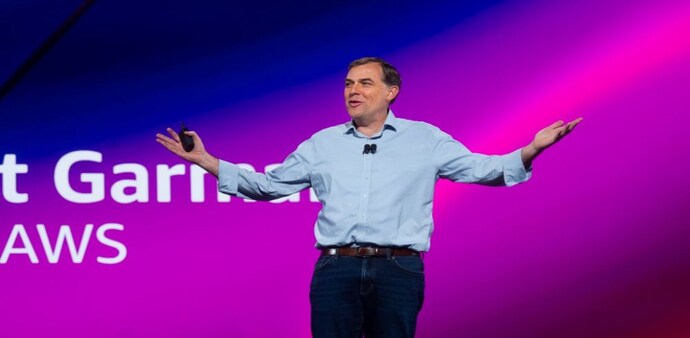
Matt Garman, the Chief Executive of Amazon Web Services (AWS), has served a 'reality check' for the burgeoning space-technology sector, stating that the prospect of orbital data centres remains "pretty far" from becoming a practical reality.
Speaking at the Cisco AI Summit in San Francisco, Garman’s comments suggest a significant divergence in strategy between the world’s leading cloud provider and some of its more optimistic rivals in the tech and aerospace industries.
"There are not enough rockets to launch a million satellites yet, so we're, like, pretty far from that," he said when asked about the idea. "If you think about the cost of getting a payload in space today, it's massive."
"It is just not economical," Garman said, according to Reuters.
The concept of hosting data centres in space has gained traction recently, driven by the belief that orbital facilities could bypass the terrestrial constraints of land use and cooling requirements. Furthermore, proponents argue that space-based servers could provide a more cost-effective method for generating the immense AI compute power required for artificial general intelligence.
This vision was notably bolstered by Elon Musk’s recent announcement of a merger between SpaceX and xAI, a deal valuing the combined entity at $1.25 trillion.
However, Garman maintained a more grounded stance, asserting that the economic and technical hurdles currently outweigh the benefits. He suggested that while the idea is conceptually intriguing, the logistics of maintaining high-performance hardware in the harsh environment of space, coupled with the immense costs of launching and servicing such infrastructure, make it an unviable option for the immediate future.
The AWS chief's skepticism comes despite the fact that Amazon’s founder, Jeff Bezos, is himself heavily invested in the space race through Blue Origin.
It signals that for AWS, the focus will remain on expanding its terrestrial footprint. This strategy is not without its own challenges; the company is currently grappling with power-grid delays in Europe that threaten to slow its data centre expansion.
Google has also announced plans for it's orbital data center project 'Suncatcher', and the company could perform test launches as soon as next year.
For Unparalleled coverage of India's Businesses and Economy – Subscribe to Business Today Magazine
Matt Garman, the Chief Executive of Amazon Web Services (AWS), has served a 'reality check' for the burgeoning space-technology sector, stating that the prospect of orbital data centres remains "pretty far" from becoming a practical reality.
Speaking at the Cisco AI Summit in San Francisco, Garman’s comments suggest a significant divergence in strategy between the world’s leading cloud provider and some of its more optimistic rivals in the tech and aerospace industries.
"There are not enough rockets to launch a million satellites yet, so we're, like, pretty far from that," he said when asked about the idea. "If you think about the cost of getting a payload in space today, it's massive."
"It is just not economical," Garman said, according to Reuters.
The concept of hosting data centres in space has gained traction recently, driven by the belief that orbital facilities could bypass the terrestrial constraints of land use and cooling requirements. Furthermore, proponents argue that space-based servers could provide a more cost-effective method for generating the immense AI compute power required for artificial general intelligence.
This vision was notably bolstered by Elon Musk’s recent announcement of a merger between SpaceX and xAI, a deal valuing the combined entity at $1.25 trillion.
However, Garman maintained a more grounded stance, asserting that the economic and technical hurdles currently outweigh the benefits. He suggested that while the idea is conceptually intriguing, the logistics of maintaining high-performance hardware in the harsh environment of space, coupled with the immense costs of launching and servicing such infrastructure, make it an unviable option for the immediate future.
The AWS chief's skepticism comes despite the fact that Amazon’s founder, Jeff Bezos, is himself heavily invested in the space race through Blue Origin.
It signals that for AWS, the focus will remain on expanding its terrestrial footprint. This strategy is not without its own challenges; the company is currently grappling with power-grid delays in Europe that threaten to slow its data centre expansion.
Google has also announced plans for it's orbital data center project 'Suncatcher', and the company could perform test launches as soon as next year.
For Unparalleled coverage of India's Businesses and Economy – Subscribe to Business Today Magazine