
Elon Musk calls Mukesh Ambani 'real boss of India', amid push for Starlink in India
Explaining his push for Starlink's entry into India, Musk argued that satellite internet could help bridge the digital divide, particularly in areas where conventional internet connectivity remains limited
- Oct 9, 2026,
- Updated Oct 9, 2026 11:32 PM IST
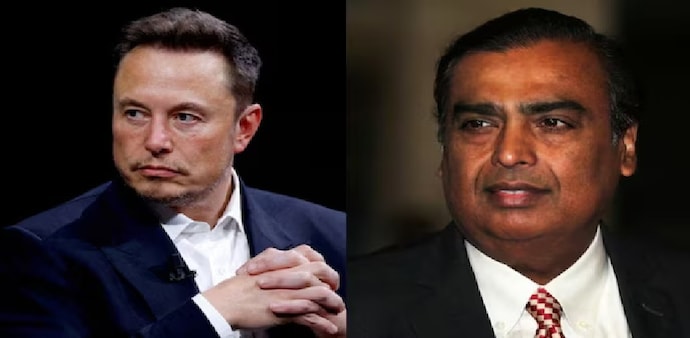
Elon Musk has taken a pointed swipe at India's telecom market while seeking an opportunity for his satellite internet service, Starlink, to compete in the country. In a series of posts on X on October 9, Musk addressed industrialist Mukesh Ambani as “Prime Minister Ambani” and apologised for not realising that he was the “real boss of India”.
“Please accept my humble apologies for not realizing that you are the real boss of India,” Musk wrote, questioning whether Ambani would consider allowing Starlink to compete in the Indian market.
Musk alleged that Ambani would naturally prefer to maintain a monopolistic hold over India's internet sector but asked whether he would nevertheless consider opening the market to competition.
READ THIS: 'This is indeed troubling': Elon Musk tells Rahul Gandhi on Starlink's delayed entry into India
Musk says Starlink could expand internet access in rural India
Explaining his push for Starlink's entry into India, Musk argued that satellite internet could help bridge the digital divide, particularly in areas where conventional internet connectivity remains limited.
“There are many areas of India, as there are in all countries, with no Internet access,” he wrote, adding that the lack of connectivity denies children educational opportunities and prevents small businesses from reaching global markets.
“Starlink would change their lives for the better,” Musk added, arguing that improved internet access could help people access education and enable small businesses to sell their products to customers worldwide.
Musk says Starlink can save lives during disasters
In a follow-up post, Musk highlighted another potential benefit of Starlink, saying its satellite-based connectivity had proved essential in saving lives during natural disasters around the world.
“Also, Starlink has proven to be essential for saving lives during natural disasters throughout the world, when all other communications systems have failed,” Musk wrote.
He added that allowing the service to operate in India could help save lives during emergencies.
“So you would also be helping save men, women and children throughout India,” Musk said.
Satellite internet services can be particularly useful during disasters because they can provide connectivity when terrestrial communication infrastructure, including mobile networks and fibre-optic cables, is damaged or disrupted.
Starlink's India launch awaits regulatory clearances
Musk's remarks come amid efforts by Starlink to enter India's satellite broadband market, where established telecom operators Reliance Jio and Bharti Airtel have a significant presence.
The entry of Starlink could offer an additional connectivity option, particularly for remote and underserved regions where extending conventional broadband infrastructure can be challenging. However, satellite internet services must comply with India's applicable licensing, security and regulatory requirements before commercial operations can begin.
For Unparalleled coverage of India's Businesses and Economy – Subscribe to Business Today Magazine
Elon Musk has taken a pointed swipe at India's telecom market while seeking an opportunity for his satellite internet service, Starlink, to compete in the country. In a series of posts on X on October 9, Musk addressed industrialist Mukesh Ambani as “Prime Minister Ambani” and apologised for not realising that he was the “real boss of India”.
“Please accept my humble apologies for not realizing that you are the real boss of India,” Musk wrote, questioning whether Ambani would consider allowing Starlink to compete in the Indian market.
Musk alleged that Ambani would naturally prefer to maintain a monopolistic hold over India's internet sector but asked whether he would nevertheless consider opening the market to competition.
READ THIS: 'This is indeed troubling': Elon Musk tells Rahul Gandhi on Starlink's delayed entry into India
Musk says Starlink could expand internet access in rural India
Explaining his push for Starlink's entry into India, Musk argued that satellite internet could help bridge the digital divide, particularly in areas where conventional internet connectivity remains limited.
“There are many areas of India, as there are in all countries, with no Internet access,” he wrote, adding that the lack of connectivity denies children educational opportunities and prevents small businesses from reaching global markets.
“Starlink would change their lives for the better,” Musk added, arguing that improved internet access could help people access education and enable small businesses to sell their products to customers worldwide.
Musk says Starlink can save lives during disasters
In a follow-up post, Musk highlighted another potential benefit of Starlink, saying its satellite-based connectivity had proved essential in saving lives during natural disasters around the world.
“Also, Starlink has proven to be essential for saving lives during natural disasters throughout the world, when all other communications systems have failed,” Musk wrote.
He added that allowing the service to operate in India could help save lives during emergencies.
“So you would also be helping save men, women and children throughout India,” Musk said.
Satellite internet services can be particularly useful during disasters because they can provide connectivity when terrestrial communication infrastructure, including mobile networks and fibre-optic cables, is damaged or disrupted.
Starlink's India launch awaits regulatory clearances
Musk's remarks come amid efforts by Starlink to enter India's satellite broadband market, where established telecom operators Reliance Jio and Bharti Airtel have a significant presence.
The entry of Starlink could offer an additional connectivity option, particularly for remote and underserved regions where extending conventional broadband infrastructure can be challenging. However, satellite internet services must comply with India's applicable licensing, security and regulatory requirements before commercial operations can begin.
For Unparalleled coverage of India's Businesses and Economy – Subscribe to Business Today Magazine