
EV battery swapping, charging infrastructure should be at every petrol pump, CNG station: Piyush Goyal
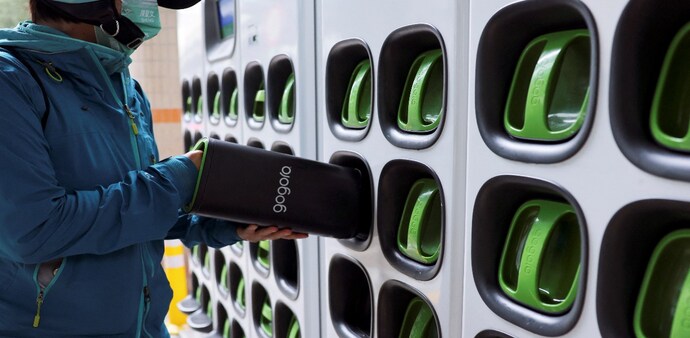
India’s EV revolution needs a dual focus on battery swapping and charging infrastructure.
- Jan 4, 2025,
- Updated Jan 4, 2025 8:13 PM IST
Union Minister of Commerce and Industry Piyush Goyal has emphasised the need for battery swapping facilities to work alongside charging infrastructure to accelerate India’s adoption of electric vehicles (EVs). Speaking at a consultation meeting on Friday, Goyal urged for a nationwide approach to EV infrastructure, envisioning it as a “people’s movement.”
The meeting, co-organised by the Confederation of Indian Industry (CII) and the Department for Promotion of Industry and Internal Trade (DPIIT), explored strategies for the development of robust battery charging and swapping facilities.
“All petrol pumps, CNG stations, and similar facilities should integrate battery swapping and charging infrastructure,” said Goyal. He highlighted how this approach could mitigate vandalism issues and ensure equitable access across regions, avoiding undue concentration in specific urban areas.
The session brought together representatives from leading companies in the EV and battery sectors, including Amara Raja Advanced Cell Technologies, SUN Mobility, Ather Energy, Mahindra & Mahindra, TVS Motor Company, Hero MotoCorp, and Bajaj Auto.
Industry stakeholders shared optimistic projections for the battery swapping sector, which is expected to grow to $20 billion by 2030. They also called for parity in subsidies and incentives for battery-swapping EVs to ensure a level playing field with fixed-battery EV manufacturers.
Technological advancements were a focal point of the discussion. Industry representatives showcased innovations, such as robotics that can replace batteries in just 135 seconds, paving the way for faster and more efficient solutions.
While the potential of battery swapping is promising, safety remains a concern. Stakeholders stressed the importance of accountability and the establishment of clear standards by authorities like the Bureau of Indian Standards (BIS). These measures, they noted, are essential for ensuring the sector’s growth while maintaining user trust and safety.
The meeting also saw participation from Union Minister of State for Heavy Industries and Steel, Bhupathi Raju Srinivasa Varma, and senior officials from various ministries, underscoring the government’s commitment to fostering a sustainable EV ecosystem.
Goyal reiterated that building a robust EV infrastructure should not just be a policy initiative but a collective effort involving the industry and citizens alike.
For Unparalleled coverage of India's Businesses and Economy – Subscribe to Business Today Magazine
Union Minister of Commerce and Industry Piyush Goyal has emphasised the need for battery swapping facilities to work alongside charging infrastructure to accelerate India’s adoption of electric vehicles (EVs). Speaking at a consultation meeting on Friday, Goyal urged for a nationwide approach to EV infrastructure, envisioning it as a “people’s movement.”
The meeting, co-organised by the Confederation of Indian Industry (CII) and the Department for Promotion of Industry and Internal Trade (DPIIT), explored strategies for the development of robust battery charging and swapping facilities.
“All petrol pumps, CNG stations, and similar facilities should integrate battery swapping and charging infrastructure,” said Goyal. He highlighted how this approach could mitigate vandalism issues and ensure equitable access across regions, avoiding undue concentration in specific urban areas.
The session brought together representatives from leading companies in the EV and battery sectors, including Amara Raja Advanced Cell Technologies, SUN Mobility, Ather Energy, Mahindra & Mahindra, TVS Motor Company, Hero MotoCorp, and Bajaj Auto.
Industry stakeholders shared optimistic projections for the battery swapping sector, which is expected to grow to $20 billion by 2030. They also called for parity in subsidies and incentives for battery-swapping EVs to ensure a level playing field with fixed-battery EV manufacturers.
Technological advancements were a focal point of the discussion. Industry representatives showcased innovations, such as robotics that can replace batteries in just 135 seconds, paving the way for faster and more efficient solutions.
While the potential of battery swapping is promising, safety remains a concern. Stakeholders stressed the importance of accountability and the establishment of clear standards by authorities like the Bureau of Indian Standards (BIS). These measures, they noted, are essential for ensuring the sector’s growth while maintaining user trust and safety.
The meeting also saw participation from Union Minister of State for Heavy Industries and Steel, Bhupathi Raju Srinivasa Varma, and senior officials from various ministries, underscoring the government’s commitment to fostering a sustainable EV ecosystem.
Goyal reiterated that building a robust EV infrastructure should not just be a policy initiative but a collective effort involving the industry and citizens alike.
For Unparalleled coverage of India's Businesses and Economy – Subscribe to Business Today Magazine