
‘Fighting wrong tech war’: US founder warns ByteDance's Seedance 2.0 signals a new battlefield
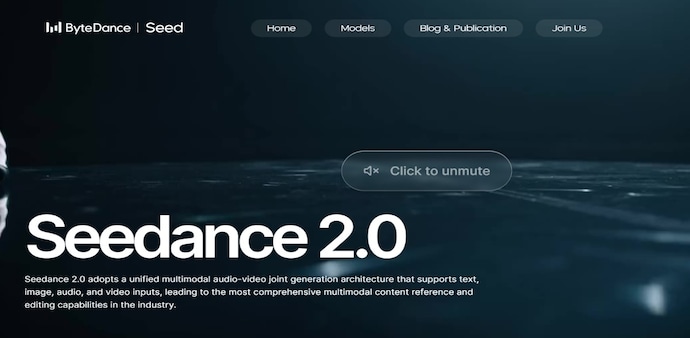
Seedance 2.0 has drawn attention primarily for its ability to generate video and audio simultaneously — a technical departure from most existing systems that create visuals first and add sound later.
- Feb 13, 2026,
- Updated Feb 13, 2026 2:20 PM IST
A fresh debate over the global artificial intelligence race has been triggered by claims that Chinese technology giant ByteDance may be pulling ahead of Western rivals, following the release of its latest AI video-generation model, Seedance 2.0.
The discussion gained traction after entrepreneur Arnaud Bertrand, co-founder of HouseTrip, highlighted the tool’s capabilities in a widely shared post on social media platform X. Bertrand argued that ByteDance — best known globally as the parent company of TikTok — has quietly become “by far” the world’s largest AI company by usage scale.
Scale claims put spotlight on AI competition
According to Bertrand, ByteDance processes an estimated 50 trillion tokens a day across its AI services, a figure he suggested surpasses usage levels at Western players such as OpenAI, Google, and Microsoft.
While such figures are difficult to independently verify, they underscore a broader perception shift: that China’s consumer-driven AI ecosystem may be scaling faster than many observers expected.
Industry watchers have often focused on DeepSeek as a symbol of China’s AI ambitions. However, Bertrand contends that ByteDance’s own consumer-facing AI products command far wider adoption domestically, suggesting a different competitive landscape than the one commonly discussed in Western narratives.
What makes the new tool different
Seedance 2.0 has drawn attention primarily for its ability to generate video and audio simultaneously — a technical departure from most existing systems that create visuals first and add sound later.
This “co-generation” approach allows dialogue, music, sound effects, and imagery to emerge together, producing scenes that appear more cohesive and cinematic.
Another notable feature is improved character consistency, long a stumbling block for AI video. The model reportedly allows multiple visual and audio references to guide how a character looks, moves, and sounds across shots — addressing the uncanny shifts that have plagued earlier tools.
The system is also designed for speed, with short clips generated in under a minute. Such rapid rendering has fueled speculation about hyper-personalised entertainment, where shows or films could theoretically be created in real time based on viewer preferences.
Viral demonstrations and rising concern
Online demonstrations have already gone viral, including one test that generated a fictional fight scene featuring actors Brad Pitt and Tom Cruise, complete with synchronised dialogue.
The realism of such clips has intensified concerns about how quickly generative AI is blurring the boundary between authentic footage and synthetic media.
Lu Huang, an AI consultant and digital film director, offered a stark assessment of the disruption facing creative professionals.
“I studied digital filmmaking for seven years,” Huang said in a statement circulated online, “and I’d say that 90 percent of the skills I learned have now become useless.”
Shift from social media battles to AI rivalry
The timing of the release has added geopolitical undertones. Over the past few years, ByteDance has been at the centre of regulatory tensions in the United States related to TikTok’s ownership and data practices.
Now, some analysts see the company’s AI expansion as evidence that the technological contest between the US and China is moving beyond social media into foundational AI infrastructure and applications.
Experts say tools like Seedance 2.0 could reshape filmmaking, advertising, gaming, and education by drastically lowering production costs and timelines. At the same time, they raise urgent questions around misinformation, copyright, and the future of creative employment.
For Unparalleled coverage of India's Businesses and Economy – Subscribe to Business Today Magazine
A fresh debate over the global artificial intelligence race has been triggered by claims that Chinese technology giant ByteDance may be pulling ahead of Western rivals, following the release of its latest AI video-generation model, Seedance 2.0.
The discussion gained traction after entrepreneur Arnaud Bertrand, co-founder of HouseTrip, highlighted the tool’s capabilities in a widely shared post on social media platform X. Bertrand argued that ByteDance — best known globally as the parent company of TikTok — has quietly become “by far” the world’s largest AI company by usage scale.
Scale claims put spotlight on AI competition
According to Bertrand, ByteDance processes an estimated 50 trillion tokens a day across its AI services, a figure he suggested surpasses usage levels at Western players such as OpenAI, Google, and Microsoft.
While such figures are difficult to independently verify, they underscore a broader perception shift: that China’s consumer-driven AI ecosystem may be scaling faster than many observers expected.
Industry watchers have often focused on DeepSeek as a symbol of China’s AI ambitions. However, Bertrand contends that ByteDance’s own consumer-facing AI products command far wider adoption domestically, suggesting a different competitive landscape than the one commonly discussed in Western narratives.
What makes the new tool different
Seedance 2.0 has drawn attention primarily for its ability to generate video and audio simultaneously — a technical departure from most existing systems that create visuals first and add sound later.
This “co-generation” approach allows dialogue, music, sound effects, and imagery to emerge together, producing scenes that appear more cohesive and cinematic.
Another notable feature is improved character consistency, long a stumbling block for AI video. The model reportedly allows multiple visual and audio references to guide how a character looks, moves, and sounds across shots — addressing the uncanny shifts that have plagued earlier tools.
The system is also designed for speed, with short clips generated in under a minute. Such rapid rendering has fueled speculation about hyper-personalised entertainment, where shows or films could theoretically be created in real time based on viewer preferences.
Viral demonstrations and rising concern
Online demonstrations have already gone viral, including one test that generated a fictional fight scene featuring actors Brad Pitt and Tom Cruise, complete with synchronised dialogue.
The realism of such clips has intensified concerns about how quickly generative AI is blurring the boundary between authentic footage and synthetic media.
Lu Huang, an AI consultant and digital film director, offered a stark assessment of the disruption facing creative professionals.
“I studied digital filmmaking for seven years,” Huang said in a statement circulated online, “and I’d say that 90 percent of the skills I learned have now become useless.”
Shift from social media battles to AI rivalry
The timing of the release has added geopolitical undertones. Over the past few years, ByteDance has been at the centre of regulatory tensions in the United States related to TikTok’s ownership and data practices.
Now, some analysts see the company’s AI expansion as evidence that the technological contest between the US and China is moving beyond social media into foundational AI infrastructure and applications.
Experts say tools like Seedance 2.0 could reshape filmmaking, advertising, gaming, and education by drastically lowering production costs and timelines. At the same time, they raise urgent questions around misinformation, copyright, and the future of creative employment.
For Unparalleled coverage of India's Businesses and Economy – Subscribe to Business Today Magazine