
From Apple to Meta to OpenAI in 7 Months: Who is Ruoming Pang?
After only 7 months at Meta, AI researcher Ruoming Pang is reported to have joined OpenAI.
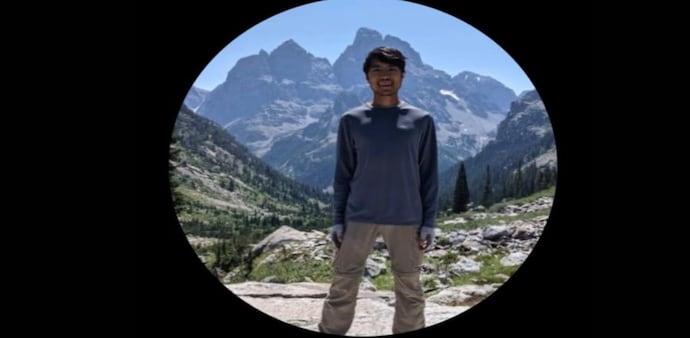
- Feb 26, 2026,
- Updated Feb 26, 2026 5:18 PM IST
In the global race to dominate artificial intelligence, the fiercest competition is no longer just about chips, data centres or consumer products…it is about people.
That was on full display last year when Meta chief executive Mark Zuckerberg launched a massive recruitment drive to build the company’s Superintelligence Labs, a new division focused on developing “personal superintelligence”. The effort drew high-profile figures from across the industry with offers reportedly worth hundreds of millions of dollars.
Among the notable additions were former Scale AI chief executive Alexandr Wang, OpenAI researcher Engj Zhao, credited as a co-creator of ChatGPT and former GitHub chief executive Nat Friedman. One of the most notable recruits, however, was Ruoming Pang, an influential AI architect who joined Meta in July 2025.
A brief but costly stint at Meta
Pang’s tenure at Meta lasted barely seven months despite a compensation package reportedly valued at more than $200 million over several years.
OpenAI has since lured him away after a months-long pursuit, according to a report by The Information. He joined the ChatGPT maker last week, although the company has yet to announce the hire or disclose his role formally.
His departure adds to a growing list of high-profile talent movements across Meta’s AI research efforts, highlighting how even aggressive pay packages do not guarantee retention in a market where experienced leaders in large-scale AI systems remain scarce.
Education and early career
Pang earned a bachelor’s degree in computer science from Shanghai Jiao Tong University, followed by a master’s degree from the University of Southern California. He went on to complete a PhD at Princeton University.
Regarded as one of Silicon Valley’s most accomplished AI infrastructure specialists, Pang’s career spans more than 15 years at Google, followed by senior leadership roles at Apple.
At Google, he worked on foundational systems that underpin the company’s global services. Between 2012 and 2017, he co-founded Zanzibar, Google’s widely used authorisation platform that manages access control across its products. He also contributed to a large-scale search system built on Bigtable, the company’s distributed database technology.
He later joined Apple, where he led the foundation models team for more than four years. According to his LinkedIn profile, he oversaw more than 100 engineers working on core large language models that power Apple Intelligence, the company’s AI platform integrated across devices and services. What his move means for the AI race
Pang’s shift to OpenAI reflects the broader consolidation of elite talent around organisations capable of building and operating frontier models at scale. For Meta, losing a marquee hire so soon after an expensive recruitment push could complicate efforts to accelerate its superintelligence ambitions.
For OpenAI, however, securing a figure with experience across Google’s infrastructure, Apple’s consumer AI stack and Meta’s research ecosystem strengthens its ability to compete in the next phase of the AI race
For Unparalleled coverage of India's Businesses and Economy – Subscribe to Business Today Magazine
In the global race to dominate artificial intelligence, the fiercest competition is no longer just about chips, data centres or consumer products…it is about people.
That was on full display last year when Meta chief executive Mark Zuckerberg launched a massive recruitment drive to build the company’s Superintelligence Labs, a new division focused on developing “personal superintelligence”. The effort drew high-profile figures from across the industry with offers reportedly worth hundreds of millions of dollars.
Among the notable additions were former Scale AI chief executive Alexandr Wang, OpenAI researcher Engj Zhao, credited as a co-creator of ChatGPT and former GitHub chief executive Nat Friedman. One of the most notable recruits, however, was Ruoming Pang, an influential AI architect who joined Meta in July 2025.
A brief but costly stint at Meta
Pang’s tenure at Meta lasted barely seven months despite a compensation package reportedly valued at more than $200 million over several years.
OpenAI has since lured him away after a months-long pursuit, according to a report by The Information. He joined the ChatGPT maker last week, although the company has yet to announce the hire or disclose his role formally.
His departure adds to a growing list of high-profile talent movements across Meta’s AI research efforts, highlighting how even aggressive pay packages do not guarantee retention in a market where experienced leaders in large-scale AI systems remain scarce.
Education and early career
Pang earned a bachelor’s degree in computer science from Shanghai Jiao Tong University, followed by a master’s degree from the University of Southern California. He went on to complete a PhD at Princeton University.
Regarded as one of Silicon Valley’s most accomplished AI infrastructure specialists, Pang’s career spans more than 15 years at Google, followed by senior leadership roles at Apple.
At Google, he worked on foundational systems that underpin the company’s global services. Between 2012 and 2017, he co-founded Zanzibar, Google’s widely used authorisation platform that manages access control across its products. He also contributed to a large-scale search system built on Bigtable, the company’s distributed database technology.
He later joined Apple, where he led the foundation models team for more than four years. According to his LinkedIn profile, he oversaw more than 100 engineers working on core large language models that power Apple Intelligence, the company’s AI platform integrated across devices and services. What his move means for the AI race
Pang’s shift to OpenAI reflects the broader consolidation of elite talent around organisations capable of building and operating frontier models at scale. For Meta, losing a marquee hire so soon after an expensive recruitment push could complicate efforts to accelerate its superintelligence ambitions.
For OpenAI, however, securing a figure with experience across Google’s infrastructure, Apple’s consumer AI stack and Meta’s research ecosystem strengthens its ability to compete in the next phase of the AI race
For Unparalleled coverage of India's Businesses and Economy – Subscribe to Business Today Magazine