
India’s AI talent gap: Only 5,000 core AI engineers in a pool of 20,000, says Xpheno
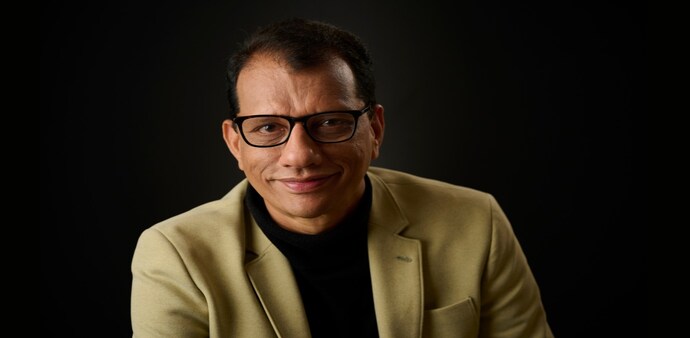
“As agentic AI tools and LLM processes mature, the potential of AI replacing human role-holders will increase,” according to Kamal Karanth, co-founder of Xpheno.
- Feb 10, 2026,
- Updated Feb 10, 2026 11:24 AM IST
India’s push to become a global artificial-intelligence powerhouse is running up against a hard constraint: a shallow pool of core AI engineers.
Out of an estimated 18,000–20,000 professionals in the country with some exposure to AI, only about 4,000–5,000 qualify as “true AI specialists,” according to Xpheno. The rest are largely trained in applying AI tools rather than building models, infrastructure or advanced systems from scratch.
“The impact of AI with respect to India’s talent gap is yet to be seen, or we can say it is a work in progress,” Kamal Karanth, co-founder of Xpheno, told Business Today. “The hiring funnel is yet to be affected by the same.”
The shortage comes at a time when the government is pitching India as home to one of the world’s largest AI-skilled workforces. Recruiters and industry executives say that the headline number masks a structural imbalance. India excels in AI services and implementation, but lacks depth in core engineering and research roles.
“The AI skillset can be divided into two domains, service-based and core AI engineering,” Karanth said. “The core AI roles need more upskilling, as they are the front-end AI roles.”
Under the IndiaAI Mission, the government plans to push universities away from application-level coding toward model-level engineering, with the aim of reducing dependence on foreign intellectual property. More than 500 institutions are expected to update curricula, while programmes such as the PM Research Fellowship are meant to encourage doctoral research.
Entry-level jobs under pressure
The rise of so-called agentic AI, systems that can independently execute tasks, is also reshaping hiring, particularly at the entry level. As companies deploy enterprise AI tools from firms such as OpenAI and Anthropic, concerns about job displacement have intensified across India’s IT services industry.
“The threat of AI replacing human role-holders is high and imminent in these rule-based functions,” Karanth said. “As agentic AI tools and LLM processes mature, the potential of AI replacing human role-holders will increase in this layer.”
Active demand for fresh graduates across sectors is currently below 50,000 roles, he said, with only about a third coming from technology companies. Enterprises are becoming more cautious as they reassess workforce needs, budgets and long-term talent strategies in an AI-driven environment, often offering graduates only short-term or project-based exposure.
Where hiring is concentrated
Despite the slowdown, demand persists in specific areas. According to Xpheno, companies are hiring for software engineering, data engineering, analytics, full-stack development, machine learning and solutions architecture. Interest is also growing in cross-functional roles that combine technical AI expertise with business understanding, enabling teams to design workflows and deploy models at scale.
Another emerging category is AI advisory, covering governance, risk, cost and regulatory impact, areas gaining prominence as enterprises move from pilots to production.
“While we are short on core AI engineering talent, with a bit of AI orientation, India’s techno-functional and multi-functional talent pool can be a competitive advantage,” Karanth said.
For Unparalleled coverage of India's Businesses and Economy – Subscribe to Business Today Magazine
India’s push to become a global artificial-intelligence powerhouse is running up against a hard constraint: a shallow pool of core AI engineers.
Out of an estimated 18,000–20,000 professionals in the country with some exposure to AI, only about 4,000–5,000 qualify as “true AI specialists,” according to Xpheno. The rest are largely trained in applying AI tools rather than building models, infrastructure or advanced systems from scratch.
“The impact of AI with respect to India’s talent gap is yet to be seen, or we can say it is a work in progress,” Kamal Karanth, co-founder of Xpheno, told Business Today. “The hiring funnel is yet to be affected by the same.”
The shortage comes at a time when the government is pitching India as home to one of the world’s largest AI-skilled workforces. Recruiters and industry executives say that the headline number masks a structural imbalance. India excels in AI services and implementation, but lacks depth in core engineering and research roles.
“The AI skillset can be divided into two domains, service-based and core AI engineering,” Karanth said. “The core AI roles need more upskilling, as they are the front-end AI roles.”
Under the IndiaAI Mission, the government plans to push universities away from application-level coding toward model-level engineering, with the aim of reducing dependence on foreign intellectual property. More than 500 institutions are expected to update curricula, while programmes such as the PM Research Fellowship are meant to encourage doctoral research.
Entry-level jobs under pressure
The rise of so-called agentic AI, systems that can independently execute tasks, is also reshaping hiring, particularly at the entry level. As companies deploy enterprise AI tools from firms such as OpenAI and Anthropic, concerns about job displacement have intensified across India’s IT services industry.
“The threat of AI replacing human role-holders is high and imminent in these rule-based functions,” Karanth said. “As agentic AI tools and LLM processes mature, the potential of AI replacing human role-holders will increase in this layer.”
Active demand for fresh graduates across sectors is currently below 50,000 roles, he said, with only about a third coming from technology companies. Enterprises are becoming more cautious as they reassess workforce needs, budgets and long-term talent strategies in an AI-driven environment, often offering graduates only short-term or project-based exposure.
Where hiring is concentrated
Despite the slowdown, demand persists in specific areas. According to Xpheno, companies are hiring for software engineering, data engineering, analytics, full-stack development, machine learning and solutions architecture. Interest is also growing in cross-functional roles that combine technical AI expertise with business understanding, enabling teams to design workflows and deploy models at scale.
Another emerging category is AI advisory, covering governance, risk, cost and regulatory impact, areas gaining prominence as enterprises move from pilots to production.
“While we are short on core AI engineering talent, with a bit of AI orientation, India’s techno-functional and multi-functional talent pool can be a competitive advantage,” Karanth said.
For Unparalleled coverage of India's Businesses and Economy – Subscribe to Business Today Magazine