
Google launches Veo gen AI video model; to challenge OpenAI’s Sora
Google’s Veo AI model sets the pace in generative video technology, leaving OpenAI racing to catch up.
- Dec 5, 2024,
- Updated Dec 5, 2024 7:22 PM IST
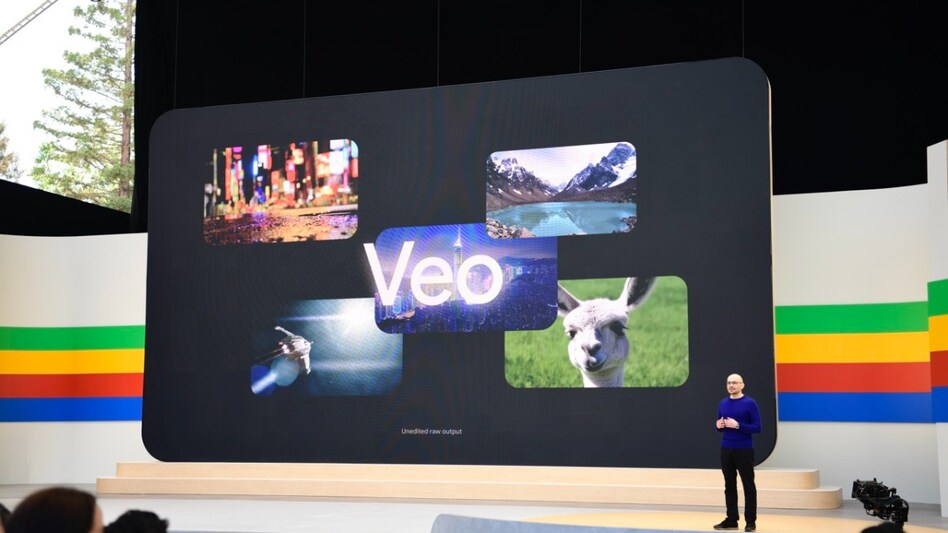
Google’s much-anticipated generative AI video model, Veo, is now available for businesses, marking a significant step forward in AI-driven content creation. Launched in a private preview on Google’s Vertex AI platform, Veo is capable of producing “high-quality” 1080p videos in various cinematic and visual styles based on text or image prompts.
Unveiled in May, just three months after OpenAI teased its competing product, Sora, Veo has now leapfrogged its rival by reaching the market first.
Veo’s standout feature is its ability to maintain consistency in intricate details like patterns, lighting, and object positioning within AI-generated video sequences. A striking example shared by Google showcases a dog moving seamlessly through a scene while retaining consistent fur patterns and a collar.
Google has not specified length restrictions for the clips in its private preview, but earlier demonstrations suggested the capability to create videos “beyond a minute” long.
The announcement also confirms the availability of the latest version of Google’s Imagen 3, a text-to-image generator, which will be accessible to all Google Cloud customers via Vertex starting next week. Imagen 3 now offers advanced features, including prompt-based photo editing and the ability to integrate brand logos, styles, or specific product features into generated images.
Despite Veo’s groundbreaking capabilities, it isn’t without flaws. Google’s announcement highlights occasional anomalies in video rendering, such as lighting inconsistencies. For instance, a demo featuring a concert scene revealed light shining through a character’s hand, indicating areas where the AI model needs refinement.
To address ethical concerns, Veo and Imagen 3 come equipped with built-in safeguards to prevent the generation of harmful or copyrighted content. Additionally, all outputs are embedded with DeepMind’s SynthID technology, a digital watermark aimed at reducing misinformation and content misattribution. This aligns with similar efforts by competitors like Adobe, which employs its Content Credentials system in AI-generated content.
The Race with OpenAI
While Veo’s launch signals Google’s aggressive push into generative AI, OpenAI lags behind in delivering its promised video model, Sora, which was slated for release by the end of 2024. Google’s head start is crucial as businesses increasingly embrace AI-driven content. According to the company, 86% of organizations leveraging generative AI have reported revenue growth, further emphasizing the economic incentives to adopt the technology.
AI-generated content has already made its way into advertising, as seen in Coca-Cola’s recent holiday campaign, signalling a shift in how brands approach video marketing.
For Unparalleled coverage of India's Businesses and Economy – Subscribe to Business Today Magazine
Google’s much-anticipated generative AI video model, Veo, is now available for businesses, marking a significant step forward in AI-driven content creation. Launched in a private preview on Google’s Vertex AI platform, Veo is capable of producing “high-quality” 1080p videos in various cinematic and visual styles based on text or image prompts.
Unveiled in May, just three months after OpenAI teased its competing product, Sora, Veo has now leapfrogged its rival by reaching the market first.
Veo’s standout feature is its ability to maintain consistency in intricate details like patterns, lighting, and object positioning within AI-generated video sequences. A striking example shared by Google showcases a dog moving seamlessly through a scene while retaining consistent fur patterns and a collar.
Google has not specified length restrictions for the clips in its private preview, but earlier demonstrations suggested the capability to create videos “beyond a minute” long.
The announcement also confirms the availability of the latest version of Google’s Imagen 3, a text-to-image generator, which will be accessible to all Google Cloud customers via Vertex starting next week. Imagen 3 now offers advanced features, including prompt-based photo editing and the ability to integrate brand logos, styles, or specific product features into generated images.
Despite Veo’s groundbreaking capabilities, it isn’t without flaws. Google’s announcement highlights occasional anomalies in video rendering, such as lighting inconsistencies. For instance, a demo featuring a concert scene revealed light shining through a character’s hand, indicating areas where the AI model needs refinement.
To address ethical concerns, Veo and Imagen 3 come equipped with built-in safeguards to prevent the generation of harmful or copyrighted content. Additionally, all outputs are embedded with DeepMind’s SynthID technology, a digital watermark aimed at reducing misinformation and content misattribution. This aligns with similar efforts by competitors like Adobe, which employs its Content Credentials system in AI-generated content.
The Race with OpenAI
While Veo’s launch signals Google’s aggressive push into generative AI, OpenAI lags behind in delivering its promised video model, Sora, which was slated for release by the end of 2024. Google’s head start is crucial as businesses increasingly embrace AI-driven content. According to the company, 86% of organizations leveraging generative AI have reported revenue growth, further emphasizing the economic incentives to adopt the technology.
AI-generated content has already made its way into advertising, as seen in Coca-Cola’s recent holiday campaign, signalling a shift in how brands approach video marketing.
For Unparalleled coverage of India's Businesses and Economy – Subscribe to Business Today Magazine