
How Samsung is localising AI appliances for India, one saree and recipe at a time
Samsung is tailoring global AI to India’s cultural needs, featuring saree-recognising washing machines and refrigerators that suggest local recipes.
- Jan 16, 2026,
- Updated Jan 16, 2026 8:44 AM IST
Samsung’s vision of the connected home is currently leaning heavily on artificial intelligence. Refrigerators that recognise ingredients, washing machines that understand fabric types, and appliances that talk to each other seamlessly formed the backbone of the company’s showcase. But for India, a market defined by its cultural complexity and deeply local habits, the real question is whether global AI can truly adapt to regional realities.
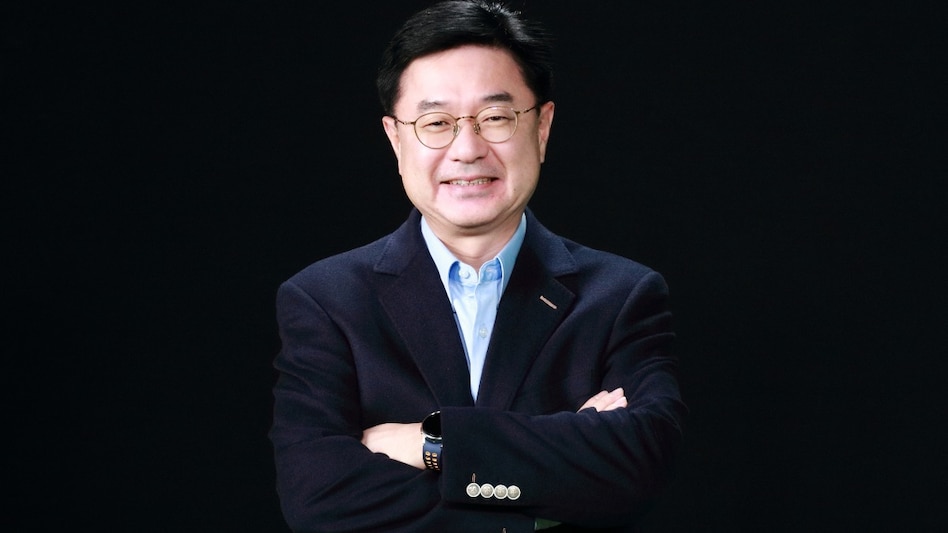
In a conversation with Business Today, JB Park, President and CEO of Samsung Southwest Asia, addressed exactly that. From saree-friendly wash cycles to refrigerators that suggest Indian recipes, Park laid out how Samsung is quietly building India-specific intelligence into its smart appliances, even as it carefully expands its premium portfolio in the country.
The discussion began with a direct question on localisation. India’s diversity in food and clothing presents challenges that generic algorithms often fail to address.
Responding to this, Park was clear that Samsung has already moved beyond a one-size-fits-all approach.
“Yes, there are India-specific features. Like in the washing machine, if you put a saree, the AI detects the textile automatically and does the washing.”
This is a small but significant detail. Sarees, often made from delicate silk, chiffon, or heavily embroidered fabrics, do not behave like Western garments. An AI system trained only on jeans and shirts risks damaging them. By training its washing machines to recognise such textiles, Samsung is effectively embedding cultural awareness into its hardware.
Food, too, is central to how Indian homes function, and Park highlighted how Samsung’s kitchen ecosystem is being tailored to reflect that reality.
“And, in the cooking menus on the microwave oven, we have embedded special recipes.”
The localisation goes beyond preset menus. According to Park, Samsung’s connected appliances are designed to work together in a way that mirrors how Indian households cook.
“So, one of the great things that we demonstrated in BKC, our experience store in Mumbai, is that whatever food ingredient you have in the refrigerator, we have a 32-inch screen that’s on the refrigerator panel, and you can ask Bixby what kind of recipe can I make out of this, and it recommends Indian recipes.”
The process does not stop at suggestion. The refrigerator communicates directly with other appliances, reducing friction in the cooking process.
“It sends (the instructions) automatically to the microwave oven to get this cooking ready, so that you can take out the ingredients, dice it up, and it can also show you on YouTube how to make it, and then you put it in the microwave, and it automatically cooks to that recipe.”
This interconnected flow reflects Samsung’s broader strategy of using AI not as a standalone feature, but as an invisible layer that simplifies everyday routines. In a market where time-saving and convenience are increasingly valued, especially in urban homes, this approach positions AI as practical rather than ornamental.
The conversation then shifted to another concern that often comes up around global tech showcases. Many of the products that draw attention at CES or IFA never seem to reach Indian shelves.
Park acknowledged this gap and explained the reasoning behind it.
“Your second question on why there are so many products that are not being introduced. When I go to IFA or CES, it is mostly displayed for the European and the US market because of bigger houses and premium products.”
Space constraints and lifestyle differences play a major role here. Appliances designed for large Western homes do not always translate well to Indian apartments.
“If we look at India, there are different requirements and different use cases that we need to develop for India.”
Still, the company is not ignoring demand for high-end appliances, particularly from a segment of Indian consumers with global exposure.
“Of course, we have already started selling the combo [washer-dryer] in India, and I am trying to bring in [more premium appliances] to meet customers that lived in the UK, live in the US, and came back to India and have different standards of what they expect versus what they see in the market.”
This returning diaspora, accustomed to integrated washer-dryers and larger appliances, represents a growing niche. Samsung’s strategy appears to be cautious expansion rather than a full-scale premium push.
“So slowly, we are bringing in those premium, larger-sized appliances to India.”
Distribution, however, remains a challenge. Park noted that not every product can be pushed through every retail channel.
“Some of them may not be available in every channel; maybe select partners who are able to sell those products will bring those premium products. Otherwise, it will be stuck in the channel.”
It is a pragmatic view of the Indian retail ecosystem, where shelf space, pricing sensitivity, and after-sales support can determine a product’s success or failure.
Park concluded with a measured commitment rather than a sweeping promise.
“So yes, your comment of not having the full portfolio in India, I think we will gradually build up.”
Taken together, the conversation reveals Samsung’s India strategy as one built on adaptation rather than replication. Instead of simply importing global products, the company is tuning its AI to recognise local fabrics, flavours, and habits, while selectively introducing premium appliances where demand genuinely exists.
For Unparalleled coverage of India's Businesses and Economy – Subscribe to Business Today Magazine
Samsung’s vision of the connected home is currently leaning heavily on artificial intelligence. Refrigerators that recognise ingredients, washing machines that understand fabric types, and appliances that talk to each other seamlessly formed the backbone of the company’s showcase. But for India, a market defined by its cultural complexity and deeply local habits, the real question is whether global AI can truly adapt to regional realities.
In a conversation with Business Today, JB Park, President and CEO of Samsung Southwest Asia, addressed exactly that. From saree-friendly wash cycles to refrigerators that suggest Indian recipes, Park laid out how Samsung is quietly building India-specific intelligence into its smart appliances, even as it carefully expands its premium portfolio in the country.
The discussion began with a direct question on localisation. India’s diversity in food and clothing presents challenges that generic algorithms often fail to address.
Responding to this, Park was clear that Samsung has already moved beyond a one-size-fits-all approach.
“Yes, there are India-specific features. Like in the washing machine, if you put a saree, the AI detects the textile automatically and does the washing.”
This is a small but significant detail. Sarees, often made from delicate silk, chiffon, or heavily embroidered fabrics, do not behave like Western garments. An AI system trained only on jeans and shirts risks damaging them. By training its washing machines to recognise such textiles, Samsung is effectively embedding cultural awareness into its hardware.
Food, too, is central to how Indian homes function, and Park highlighted how Samsung’s kitchen ecosystem is being tailored to reflect that reality.
“And, in the cooking menus on the microwave oven, we have embedded special recipes.”
The localisation goes beyond preset menus. According to Park, Samsung’s connected appliances are designed to work together in a way that mirrors how Indian households cook.
“So, one of the great things that we demonstrated in BKC, our experience store in Mumbai, is that whatever food ingredient you have in the refrigerator, we have a 32-inch screen that’s on the refrigerator panel, and you can ask Bixby what kind of recipe can I make out of this, and it recommends Indian recipes.”
The process does not stop at suggestion. The refrigerator communicates directly with other appliances, reducing friction in the cooking process.
“It sends (the instructions) automatically to the microwave oven to get this cooking ready, so that you can take out the ingredients, dice it up, and it can also show you on YouTube how to make it, and then you put it in the microwave, and it automatically cooks to that recipe.”
This interconnected flow reflects Samsung’s broader strategy of using AI not as a standalone feature, but as an invisible layer that simplifies everyday routines. In a market where time-saving and convenience are increasingly valued, especially in urban homes, this approach positions AI as practical rather than ornamental.
The conversation then shifted to another concern that often comes up around global tech showcases. Many of the products that draw attention at CES or IFA never seem to reach Indian shelves.
Park acknowledged this gap and explained the reasoning behind it.
“Your second question on why there are so many products that are not being introduced. When I go to IFA or CES, it is mostly displayed for the European and the US market because of bigger houses and premium products.”
Space constraints and lifestyle differences play a major role here. Appliances designed for large Western homes do not always translate well to Indian apartments.
“If we look at India, there are different requirements and different use cases that we need to develop for India.”
Still, the company is not ignoring demand for high-end appliances, particularly from a segment of Indian consumers with global exposure.
“Of course, we have already started selling the combo [washer-dryer] in India, and I am trying to bring in [more premium appliances] to meet customers that lived in the UK, live in the US, and came back to India and have different standards of what they expect versus what they see in the market.”
This returning diaspora, accustomed to integrated washer-dryers and larger appliances, represents a growing niche. Samsung’s strategy appears to be cautious expansion rather than a full-scale premium push.
“So slowly, we are bringing in those premium, larger-sized appliances to India.”
Distribution, however, remains a challenge. Park noted that not every product can be pushed through every retail channel.
“Some of them may not be available in every channel; maybe select partners who are able to sell those products will bring those premium products. Otherwise, it will be stuck in the channel.”
It is a pragmatic view of the Indian retail ecosystem, where shelf space, pricing sensitivity, and after-sales support can determine a product’s success or failure.
Park concluded with a measured commitment rather than a sweeping promise.
“So yes, your comment of not having the full portfolio in India, I think we will gradually build up.”
Taken together, the conversation reveals Samsung’s India strategy as one built on adaptation rather than replication. Instead of simply importing global products, the company is tuning its AI to recognise local fabrics, flavours, and habits, while selectively introducing premium appliances where demand genuinely exists.
For Unparalleled coverage of India's Businesses and Economy – Subscribe to Business Today Magazine