
Lava's answer to global memory crisis: More ‘identity’ and personality over extras
Amid rising memory costs, consumers are forced to delay upgrades or settle for lower configurations, while Lava is focusing on design, performance and AI features.
- Sep 23, 2026,
- Updated Sep 23, 2026 4:44 PM IST
The smartphone industry around the world is currently witnessing the biggest challenge amid the memory chip crisis. From increasing component costs to supply-chain pressure, brands have been under pressure to maintain prices across electronic devices. However, the India-based smartphone brand, Lava, thinks the challenge also comes as an opportunity to rethink what consumers actually value, with premium design, performance and practical AI features emerging as key focus areas.
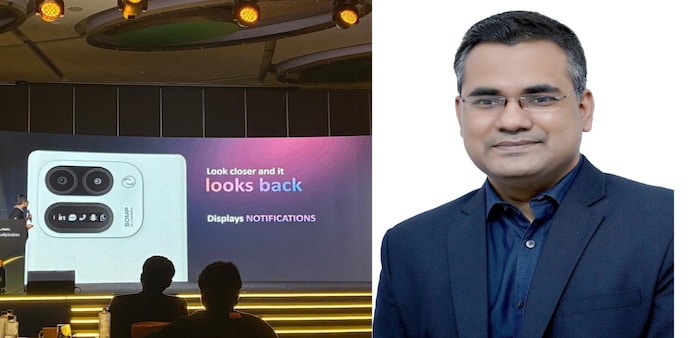
Speaking on the sidelines of the Lava Virat Curve 5G launch, Sumit Singh, SVP and Product Head, Lava told, Business Today that the brand’s focus is to deliver a premium experience without adding unnecessary components and costs, giving its new Virat Curve 5G as the example. The device combines an 184g design, a 6,000mAh battery and a personalised secondary rear display that grabs buyers' attention.
Must read: Lava Virat Curve 5G launched in India at under Rs 25,000
“The core idea of designing this product was to give a feel of premiumness for the consumer,” Singh said, adding that the rear display was intended to give users “some identity with the device”.
“You can write down your name, and then it displays… that's how it's known that it's your phone,” he added.
Memory crisis pressure and consumer behavior
When asked about the global memory chip crisis, Singh highlighted that it is an industry-wide challenge, and that AI companies have “blocked a very big capacity of the memories.” He also noted that it is putting pressure on smartphone manufacturers because the same component suppliers serve multiple major brands.
However, instead of passing the higher costs on to consumers, Lava has redesigned products around essential features based on internal research. Singh highlighted that it has removed less relevant components and features for Indian consumers, and that it focuses on areas such as performance, design, and battery life.
Must read: Smartphone prices may stay high through 2028 as memory crisis threatens cheap phones
However, several smartphone brands are making similar changes and even making specifications and feature compromises to maintain costs. Several brands have also shifted from 8GB RAM variants to 6GB RAM, and we have also seen compromises in internal storage types.
From the consumer end, the supply-chain disruption is also beginning to influence consumer behaviour. Lava highlighted that one-third of consumers are delaying their upgrades in India. Many are also settling for lower-spec models as smartphone prices are skyrocketing. Singh highlighted that a "good" 5G phone that cost around 10,000-12,000 a couple of years ago now costs Rs 18,000-20,000.
Therefore, Lava’s strategy is clear. As consumers become more cautious about upgrades, the company is looking to differentiate through design, performance, AI, and personalisation.
For Unparalleled coverage of India's Businesses and Economy – Subscribe to Business Today Magazine
The smartphone industry around the world is currently witnessing the biggest challenge amid the memory chip crisis. From increasing component costs to supply-chain pressure, brands have been under pressure to maintain prices across electronic devices. However, the India-based smartphone brand, Lava, thinks the challenge also comes as an opportunity to rethink what consumers actually value, with premium design, performance and practical AI features emerging as key focus areas.
Speaking on the sidelines of the Lava Virat Curve 5G launch, Sumit Singh, SVP and Product Head, Lava told, Business Today that the brand’s focus is to deliver a premium experience without adding unnecessary components and costs, giving its new Virat Curve 5G as the example. The device combines an 184g design, a 6,000mAh battery and a personalised secondary rear display that grabs buyers' attention.
Must read: Lava Virat Curve 5G launched in India at under Rs 25,000
“The core idea of designing this product was to give a feel of premiumness for the consumer,” Singh said, adding that the rear display was intended to give users “some identity with the device”.
“You can write down your name, and then it displays… that's how it's known that it's your phone,” he added.
Memory crisis pressure and consumer behavior
When asked about the global memory chip crisis, Singh highlighted that it is an industry-wide challenge, and that AI companies have “blocked a very big capacity of the memories.” He also noted that it is putting pressure on smartphone manufacturers because the same component suppliers serve multiple major brands.
However, instead of passing the higher costs on to consumers, Lava has redesigned products around essential features based on internal research. Singh highlighted that it has removed less relevant components and features for Indian consumers, and that it focuses on areas such as performance, design, and battery life.
Must read: Smartphone prices may stay high through 2028 as memory crisis threatens cheap phones
However, several smartphone brands are making similar changes and even making specifications and feature compromises to maintain costs. Several brands have also shifted from 8GB RAM variants to 6GB RAM, and we have also seen compromises in internal storage types.
From the consumer end, the supply-chain disruption is also beginning to influence consumer behaviour. Lava highlighted that one-third of consumers are delaying their upgrades in India. Many are also settling for lower-spec models as smartphone prices are skyrocketing. Singh highlighted that a "good" 5G phone that cost around 10,000-12,000 a couple of years ago now costs Rs 18,000-20,000.
Therefore, Lava’s strategy is clear. As consumers become more cautious about upgrades, the company is looking to differentiate through design, performance, AI, and personalisation.
For Unparalleled coverage of India's Businesses and Economy – Subscribe to Business Today Magazine