
Mastercard’s ‘Agentic Commerce’ is ready for Indian requirements, says Nitendra Rajput
MasterCard's Nitendra Rajput talks about its autonomous systems, the Agentic Commerce, which is localised for Indian requirements, at the India AI Impact Summit 2026.
- Feb 23, 2026,
- Updated Feb 23, 2026 10:11 AM IST
At the India AI Impact Summit 2026, Mastercard launched its Agentic Commerce framework powered by AI agents. This new ecosystem goes beyond simple product recommendations to find, negotiate and complete transactions on behalf of users.
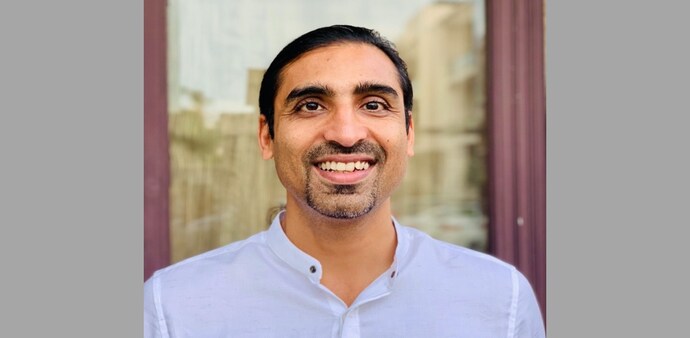
In an interaction with Business Today, Nitendra Rajput, Senior Vice President and Head of Mastercard AI Garage, explained how the company has localised its AI for Indian requirements while also building foundational trust layers for autonomous systems such as Agentic Commerce.
Bringing agentic AI to Tier-2 and Tier-3 India
As the government doubles down on the IndiaAI Mission, tech and payment companies must build agentic systems that are localised and tailored to Indian user needs.
Speaking about localisation, Rajput said, “The first thing the agentic commerce demo asks you is the language you would want to interact in. Since the technology is now so advanced, it can handle interactions in multiple Indian languages, even voice is supported.” The demonstration was showcased at the Bharat Mandapam exhibition zone.
In addition, the system has been built in accordance with Indian regulations, particularly those related to data storage, privacy, and financial compliance. “Mastercard has been in India for many years. We understand the data localisation principles, those are the foundations on which agentic commerce is built,” he added.
Mastercard’s ‘consent layer’ for agentic AI payments and fraud detection
A primary concern with agentic AI is the risk of unauthorised spending. Rajput emphasised that Mastercard’s ecosystem prioritises secure automation and fraud prevention, embedding strict safeguards and user control directly into the payment architecture.
“So Mastercard Agent Pay incorporates tokenisation and passkeys, which are built into the system. It also requires users to explicitly allow those tokens and passkeys to be used,” he said.
He also highlighted the company’s Decision Intelligence platform, which uses behavioural analysis to flag suspicious activity. “It looks at past patterns of consumers and other consumers like you. Then it can detect if a transaction deviates from the usual pattern.”
The system relies on recurrent neural network (RNN) models to analyse user behaviour. “If I see a gambling transaction at 11 AM that doesn’t look like a recurring pattern, it can detect that,” Rajput noted.
It also uses graph-based technology to analyse connections across the entire network, helping identify synthetic identities and sophisticated fraud rings.
Agentic AI is now moving beyond enterprise use cases and can handle real financial transactions autonomously. But what does this mean for jobs in the fintech sector? Rajput acknowledged that “there will be job displacement for sure,” while emphasising that the shift will be less about job losses and more about role transformation.
For Unparalleled coverage of India's Businesses and Economy – Subscribe to Business Today Magazine
At the India AI Impact Summit 2026, Mastercard launched its Agentic Commerce framework powered by AI agents. This new ecosystem goes beyond simple product recommendations to find, negotiate and complete transactions on behalf of users.
In an interaction with Business Today, Nitendra Rajput, Senior Vice President and Head of Mastercard AI Garage, explained how the company has localised its AI for Indian requirements while also building foundational trust layers for autonomous systems such as Agentic Commerce.
Bringing agentic AI to Tier-2 and Tier-3 India
As the government doubles down on the IndiaAI Mission, tech and payment companies must build agentic systems that are localised and tailored to Indian user needs.
Speaking about localisation, Rajput said, “The first thing the agentic commerce demo asks you is the language you would want to interact in. Since the technology is now so advanced, it can handle interactions in multiple Indian languages, even voice is supported.” The demonstration was showcased at the Bharat Mandapam exhibition zone.
In addition, the system has been built in accordance with Indian regulations, particularly those related to data storage, privacy, and financial compliance. “Mastercard has been in India for many years. We understand the data localisation principles, those are the foundations on which agentic commerce is built,” he added.
Mastercard’s ‘consent layer’ for agentic AI payments and fraud detection
A primary concern with agentic AI is the risk of unauthorised spending. Rajput emphasised that Mastercard’s ecosystem prioritises secure automation and fraud prevention, embedding strict safeguards and user control directly into the payment architecture.
“So Mastercard Agent Pay incorporates tokenisation and passkeys, which are built into the system. It also requires users to explicitly allow those tokens and passkeys to be used,” he said.
He also highlighted the company’s Decision Intelligence platform, which uses behavioural analysis to flag suspicious activity. “It looks at past patterns of consumers and other consumers like you. Then it can detect if a transaction deviates from the usual pattern.”
The system relies on recurrent neural network (RNN) models to analyse user behaviour. “If I see a gambling transaction at 11 AM that doesn’t look like a recurring pattern, it can detect that,” Rajput noted.
It also uses graph-based technology to analyse connections across the entire network, helping identify synthetic identities and sophisticated fraud rings.
Agentic AI is now moving beyond enterprise use cases and can handle real financial transactions autonomously. But what does this mean for jobs in the fintech sector? Rajput acknowledged that “there will be job displacement for sure,” while emphasising that the shift will be less about job losses and more about role transformation.
For Unparalleled coverage of India's Businesses and Economy – Subscribe to Business Today Magazine