
Michaela Benthaus becomes world's first 'Parastronaut' aboard Jeff Bezos' Blue Origin space flight
Michaela Benthaus, a 33-year-old German aerospace engineer, has made history by becoming the first wheelchair user to travel to space.
- Dec 22, 2025,
- Updated Dec 22, 2025 4:40 PM IST
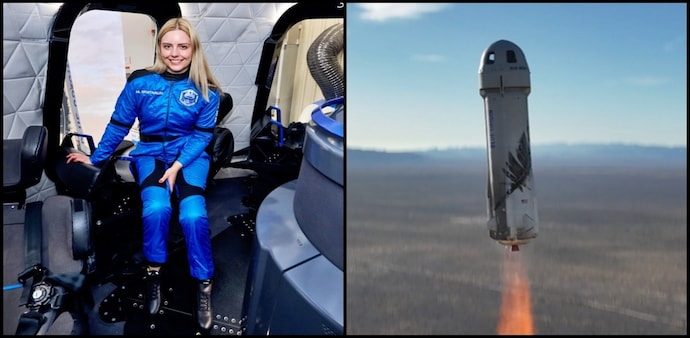
Michaela Benthaus, a 33-year-old German aerospace engineer, has made history by becoming the first wheelchair user to travel to space. The landmark mission took place on Saturday, 20th December, aboard Blue Origin’s New Shepard rocket, marking a transformative moment for inclusivity in the final frontier.
Benthaus, who works for the European Space Agency (ESA), reached an altitude of approximately 105 kilometres crossing the Kármán line, the internationally recognised boundary of outer space. The suborbital flight, designated NS-37, launched from a private site in West Texas and lasted roughly 11 minutes.
A lifelong space enthusiast, Benthaus’s path to the stars was nearly derailed seven years ago following a spinal cord injury sustained in a mountain biking accident. Despite using a wheelchair, she remained dedicated to her career in mechatronics and aerospace engineering, eventually joining the crew of six on Jeff Bezos’s latest commercial flight.
During the mission, Benthaus experienced several minutes of weightlessness. To ensure her safety and mobility, the company made minor but vital modifications to the capsule, including the addition of a patient transfer board to help her move between the hatch and her seat. She also utilised a specialised strap to keep her legs secure while floating, allowing her to focus on the "breathtaking" views of the Earth.
Speaking shortly after her capsule touched down in the Texas desert, an exuberant Benthaus described the journey as "the coolest experience ever."
"I think you should never give up on your dreams," she said. "After my accident, I realised just how inaccessible our world still is. If we want an inclusive society, we should be inclusive in every part of it—including space."
Benthaus was accompanied on the flight by Hans Koenigsmann, a former SpaceX executive and fellow German engineer, who acted as her designated emergency helper.
The Future of Accessible Flight
While the European Space Agency is currently training John McFall, a British amputee, for a future mission to the International Space Station, Benthaus’s private flight represents the first time a person with paraplegia has reached space.
Industry experts suggest the success of the NS-37 mission will set a new precedent for "parastronaut" safety protocols. By demonstrating that high-performance spaceflight is possible without traditional physical requirements, Benthaus has opened the door for a more diverse generation of explorers to look beyond the Earth's atmosphere.
For Unparalleled coverage of India's Businesses and Economy – Subscribe to Business Today Magazine
Michaela Benthaus, a 33-year-old German aerospace engineer, has made history by becoming the first wheelchair user to travel to space. The landmark mission took place on Saturday, 20th December, aboard Blue Origin’s New Shepard rocket, marking a transformative moment for inclusivity in the final frontier.
Benthaus, who works for the European Space Agency (ESA), reached an altitude of approximately 105 kilometres crossing the Kármán line, the internationally recognised boundary of outer space. The suborbital flight, designated NS-37, launched from a private site in West Texas and lasted roughly 11 minutes.
A lifelong space enthusiast, Benthaus’s path to the stars was nearly derailed seven years ago following a spinal cord injury sustained in a mountain biking accident. Despite using a wheelchair, she remained dedicated to her career in mechatronics and aerospace engineering, eventually joining the crew of six on Jeff Bezos’s latest commercial flight.
During the mission, Benthaus experienced several minutes of weightlessness. To ensure her safety and mobility, the company made minor but vital modifications to the capsule, including the addition of a patient transfer board to help her move between the hatch and her seat. She also utilised a specialised strap to keep her legs secure while floating, allowing her to focus on the "breathtaking" views of the Earth.
Speaking shortly after her capsule touched down in the Texas desert, an exuberant Benthaus described the journey as "the coolest experience ever."
"I think you should never give up on your dreams," she said. "After my accident, I realised just how inaccessible our world still is. If we want an inclusive society, we should be inclusive in every part of it—including space."
Benthaus was accompanied on the flight by Hans Koenigsmann, a former SpaceX executive and fellow German engineer, who acted as her designated emergency helper.
The Future of Accessible Flight
While the European Space Agency is currently training John McFall, a British amputee, for a future mission to the International Space Station, Benthaus’s private flight represents the first time a person with paraplegia has reached space.
Industry experts suggest the success of the NS-37 mission will set a new precedent for "parastronaut" safety protocols. By demonstrating that high-performance spaceflight is possible without traditional physical requirements, Benthaus has opened the door for a more diverse generation of explorers to look beyond the Earth's atmosphere.
For Unparalleled coverage of India's Businesses and Economy – Subscribe to Business Today Magazine