
Microsoft, Apple, banks and more hit by tech outages: Ways to protect your online accounts
You may not be able to access your bank account, open a work app or use an online service when a major technology outage strikes. But the bigger concern is what happens when such disruptions confuse you.
- Nov 18, 2026,
- Updated Nov 18, 2026 12:59 PM IST
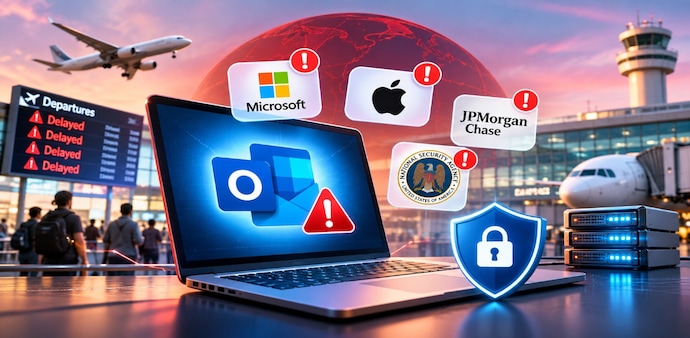
A sudden technology outage can leave you wondering whether your emails, bank accounts, personal data or other online services are safe. With major companies and institutions, including Microsoft, Apple, JPMorgan Chase and the US National Security Agency (NSA), facing technology disruptions and cybersecurity incidents, concerns around digital security are growing.
While an outage does not necessarily mean a cyberattack has taken place, it can create an opportunity for scammers to take advantage of users who are already worried about their accounts. Artificial intelligence (AI) is adding another layer to the problem by making it easier to identify software vulnerabilities that attackers could exploit.
MUST READ | ‘One has nothing to do with the other’: Marco Rubio on US tech outages, dismisses fears of ‘systemic attack’
How to protect your online accounts
You cannot prevent every cyber threat, particularly when a service provider has a security flaw. However, a few precautions can make it harder for attackers to access your accounts and misuse your personal information.
Use a different password for every account - Avoid using the same password across your email, banking, shopping and social media accounts. If one website suffers a data breach, reused passwords could put your other accounts at risk. Use strong, unique passwords for different services.
Enable multi-factor authentication - A password alone may not be enough to protect your account. Turn on multi-factor authentication (MFA) wherever it is available. It adds another verification step, such as a one-time code or security key, making unauthorised access more difficult.
Keep your devices and software updated - Turn on automatic security updates on your smartphone, computer and home router. Also check whether your apps and connected home devices are running the latest available software. Updates often include fixes for security vulnerabilities that attackers could otherwise exploit.
Monitor your bank and financial transactions - Regularly check your bank statements, card payments and online transactions. Look out for unfamiliar payments or activity you do not recognise. Report suspicious transactions to your bank immediately.
Verify urgent security messages before clicking - Scammers may use news of a major outage to send fake messages claiming that your account has been compromised. Do not click links in unexpected emails, SMS messages or social media messages asking you to verify your account. Instead, open the company’s official app or type its website address yourself.
Consider switching to passkeys - Where supported, consider using passkeys instead of relying only on passwords. They are designed to resist phishing attacks and can make signing in more secure. The American Bankers Association’s Paul Benda also recommends considering passkeys and avoiding password reuse across shopping websites.
Be careful about where you enter your login details - Before signing in, check that you are using the genuine website or official application. Avoid unfamiliar links, suspicious login pages and messages that pressure you into sharing passwords or verification codes.
DON’T MISS | Apple says internal software update caused global outage, rules out cyberattack claims
Why fixing security vulnerabilities is not always easy
While you can take steps to secure your accounts, you have little control over vulnerabilities within the digital services you use. Fixing these weaknesses is largely the responsibility of the companies that develop and operate these platforms.
The growing use of AI is making the challenge more complex. It is becoming easier to identify software vulnerabilities, but addressing them across interconnected systems is not always straightforward. Daniel Gardham, a lecturer at the University of Surrey’s Centre for Cyber Security, told Reuters that identifying vulnerabilities is becoming easier, while fixing them across multiple systems remains difficult.
For you, this makes basic digital safety measures all the more important. Keeping devices updated, using additional account verification and checking the authenticity of unexpected security messages can help reduce the risk of falling victim to online scams.
For Unparalleled coverage of India's Businesses and Economy – Subscribe to Business Today Magazine