
Microsoft’s Nvidia-powered Surface Ultra laptop put a price on its hybrid AI ambitions: All details
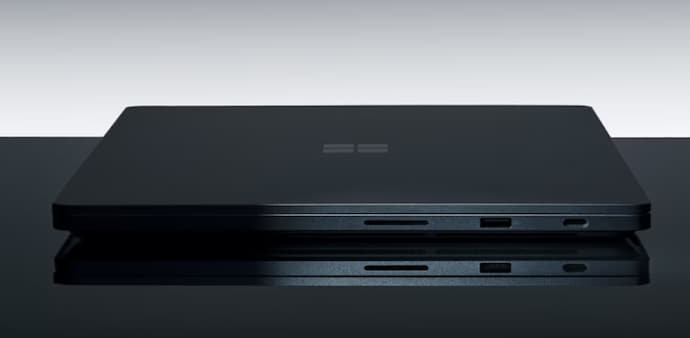
The new Surface Ultra is the result of a partnership between Microsoft and Nvidia that brings a high-performance workstation tailored for developers, creators, and AI researchers.
- Oct 8, 2026,
- Updated Oct 8, 2026 10:43 AM IST
Microsoft announced a new Nvidia artificial intelligence (AI) powered Surface Ultra laptop that expands the company’s vision for hybrid intelligence, combining on-device AI processing with cloud-based capabilities to power AI agents across Windows. Alongside the new AI PC, Microsoft also announced a new workstation powered by the RTX Spark chip, that includes Microsoft dev tools like VS Code, GitHub Copilot CLI, WSL, and PowerShell 7.
Alongside new powerful devices, the company also showcased the revamped version of Windows 11 with a new sandboxing feature called “Execution Containers,” Search Customization, UI changes, enhanced privacy, and more.
Must read: Microsoft launches new Surface Pro 12 and Laptop 13 with Snapdragon X2 Plus: Key upgrades explained
Microsoft Surface Ultra laptop: What you need to know
The new Surface Ultra is the result of a partnership between Microsoft and Nvidia that brings a high-performance workstation tailored for developers, creators, and AI researchers. The laptop is powered by an Arm-based system-on-chip featuring the brand-new Nvidia RTX Spark platform paired with up to a 20-core Nvidia Grace CPU configuration and an Nvidia Blackwell RTX GPU.
The device can run local LLMs and AI agents with over 120 billion parameters completely on-device, which eliminates recurring cloud computing costs. Microsoft claims the architecture delivers 99% of its maximum performance even when unplugged from a wall outlet.
Microsoft claims the Spark outpaces Apple’s M5 Pro-powered MacBook Pro, delivering up to 2.1x faster first-token generation, 4.3x faster image generation, and 6.2x faster video generation.
Must read: Nvidia launches Open Agent Safety Platform to keep AI agents within boundaries
The Microsoft Surface Ultra laptop comes in three configurations, starting at $2,599 for an 18-core CPU, 24GB RAM, and 512GB Storage. The price goes up to $5,899 for a 20-core CPU, 128GB RAM, and 1TB Storage.
Hybrid Intelligence: What is it?
During the event, Windows head Pavan Davuluri also showcased its new agentic AI push with Hybrid Intelligence. According to Microsoft’s blog post, Hybrid Intelligence is a Windows architecture that is designed to seamlessly bridge the gap between local, on-device AI hardware and remote cloud intelligence.
The architecture enables AI agents to run directly on the laptop while others run in the cloud. This could reduce the number of tokens sent to cloud AI models, potentially making AI cheaper and more efficient.
Microsoft says Windows ML will become the software runtime that allows AI models to run across different types of hardware, including GPUs, NPUs, and CPUs. Copilot would also be able to automatically choose the right AI model depending on how difficult the task is.
This means Windows could intelligently decide whether a task should be handled locally on the PC or remotely in the cloud, depending on its complexity. This could make AI faster, more efficient, and potentially less expensive to operate.
For Unparalleled coverage of India's Businesses and Economy – Subscribe to Business Today Magazine
Microsoft announced a new Nvidia artificial intelligence (AI) powered Surface Ultra laptop that expands the company’s vision for hybrid intelligence, combining on-device AI processing with cloud-based capabilities to power AI agents across Windows. Alongside the new AI PC, Microsoft also announced a new workstation powered by the RTX Spark chip, that includes Microsoft dev tools like VS Code, GitHub Copilot CLI, WSL, and PowerShell 7.
Alongside new powerful devices, the company also showcased the revamped version of Windows 11 with a new sandboxing feature called “Execution Containers,” Search Customization, UI changes, enhanced privacy, and more.
Must read: Microsoft launches new Surface Pro 12 and Laptop 13 with Snapdragon X2 Plus: Key upgrades explained
Microsoft Surface Ultra laptop: What you need to know
The new Surface Ultra is the result of a partnership between Microsoft and Nvidia that brings a high-performance workstation tailored for developers, creators, and AI researchers. The laptop is powered by an Arm-based system-on-chip featuring the brand-new Nvidia RTX Spark platform paired with up to a 20-core Nvidia Grace CPU configuration and an Nvidia Blackwell RTX GPU.
The device can run local LLMs and AI agents with over 120 billion parameters completely on-device, which eliminates recurring cloud computing costs. Microsoft claims the architecture delivers 99% of its maximum performance even when unplugged from a wall outlet.
Microsoft claims the Spark outpaces Apple’s M5 Pro-powered MacBook Pro, delivering up to 2.1x faster first-token generation, 4.3x faster image generation, and 6.2x faster video generation.
Must read: Nvidia launches Open Agent Safety Platform to keep AI agents within boundaries
The Microsoft Surface Ultra laptop comes in three configurations, starting at $2,599 for an 18-core CPU, 24GB RAM, and 512GB Storage. The price goes up to $5,899 for a 20-core CPU, 128GB RAM, and 1TB Storage.
Hybrid Intelligence: What is it?
During the event, Windows head Pavan Davuluri also showcased its new agentic AI push with Hybrid Intelligence. According to Microsoft’s blog post, Hybrid Intelligence is a Windows architecture that is designed to seamlessly bridge the gap between local, on-device AI hardware and remote cloud intelligence.
The architecture enables AI agents to run directly on the laptop while others run in the cloud. This could reduce the number of tokens sent to cloud AI models, potentially making AI cheaper and more efficient.
Microsoft says Windows ML will become the software runtime that allows AI models to run across different types of hardware, including GPUs, NPUs, and CPUs. Copilot would also be able to automatically choose the right AI model depending on how difficult the task is.
This means Windows could intelligently decide whether a task should be handled locally on the PC or remotely in the cloud, depending on its complexity. This could make AI faster, more efficient, and potentially less expensive to operate.
For Unparalleled coverage of India's Businesses and Economy – Subscribe to Business Today Magazine