
Nirmala Sitharaman flags deepfake videos of herself, urges fintechs to strengthen AI defences and trust safeguards
Finance Minister Nirmala Sitharaman warns of AI-driven fraud and calls for stronger defences against deepfakes.
- Oct 8, 2025,
- Updated Oct 8, 2025 11:35 AM IST
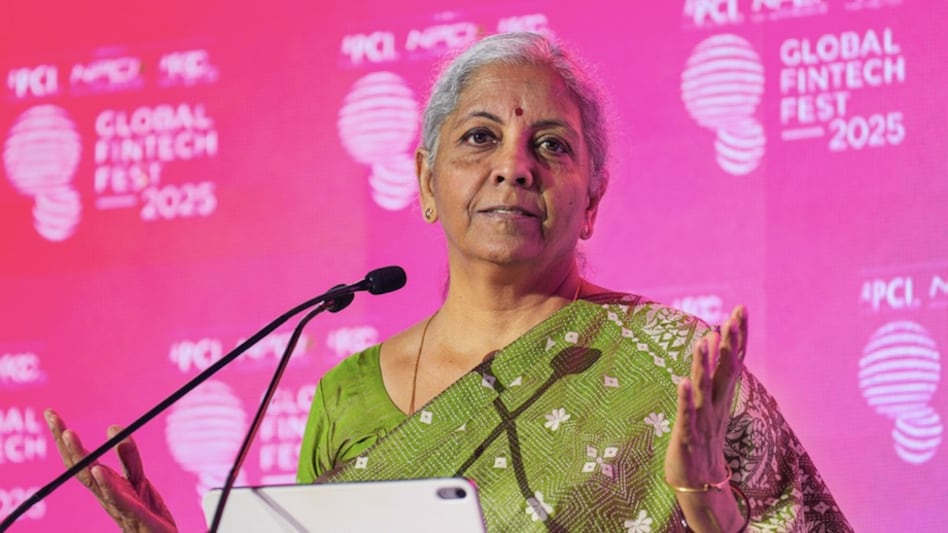
Finance Minister Nirmala Sitharaman on Tuesday revealed that several deepfake videos of her have been circulating online, manipulated to mislead citizens and distort facts. Speaking at the 6th Global FinTech Fest 2025 in Mumbai, she said the rise of such content highlights the urgency of strengthening digital trust and security frameworks.
“The new generation of fraud is no longer about breaching firewalls; it is about hacking trust,” the minister said. “Criminals are using AI to mimic voices, clone identities, and create lifelike videos that can manipulate people.”
To address rising cases of impersonation and fraudulent representation targeting investors, Sitharaman welcomed initiatives launched by market regulators and payment authorities. She noted that the Securities and Exchange Board of India (SEBI) and the National Payments Corporation of India (NPCI) have introduced a dedicated UPI handle for SEBI-registered investor-facing intermediaries, featuring category suffixes such as .brk for brokers and .mf for mutual funds.
She said that major brokers covering over 90 per cent of investors and all mutual funds have already enabled the new payment handle. “The valid handle establishes a verified, secure payment channel in the securities market while preserving existing payment options, improving safety and accessibility without disrupting user preference,” Sitharaman explained.
Additionally, SEBI has launched a new service called “SEBI Check”, allowing investors to verify the UPI IDs and bank account details of registered intermediaries before making payments. The verification is available through SEBI’s web portal and the Saarthi app and works across UPI, NEFT, RTGS, and IMPS platforms. The framework incorporates privacy-preserving verification, secure processing, audit trails, and continuous improvement based on user feedback.
“This is a good moment to reflect on what kind of financial future we wish to build and how do we get there,” Sitharaman said, calling on fintech companies to focus on fundamentals such as revenue growth, innovation, profitability, risk management, and compliance. “Responsible regulation is not a brake on progress; it is a seatbelt for safe acceleration,” she added.
The Finance Minister also highlighted how the government has fostered fintech innovation through policy support, digital public infrastructure, and forward-looking regulation. “Aadhaar, UPI, Account Aggregator Framework, and DigiLocker have decisively changed how public finance is handled for the betterment of citizens,” she said.
She also pointed to India’s growing strength in artificial intelligence. “India has stepped decisively into the global AI arena with the launch of the $1.3 billion IndiaAI Mission,” Sitharaman noted, adding that the country contributes 16 per cent of global AI talent and ranks among the top three talent markets.
Indians are the second-largest contributors to public GenAI projects on GitHub, while AI-enabled Global Capability Centres (GCCs) are projected to generate 30 to 35 per cent of India’s AI services revenue by 2028. “Thus, India has the potential for becoming the global hub for building various AI products and services,” she said.
Sitharaman concluded that India offers an ideal environment for developing and testing AI-driven fintech solutions. “The country also provides an unparalleled opportunity for Fintech GCCs to scale innovation, as we have a deep talent base and favourable government policies,” she added.
For Unparalleled coverage of India's Businesses and Economy – Subscribe to Business Today Magazine
Finance Minister Nirmala Sitharaman on Tuesday revealed that several deepfake videos of her have been circulating online, manipulated to mislead citizens and distort facts. Speaking at the 6th Global FinTech Fest 2025 in Mumbai, she said the rise of such content highlights the urgency of strengthening digital trust and security frameworks.
“The new generation of fraud is no longer about breaching firewalls; it is about hacking trust,” the minister said. “Criminals are using AI to mimic voices, clone identities, and create lifelike videos that can manipulate people.”
To address rising cases of impersonation and fraudulent representation targeting investors, Sitharaman welcomed initiatives launched by market regulators and payment authorities. She noted that the Securities and Exchange Board of India (SEBI) and the National Payments Corporation of India (NPCI) have introduced a dedicated UPI handle for SEBI-registered investor-facing intermediaries, featuring category suffixes such as .brk for brokers and .mf for mutual funds.
She said that major brokers covering over 90 per cent of investors and all mutual funds have already enabled the new payment handle. “The valid handle establishes a verified, secure payment channel in the securities market while preserving existing payment options, improving safety and accessibility without disrupting user preference,” Sitharaman explained.
Additionally, SEBI has launched a new service called “SEBI Check”, allowing investors to verify the UPI IDs and bank account details of registered intermediaries before making payments. The verification is available through SEBI’s web portal and the Saarthi app and works across UPI, NEFT, RTGS, and IMPS platforms. The framework incorporates privacy-preserving verification, secure processing, audit trails, and continuous improvement based on user feedback.
“This is a good moment to reflect on what kind of financial future we wish to build and how do we get there,” Sitharaman said, calling on fintech companies to focus on fundamentals such as revenue growth, innovation, profitability, risk management, and compliance. “Responsible regulation is not a brake on progress; it is a seatbelt for safe acceleration,” she added.
The Finance Minister also highlighted how the government has fostered fintech innovation through policy support, digital public infrastructure, and forward-looking regulation. “Aadhaar, UPI, Account Aggregator Framework, and DigiLocker have decisively changed how public finance is handled for the betterment of citizens,” she said.
She also pointed to India’s growing strength in artificial intelligence. “India has stepped decisively into the global AI arena with the launch of the $1.3 billion IndiaAI Mission,” Sitharaman noted, adding that the country contributes 16 per cent of global AI talent and ranks among the top three talent markets.
Indians are the second-largest contributors to public GenAI projects on GitHub, while AI-enabled Global Capability Centres (GCCs) are projected to generate 30 to 35 per cent of India’s AI services revenue by 2028. “Thus, India has the potential for becoming the global hub for building various AI products and services,” she said.
Sitharaman concluded that India offers an ideal environment for developing and testing AI-driven fintech solutions. “The country also provides an unparalleled opportunity for Fintech GCCs to scale innovation, as we have a deep talent base and favourable government policies,” she added.
For Unparalleled coverage of India's Businesses and Economy – Subscribe to Business Today Magazine