
No humans, no joysticks: How AI just planned Perseverance’s Mars journey
Traditionally, driving a rover on Mars is a slow and cautious process. Because Mars is, on average, 140 million miles (225 million kilometers) from Earth, commands can’t be sent in real time.
- Feb 1, 2026,
- Updated Feb 1, 2026 10:06 PM IST
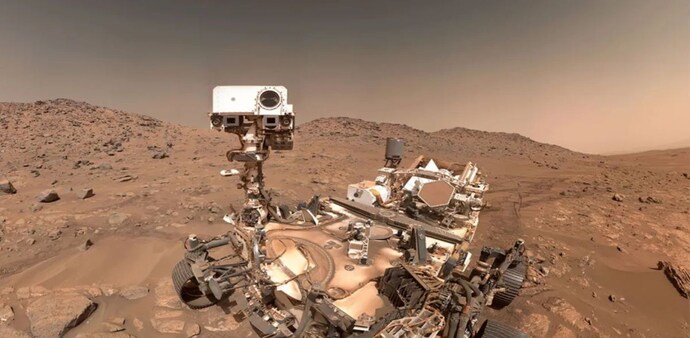
NASA’s Perseverance rover has achieved a major first in space exploration: completing drives on Mars that were planned entirely by artificial intelligence, without human route planners guiding every step. The milestone marks a leap forward in autonomous planetary navigation and shows how AI can make complex decisions in environments millions of miles away from Earth.
Traditionally, driving a rover on Mars is a slow and cautious process. Because Mars is, on average, 140 million miles (225 million kilometers) from Earth, commands can’t be sent in real time. Engineers must plan each route in advance, breaking it into short waypoints — usually no more than 330 feet (100 meters) apart — to avoid hazards such as sharp rocks, sand ripples, steep slopes, and uneven ground.
This manual planning takes significant time and limits how far a rover can travel in a single Martian day.
How AI took over the planning
To overcome these limits, NASA’s Jet Propulsion Laboratory (JPL) tested a generative AI system to handle route planning. Instead of relying on human planners, the AI analyzed:
- High-resolution images from the HiRISE camera on the Mars Reconnaissance Orbiter
- Terrain slope data from digital elevation models
Using this information, the system generated a continuous driving path and a full set of waypoints for Perseverance — effectively replacing the manual planning process.
Seeing & understanding Martian terrain
The AI relied on vision-language models to identify and interpret key terrain features, including boulder fields, exposed bedrock, rocky outcrops, and sand ripples. Based on these observations, it determined which paths were safe and efficient for the rover to follow.
Before the commands were sent to Mars, NASA engineers tested them using a digital twin — a virtual replica of Perseverance. This simulation checked more than 500,000 telemetry variables to confirm the AI’s plan would work safely with the rover’s flight software.
AI’s first autonomous drives
During the demonstration, Perseverance completed two AI-planned drives:
- 689 feet (210 meters) on December 8
- 807 feet (246 meters) on December 10
Throughout these drives, the AI managed core navigation functions such as perception, localization, and path planning. According to JPL roboticist Vandi Verma, the technology could eventually enable kilometer-scale drives while also flagging scientifically interesting features from the massive volumes of images collected by the rover.
Matt Wallace, manager of JPL’s Exploration Systems Office, says the demonstration shows how intelligent systems could operate across multiple planetary platforms — from rovers and helicopters to drones and other surface vehicles.
For Unparalleled coverage of India's Businesses and Economy – Subscribe to Business Today Magazine
NASA’s Perseverance rover has achieved a major first in space exploration: completing drives on Mars that were planned entirely by artificial intelligence, without human route planners guiding every step. The milestone marks a leap forward in autonomous planetary navigation and shows how AI can make complex decisions in environments millions of miles away from Earth.
Traditionally, driving a rover on Mars is a slow and cautious process. Because Mars is, on average, 140 million miles (225 million kilometers) from Earth, commands can’t be sent in real time. Engineers must plan each route in advance, breaking it into short waypoints — usually no more than 330 feet (100 meters) apart — to avoid hazards such as sharp rocks, sand ripples, steep slopes, and uneven ground.
This manual planning takes significant time and limits how far a rover can travel in a single Martian day.
How AI took over the planning
To overcome these limits, NASA’s Jet Propulsion Laboratory (JPL) tested a generative AI system to handle route planning. Instead of relying on human planners, the AI analyzed:
- High-resolution images from the HiRISE camera on the Mars Reconnaissance Orbiter
- Terrain slope data from digital elevation models
Using this information, the system generated a continuous driving path and a full set of waypoints for Perseverance — effectively replacing the manual planning process.
Seeing & understanding Martian terrain
The AI relied on vision-language models to identify and interpret key terrain features, including boulder fields, exposed bedrock, rocky outcrops, and sand ripples. Based on these observations, it determined which paths were safe and efficient for the rover to follow.
Before the commands were sent to Mars, NASA engineers tested them using a digital twin — a virtual replica of Perseverance. This simulation checked more than 500,000 telemetry variables to confirm the AI’s plan would work safely with the rover’s flight software.
AI’s first autonomous drives
During the demonstration, Perseverance completed two AI-planned drives:
- 689 feet (210 meters) on December 8
- 807 feet (246 meters) on December 10
Throughout these drives, the AI managed core navigation functions such as perception, localization, and path planning. According to JPL roboticist Vandi Verma, the technology could eventually enable kilometer-scale drives while also flagging scientifically interesting features from the massive volumes of images collected by the rover.
Matt Wallace, manager of JPL’s Exploration Systems Office, says the demonstration shows how intelligent systems could operate across multiple planetary platforms — from rovers and helicopters to drones and other surface vehicles.
For Unparalleled coverage of India's Businesses and Economy – Subscribe to Business Today Magazine