
Nvidia CEO Jensen Huang says children may not need to learn basic math in this AI era
As AI takes over calculations and routine academic tasks, a growing debate is emerging over whether students should prioritise traditional mathematical skills or develop new capabilities instead.
- Sep 30, 2026,
- Updated Sep 30, 2026 9:00 AM IST
Artificial intelligence is increasingly taking over tasks that once required students to rely on memory and practice, from solving homework problems to doing basic calculations.
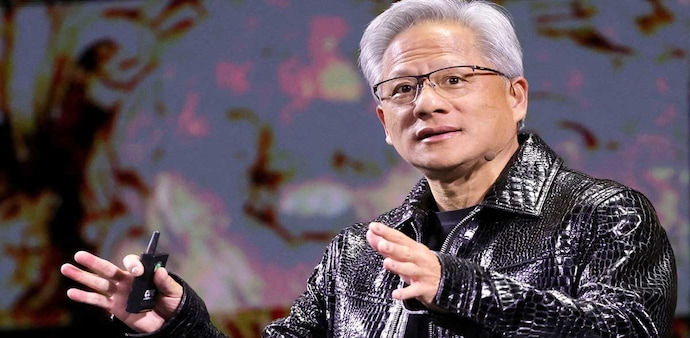
Jensen Huang, CEO of Nvidia, thinks this change could ultimately affect the skills people need to acquire. When speaking on The Ezra Klein Show, Huang admitted that children are becoming less familiar with certain fundamental mathematical skills as AI tools become more widely available. He gave examples such as performing long division, knowing multiplication tables, and calculating square roots.
Must Read: Nvidia launches Open Agent Safety Platform to keep AI agents within boundaries
Instead of seeing the change as a serious issue, Huang suggested the skills being lost could be replaced with abilities more useful in a world where AI takes over routine tasks.
‘Basic math is being forgotten’
Huang was asked about children relying less on their own abilities as AI tools become more common. His response was blunt, “Basic math is being forgotten.” He specifically pointed to long division, multiplication tables and square roots.
When asked whether that mattered, Huang said, “I don’t think it does.” He added that while some skills would remain important, traditional mathematical abilities such as long division might not. “We’re going to discover new ones. Just maybe not those,” he said.
His argument comes as research raises questions about AI's effect on learning. A study of 26,000 students in China found that AI helped them finish homework faster, but their exam scores fell by as much as 20% over six months.
From remembering numbers to thinking in systems
Huang also said he does not know his home address or phone number. Recalling an incident when he needed his ZIP code while getting petrol, he said, “I didn’t know my ZIP code.” He said his wife Lori Huang and assistant Janine Paul could confirm this.
For Huang, forgetting such information can be acceptable if AI enables people to develop different capabilities. He said, “I think that we’re going to lose some finer intellectual dexterity, but we’re going to be better systems thinkers.”
That argument, however, raises an important question for education - if AI handles calculations, how much mathematical understanding should students retain? Basic maths isn't only about arriving at an answer, but it can also help people reason through problems and recognise when an AI-generated answer doesn't make sense. As AI becomes more capable, schools may increasingly have to decide where technology should assist learning - and where students still need to do the thinking themselves.
For Unparalleled coverage of India's Businesses and Economy – Subscribe to Business Today Magazine
Artificial intelligence is increasingly taking over tasks that once required students to rely on memory and practice, from solving homework problems to doing basic calculations.
Jensen Huang, CEO of Nvidia, thinks this change could ultimately affect the skills people need to acquire. When speaking on The Ezra Klein Show, Huang admitted that children are becoming less familiar with certain fundamental mathematical skills as AI tools become more widely available. He gave examples such as performing long division, knowing multiplication tables, and calculating square roots.
Must Read: Nvidia launches Open Agent Safety Platform to keep AI agents within boundaries
Instead of seeing the change as a serious issue, Huang suggested the skills being lost could be replaced with abilities more useful in a world where AI takes over routine tasks.
‘Basic math is being forgotten’
Huang was asked about children relying less on their own abilities as AI tools become more common. His response was blunt, “Basic math is being forgotten.” He specifically pointed to long division, multiplication tables and square roots.
When asked whether that mattered, Huang said, “I don’t think it does.” He added that while some skills would remain important, traditional mathematical abilities such as long division might not. “We’re going to discover new ones. Just maybe not those,” he said.
His argument comes as research raises questions about AI's effect on learning. A study of 26,000 students in China found that AI helped them finish homework faster, but their exam scores fell by as much as 20% over six months.
From remembering numbers to thinking in systems
Huang also said he does not know his home address or phone number. Recalling an incident when he needed his ZIP code while getting petrol, he said, “I didn’t know my ZIP code.” He said his wife Lori Huang and assistant Janine Paul could confirm this.
For Huang, forgetting such information can be acceptable if AI enables people to develop different capabilities. He said, “I think that we’re going to lose some finer intellectual dexterity, but we’re going to be better systems thinkers.”
That argument, however, raises an important question for education - if AI handles calculations, how much mathematical understanding should students retain? Basic maths isn't only about arriving at an answer, but it can also help people reason through problems and recognise when an AI-generated answer doesn't make sense. As AI becomes more capable, schools may increasingly have to decide where technology should assist learning - and where students still need to do the thinking themselves.
For Unparalleled coverage of India's Businesses and Economy – Subscribe to Business Today Magazine