
Oppo Find X9 Pro review: A flagship that finally feels confident
A flagship built for photographers who want to push boundaries, even if Oppo occasionally gets in its own way.
Pranav Dixit
- Dec 2, 2025,
- Updated Dec 2, 2025 8:50 AM IST
Last year’s Find X8 and Find X8 Pro marked Oppo’s return to the Indian flagship scene after a long pause, and those two phones could not have been more different. Twelve months later, the new Find X9 Pro is Oppo’s attempt at a reset. The company has trimmed the camera system, refined the design, boosted the battery, and added a 200 megapixel periscope telephoto that anchors its biggest camera leap yet. And then there is the optional Hasselblad Teleconverter Kit, an unapologetically nerdy addition that targets serious phone photographers.
Advertisement
After weeks of using it as my daily driver, including travel, events and more than a few late-night photography sessions, the Find X9 Pro feels like a phone that finally understands what it wants to be. It is premium, powerful, and occasionally quirky, but mostly in a way that adds personality rather than confusion.
Design: Practical and Premium
Oppo has abandoned the slippery curves of the Find X8 Pro in favour of a flat front and back. The phone is thicker and heavier at 224 grams, but it feels deliberate rather than clumsy. The flat sides lend stability, the aluminium frame stays comfortable, and the IP69 rating is the kind of overkill you can appreciate when using the phone in the rain.
Advertisement
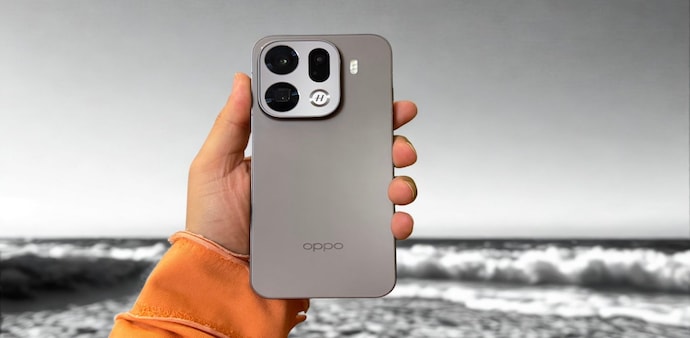
The new square camera module sits high in the left corner. It protrudes noticeably, but the placement ensures your fingers do not collide with the lenses while shooting. Oppo has also protected the module with a dual-finish glass layer, which gives the phone a more mature and polished look.
Where things get interesting is with the buttons. The familiar Quick Button for quick camera access is still here, but its recessed placement makes it harder to locate by feel. A sharp vibration cue helps, though muscle memory takes time to adjust. The Snap Key replaces last year’s alert slider and is surprisingly handy. In ColourOS 16, it can be customised to trigger features like Mind Space, DND, voice recording, translation shortcuts, and even specific camera modes.
Advertisement
I found myself using the Snap Key far more than expected. It changes how you interact with the phone in small ways that compound into a smoother everyday workflow.
Display: Flat, Bright and Flagship-Ready
The 6.78-inch LTPO AMOLED display is stunning. The shift from quad curves to a flat panel improves usability significantly. No more glare from curved edges, no ghost touches, no accidental palm triggers.
The skinny bezels allow the screen to stand out. With peak brightness hitting 3,600 nits and support for HDR10 Plus, Dolby Vision and HDR Vivid, the display holds its own even under harsh sunlight. Natural Mode produces authentic colours, and video streaming looks genuinely premium.
It feels like a display designed by someone who actually uses big phones outdoors.
Software: ColourOS 16 Is Now a Pleasure to Use
ColourOS 16 borrows aesthetic inspiration from iOS, but retains its own identity. The interface is clean, animations are fluid, and Oppo’s Luminous Rendering Engine plays a big role in the overall smoothness.
Advertisement
Adaptive Icons are surprisingly useful, letting you tuck quick actions directly into the app icon itself. Dynamic widgets add glanceable information, and the updated lockscreen with full wallpaper AOD is a welcome addition.
Mind Space is my favourite feature. It behaves like a hybrid of a personal scrapbook and an AI-supported research bank. Screenshots, audio notes and text snippets live here, neatly organised and instantly searchable. For work-heavy users who constantly save reference material, this feature is a lifesaver.
Performance: Dimensity 9500 Is Fast Enough
Oppo opted for MediaTek’s Dimensity 9500 rather than Qualcomm’s Snapdragon 8 Elite Gen 5. On benchmarks, the Dimensity sits just below Qualcomm’s best, but real world performance tells a different story.
The phone is consistently smooth. Apps launch in a snap, multitasking feels effortless, and heavy games like Genshin Impact run at high settings without thermal issues. The vapour chamber cooling keeps temperatures in check, and heat never becomes a concern.
The phone did throttle slightly during extended synthetic tests, but in daily usage, it was rock solid.
Cameras: Oppo Finally Fixes Its Biggest Flaw
Advertisement
This is the area where the Find X9 Pro truly distances itself from the Find X8 Pro.
Primary and Ultrawide Cameras
The 50 megapixel primary sensor captures natural colours, excellent dynamic range, and impressive low light detail. Oppo has addressed the colour inconsistency issues that plagued last year’s phone. Shadows retain detail, highlights stay under control, and night-time shots feel less processed.
The ultrawide camera is sharp in daylight, with controlled distortion and pleasing colours. Low light performance dips slightly, but not enough to hinder usability.
200 Megapixel Telephoto
This is the star of the show. At 3X to 10X, images look crisp and rich. Beyond 10X, image processing begins to soften details, and at 60X or 120X, the AI-enhanced results skew towards painterly interpretations.
Turn off the AI processing and the results become more realistic. Enthusiasts will appreciate the option.
Attach the Hasselblad lens and the phone transforms into a different beast. At 10X, 20X and 40X, the teleconverter produces jaw dropping separation and bokeh. The difference between the built in camera and the attachment is clear.
Advertisement
But again, this is a specialised tool best suited for deliberate shooting.
Front Camera and Video
The 50 megapixel selfie camera performs excellently, especially in low light. Video capture is stable at 4K, with good colours and accurate exposure. 4K 120 fps looks outstanding in daylight.
Battery Life: A Two-Day Champion
The 7,500 mAh silicon carbon battery is one of the Find X9 Pro’s greatest strengths. It easily lasts a full heavy day, often spilling into the second day. Even while shooting multiple 4K videos, the phone barely loses charge.
Charging is quick enough. With 80W SuperVOOC, the phone reaches 53 percent in 30 minutes and completes charging in just over 90 minutes. Wireless charging at 50W works well with AirVOOC accessories.
Verdict: Oppo’s Most Polished Flagship Yet
The Find X9 Pro feels like the flagship Oppo should have launched last year. It is powerful, thoughtfully designed, brilliantly optimised, and features one of the most capable telephoto systems in the business.
Priced at ₹1,09,999, the Find X9 Pro is a confident, near-complete package. The battery is exceptional, the display is gorgeous, the software is cleaner than ever, and the camera system finally performs consistently across conditions.
If Oppo adds built-in magnetic charging and refines the telephoto attachment next year, the Find X series might truly hit “Ultra” territory. For now, the Find X9 Pro is more than enough for anyone who wants a powerful flagship that excels at photography without relying on gimmicks.
For Unparalleled coverage of India's Businesses and Economy – Subscribe to Business Today Magazine
Last year’s Find X8 and Find X8 Pro marked Oppo’s return to the Indian flagship scene after a long pause, and those two phones could not have been more different. Twelve months later, the new Find X9 Pro is Oppo’s attempt at a reset. The company has trimmed the camera system, refined the design, boosted the battery, and added a 200 megapixel periscope telephoto that anchors its biggest camera leap yet. And then there is the optional Hasselblad Teleconverter Kit, an unapologetically nerdy addition that targets serious phone photographers.
Advertisement
After weeks of using it as my daily driver, including travel, events and more than a few late-night photography sessions, the Find X9 Pro feels like a phone that finally understands what it wants to be. It is premium, powerful, and occasionally quirky, but mostly in a way that adds personality rather than confusion.
Design: Practical and Premium
Oppo has abandoned the slippery curves of the Find X8 Pro in favour of a flat front and back. The phone is thicker and heavier at 224 grams, but it feels deliberate rather than clumsy. The flat sides lend stability, the aluminium frame stays comfortable, and the IP69 rating is the kind of overkill you can appreciate when using the phone in the rain.
Advertisement
The new square camera module sits high in the left corner. It protrudes noticeably, but the placement ensures your fingers do not collide with the lenses while shooting. Oppo has also protected the module with a dual-finish glass layer, which gives the phone a more mature and polished look.
Where things get interesting is with the buttons. The familiar Quick Button for quick camera access is still here, but its recessed placement makes it harder to locate by feel. A sharp vibration cue helps, though muscle memory takes time to adjust. The Snap Key replaces last year’s alert slider and is surprisingly handy. In ColourOS 16, it can be customised to trigger features like Mind Space, DND, voice recording, translation shortcuts, and even specific camera modes.
Advertisement
I found myself using the Snap Key far more than expected. It changes how you interact with the phone in small ways that compound into a smoother everyday workflow.
Display: Flat, Bright and Flagship-Ready
The 6.78-inch LTPO AMOLED display is stunning. The shift from quad curves to a flat panel improves usability significantly. No more glare from curved edges, no ghost touches, no accidental palm triggers.
The skinny bezels allow the screen to stand out. With peak brightness hitting 3,600 nits and support for HDR10 Plus, Dolby Vision and HDR Vivid, the display holds its own even under harsh sunlight. Natural Mode produces authentic colours, and video streaming looks genuinely premium.
It feels like a display designed by someone who actually uses big phones outdoors.
Software: ColourOS 16 Is Now a Pleasure to Use
ColourOS 16 borrows aesthetic inspiration from iOS, but retains its own identity. The interface is clean, animations are fluid, and Oppo’s Luminous Rendering Engine plays a big role in the overall smoothness.
Advertisement
Adaptive Icons are surprisingly useful, letting you tuck quick actions directly into the app icon itself. Dynamic widgets add glanceable information, and the updated lockscreen with full wallpaper AOD is a welcome addition.
Mind Space is my favourite feature. It behaves like a hybrid of a personal scrapbook and an AI-supported research bank. Screenshots, audio notes and text snippets live here, neatly organised and instantly searchable. For work-heavy users who constantly save reference material, this feature is a lifesaver.
Performance: Dimensity 9500 Is Fast Enough
Oppo opted for MediaTek’s Dimensity 9500 rather than Qualcomm’s Snapdragon 8 Elite Gen 5. On benchmarks, the Dimensity sits just below Qualcomm’s best, but real world performance tells a different story.
The phone is consistently smooth. Apps launch in a snap, multitasking feels effortless, and heavy games like Genshin Impact run at high settings without thermal issues. The vapour chamber cooling keeps temperatures in check, and heat never becomes a concern.
The phone did throttle slightly during extended synthetic tests, but in daily usage, it was rock solid.
Cameras: Oppo Finally Fixes Its Biggest Flaw
Advertisement
This is the area where the Find X9 Pro truly distances itself from the Find X8 Pro.
Primary and Ultrawide Cameras
The 50 megapixel primary sensor captures natural colours, excellent dynamic range, and impressive low light detail. Oppo has addressed the colour inconsistency issues that plagued last year’s phone. Shadows retain detail, highlights stay under control, and night-time shots feel less processed.
The ultrawide camera is sharp in daylight, with controlled distortion and pleasing colours. Low light performance dips slightly, but not enough to hinder usability.
200 Megapixel Telephoto
This is the star of the show. At 3X to 10X, images look crisp and rich. Beyond 10X, image processing begins to soften details, and at 60X or 120X, the AI-enhanced results skew towards painterly interpretations.
Turn off the AI processing and the results become more realistic. Enthusiasts will appreciate the option.
Attach the Hasselblad lens and the phone transforms into a different beast. At 10X, 20X and 40X, the teleconverter produces jaw dropping separation and bokeh. The difference between the built in camera and the attachment is clear.
Advertisement
But again, this is a specialised tool best suited for deliberate shooting.
Front Camera and Video
The 50 megapixel selfie camera performs excellently, especially in low light. Video capture is stable at 4K, with good colours and accurate exposure. 4K 120 fps looks outstanding in daylight.
Battery Life: A Two-Day Champion
The 7,500 mAh silicon carbon battery is one of the Find X9 Pro’s greatest strengths. It easily lasts a full heavy day, often spilling into the second day. Even while shooting multiple 4K videos, the phone barely loses charge.
Charging is quick enough. With 80W SuperVOOC, the phone reaches 53 percent in 30 minutes and completes charging in just over 90 minutes. Wireless charging at 50W works well with AirVOOC accessories.
Verdict: Oppo’s Most Polished Flagship Yet
The Find X9 Pro feels like the flagship Oppo should have launched last year. It is powerful, thoughtfully designed, brilliantly optimised, and features one of the most capable telephoto systems in the business.
Priced at ₹1,09,999, the Find X9 Pro is a confident, near-complete package. The battery is exceptional, the display is gorgeous, the software is cleaner than ever, and the camera system finally performs consistently across conditions.
If Oppo adds built-in magnetic charging and refines the telephoto attachment next year, the Find X series might truly hit “Ultra” territory. For now, the Find X9 Pro is more than enough for anyone who wants a powerful flagship that excels at photography without relying on gimmicks.
For Unparalleled coverage of India's Businesses and Economy – Subscribe to Business Today Magazine
Read more!