
Our prices are our most disruptive factor: Avneet Marwah
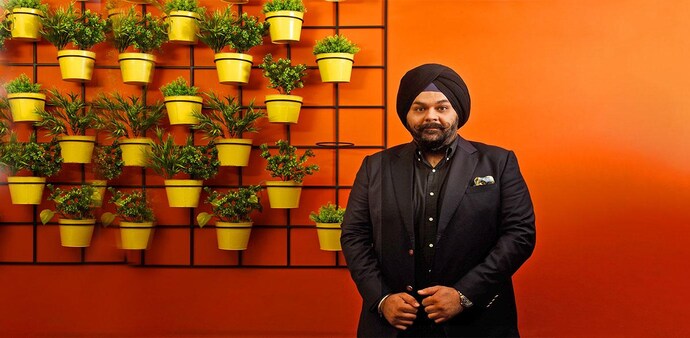
We chatted with Avneet Singh Marwah, CEO SPPL, Exclusive Brand Licensee of Thomson in India, about how he plans to take on the competitive smart TV market.
- May 10, 2022,
- Updated May 11, 2022 2:48 PM IST
When the pandemic hit and we were all forced to spend all our time at home, most households transformed from gathering around a single TV in the living room to getting another one for the bedroom. Some people even invested significantly in creating a dedicated movie room in the house since multiplexes were all closed off.
Essentially, the sale of smart TVs spiked in India and all brands hit the road running to keep up while dealing with all global chip shortages and other logistical issues. The ‘Make in India’ plan helped massively over the last two years allowing some companies to make a space for themselves in a very cluttered market that has heavyweights like Sony, Samsung, etc. on one end and Realme, Xiaomi, OnePlus, etc. on the other.
We chatted with Avneet Singh Marwah, CEO SPPL, Exclusive Brand Licensee of Thomson in India, about how 2020 and 2021 have been for them and what their plans are for the future. And here are some edited excerpts from what we talked about.
BT: How did 2020 and 2021 work out for you?
AM: It was during the pandemic that everyone’s dependence on TV screens grew phenomenally, which resulted in never-before-seen sales figures. We touched numbers that we were expecting to touch in the next five years in these two years.
This was also fuelled by the fact that most people were switching from consuming content on D2H platforms to OTT platforms with new content releasing sometimes exclusively on the latter. And cinemas were also shut.
We saw a renewed interest in wanting to have large screens at home and the TV transformed from being only an idiot box to becoming a necessity, a ‘smart’ TV, almost overnight. And we also saw a huge spike in sales when the lockdowns ended.
However, the second COVID-19 wave brought in a different set of challenges to the market. It caused so much destruction, and consumers’ disposable income was only going into healthcare, and rightly so. It the market a lot of time to recover from that and these effects lasted right till the festive season. Markets were actually ‘de-growing’ to an extent after having a few fantastic seasons.
But fortunately for us, Thomson saw a 40 per cent growth in sales. We are a completely 'Make in India' brand and we are also backwards-integrated and this has helped our case when it came to procuring raw materials.
So, 2020 was the year to grow. In 2021 we saw immense degrowth given the health scare that was around. Despite that, this year, much against popular opinion, we went ahead with several launches of new technology and new device models. We entered into the premium TV segment too. And the response to our new releases launched over this unconventional time period has been great.
Our brand equity has seen a jump in the last two years. We are now in the top two as an online brand and are competing for the number one spot. And 2022 is looking up. Although we are seeing new Covid variants that are affecting the population, since people are vaccinated this time around, the after-effects won’t hopefully be as bad. Industry and markets will continue to grow and so will the GDP and buying capacity.
Apart from domestic markets, we have plans for exports. The government is giving a massive push for the companies in India to work their export vertical and the kind of demand that Indian goods have outside is great.
BT: Do you expect to see this requirement for big screens and smart screens to continue this year as well?
AM: Our growth was completely based on demand and disposable income supply issues and hike in raw material costs. Ninety-five per cent of the reason for this. Also, why the demand plummeted was because of the same reason. Had the pandemic not happened, we were actually seeing trends of a second TV at home given everyone’s OTT choices etc. Buying will always happen but the right kind of pricing will drive that buying for any brand.
As the prices stabilised, lucrative offers were given to customers and the markets started to revive. Customers were ready to spend again given how much value they are getting from us as compared to the price.
SPPL has a completely backward integrated unit. We don't need to rely on third-party vendors for any parts or software issues. And that is what allows us to offer the kind of value that we do to our customers. We want to continue to offer the latest tech and premium quality at good prices and get it to as many customers as we can.
If things remain stable with respect to the pandemic, the market is set to grow. India is price sensitive, but our population is huge. Buying will always happen but prices need to be right.
BT: Brands like Xiaomi, Realme, etc., have a much wider reach and better brand equity, thanks to their vast ecosystem of devices, as compared to a brand like Thomson. How are you planning to work around this?
AM: We always took them and considered them as our competition, but when we started out, they never considered us as their competition. And now we are already beating their figures when it comes to TVs and our sales are only on the upwards trajectory.
All of these brands are performing well in segments that have very few alternatives. For example, today in the smartphones category there are only four global top brands hence these companies have a 90 per cent plus market share. Apart from Xiaomi, there are no other brands that occupy the number one spot across other device categories.
They are only performing well in segments that have zero other alternatives. For example, smartphones. Not in phones, headphones or power banks, and neither for TVs. They are present in the market but they are not controlling the number one spot in any category.
As international companies, these brands have also come under significant scrutiny and investigation due to security reasons, etc. We feel that customers today are looking at the narrative the brands are building or have lived through before buying from them.
All the brands under the SSPL umbrella stand true to the testimony that has been created. We’ve done our groundwork, we have built our factories from scratch and made them capable enough in a way that it functions beyond being just an assembly unit.
Now, we are being taken seriously since we’ve started performing. During this festive season, we will become number 1 for sure this year.
BT: Most of these brands are in the public eye because of their ads. How does Thomson deal with that?
AM: We are in the news. And that helps.
Since all of SPPLs brands are online-led brands, our marketing efforts are also all online. Buying trends, the intent of buying with respect to customers - we need to consider all of that. I do not know if I want to take up that IPL sponsorship or have our name on a team t-shirt, but all I can say is that our marketing efforts need to generate actual RoI for us, which it has been doing. We do our marketing in spaces where we see customers with an intent to buy, which is evidently low amidst the IPL.
BT: In 2022 what are the new features that we can expect to see from your products?
AM: We will be focusing on our premium segment. There are some new technologies that we have been working on in-house that we are set to launch and are extremely excited about. All of the tech specs we launch have been customised as per the Indian customers' needs and usage.
BT: What are the expected price brackets for these new launches?
AM: Our prices are our most disruptive factor. It will be a never-seen-before price strategy since we want to encourage buyers from across demographics to buy our products and see the value that they will get for their buck. India is an extremely price-sensitive market and we will continue to respect that. The kind of premium that brands charge for the technology they offer won't be the case with us.
We will be launching LEDs and OLEDs but the pricing will hit just the right spot for the customers.
BT: Do you think you will continue to see a similar sales trend as you have seen in the last few years? Or do you predict a change?
AM: There will be a change. As I mentioned, there is new tech coming up. For example, Dolby Atmos, HDR10+. The OTT platforms are now releasing their content in formats that support this kind of content. And customers are curious to know if the promise of a better picture and better sound quality does actually come through with the newer devices being introduced in the market. And hence the urge to upgrade home devices will remain. OTT is in trend, with a lot of content being exclusively available on them.
So, to get the complete experience, people have begun upgrading. Buying that second TV is going to keep happening, but now as a replacement for older tech.
Also Read: Thomson ventures into ACs, aims to capture a 10% market share by 2025
Also Read: TV segment achieves projected growth of 3 years in half the time amid Covid
For Unparalleled coverage of India's Businesses and Economy – Subscribe to Business Today Magazine
When the pandemic hit and we were all forced to spend all our time at home, most households transformed from gathering around a single TV in the living room to getting another one for the bedroom. Some people even invested significantly in creating a dedicated movie room in the house since multiplexes were all closed off.
Essentially, the sale of smart TVs spiked in India and all brands hit the road running to keep up while dealing with all global chip shortages and other logistical issues. The ‘Make in India’ plan helped massively over the last two years allowing some companies to make a space for themselves in a very cluttered market that has heavyweights like Sony, Samsung, etc. on one end and Realme, Xiaomi, OnePlus, etc. on the other.
We chatted with Avneet Singh Marwah, CEO SPPL, Exclusive Brand Licensee of Thomson in India, about how 2020 and 2021 have been for them and what their plans are for the future. And here are some edited excerpts from what we talked about.
BT: How did 2020 and 2021 work out for you?
AM: It was during the pandemic that everyone’s dependence on TV screens grew phenomenally, which resulted in never-before-seen sales figures. We touched numbers that we were expecting to touch in the next five years in these two years.
This was also fuelled by the fact that most people were switching from consuming content on D2H platforms to OTT platforms with new content releasing sometimes exclusively on the latter. And cinemas were also shut.
We saw a renewed interest in wanting to have large screens at home and the TV transformed from being only an idiot box to becoming a necessity, a ‘smart’ TV, almost overnight. And we also saw a huge spike in sales when the lockdowns ended.
However, the second COVID-19 wave brought in a different set of challenges to the market. It caused so much destruction, and consumers’ disposable income was only going into healthcare, and rightly so. It the market a lot of time to recover from that and these effects lasted right till the festive season. Markets were actually ‘de-growing’ to an extent after having a few fantastic seasons.
But fortunately for us, Thomson saw a 40 per cent growth in sales. We are a completely 'Make in India' brand and we are also backwards-integrated and this has helped our case when it came to procuring raw materials.
So, 2020 was the year to grow. In 2021 we saw immense degrowth given the health scare that was around. Despite that, this year, much against popular opinion, we went ahead with several launches of new technology and new device models. We entered into the premium TV segment too. And the response to our new releases launched over this unconventional time period has been great.
Our brand equity has seen a jump in the last two years. We are now in the top two as an online brand and are competing for the number one spot. And 2022 is looking up. Although we are seeing new Covid variants that are affecting the population, since people are vaccinated this time around, the after-effects won’t hopefully be as bad. Industry and markets will continue to grow and so will the GDP and buying capacity.
Apart from domestic markets, we have plans for exports. The government is giving a massive push for the companies in India to work their export vertical and the kind of demand that Indian goods have outside is great.
BT: Do you expect to see this requirement for big screens and smart screens to continue this year as well?
AM: Our growth was completely based on demand and disposable income supply issues and hike in raw material costs. Ninety-five per cent of the reason for this. Also, why the demand plummeted was because of the same reason. Had the pandemic not happened, we were actually seeing trends of a second TV at home given everyone’s OTT choices etc. Buying will always happen but the right kind of pricing will drive that buying for any brand.
As the prices stabilised, lucrative offers were given to customers and the markets started to revive. Customers were ready to spend again given how much value they are getting from us as compared to the price.
SPPL has a completely backward integrated unit. We don't need to rely on third-party vendors for any parts or software issues. And that is what allows us to offer the kind of value that we do to our customers. We want to continue to offer the latest tech and premium quality at good prices and get it to as many customers as we can.
If things remain stable with respect to the pandemic, the market is set to grow. India is price sensitive, but our population is huge. Buying will always happen but prices need to be right.
BT: Brands like Xiaomi, Realme, etc., have a much wider reach and better brand equity, thanks to their vast ecosystem of devices, as compared to a brand like Thomson. How are you planning to work around this?
AM: We always took them and considered them as our competition, but when we started out, they never considered us as their competition. And now we are already beating their figures when it comes to TVs and our sales are only on the upwards trajectory.
All of these brands are performing well in segments that have very few alternatives. For example, today in the smartphones category there are only four global top brands hence these companies have a 90 per cent plus market share. Apart from Xiaomi, there are no other brands that occupy the number one spot across other device categories.
They are only performing well in segments that have zero other alternatives. For example, smartphones. Not in phones, headphones or power banks, and neither for TVs. They are present in the market but they are not controlling the number one spot in any category.
As international companies, these brands have also come under significant scrutiny and investigation due to security reasons, etc. We feel that customers today are looking at the narrative the brands are building or have lived through before buying from them.
All the brands under the SSPL umbrella stand true to the testimony that has been created. We’ve done our groundwork, we have built our factories from scratch and made them capable enough in a way that it functions beyond being just an assembly unit.
Now, we are being taken seriously since we’ve started performing. During this festive season, we will become number 1 for sure this year.
BT: Most of these brands are in the public eye because of their ads. How does Thomson deal with that?
AM: We are in the news. And that helps.
Since all of SPPLs brands are online-led brands, our marketing efforts are also all online. Buying trends, the intent of buying with respect to customers - we need to consider all of that. I do not know if I want to take up that IPL sponsorship or have our name on a team t-shirt, but all I can say is that our marketing efforts need to generate actual RoI for us, which it has been doing. We do our marketing in spaces where we see customers with an intent to buy, which is evidently low amidst the IPL.
BT: In 2022 what are the new features that we can expect to see from your products?
AM: We will be focusing on our premium segment. There are some new technologies that we have been working on in-house that we are set to launch and are extremely excited about. All of the tech specs we launch have been customised as per the Indian customers' needs and usage.
BT: What are the expected price brackets for these new launches?
AM: Our prices are our most disruptive factor. It will be a never-seen-before price strategy since we want to encourage buyers from across demographics to buy our products and see the value that they will get for their buck. India is an extremely price-sensitive market and we will continue to respect that. The kind of premium that brands charge for the technology they offer won't be the case with us.
We will be launching LEDs and OLEDs but the pricing will hit just the right spot for the customers.
BT: Do you think you will continue to see a similar sales trend as you have seen in the last few years? Or do you predict a change?
AM: There will be a change. As I mentioned, there is new tech coming up. For example, Dolby Atmos, HDR10+. The OTT platforms are now releasing their content in formats that support this kind of content. And customers are curious to know if the promise of a better picture and better sound quality does actually come through with the newer devices being introduced in the market. And hence the urge to upgrade home devices will remain. OTT is in trend, with a lot of content being exclusively available on them.
So, to get the complete experience, people have begun upgrading. Buying that second TV is going to keep happening, but now as a replacement for older tech.
Also Read: Thomson ventures into ACs, aims to capture a 10% market share by 2025
Also Read: TV segment achieves projected growth of 3 years in half the time amid Covid
For Unparalleled coverage of India's Businesses and Economy – Subscribe to Business Today Magazine