
Pain before payoff: OpenAI's Sam Altman explains how AI will reshape careers by 2035
Altman believes students graduating around 2035 may not enter a traditional job market at all. Rather than applying for office roles or climbing corporate hierarchies, they could step into industries that barely exist today.
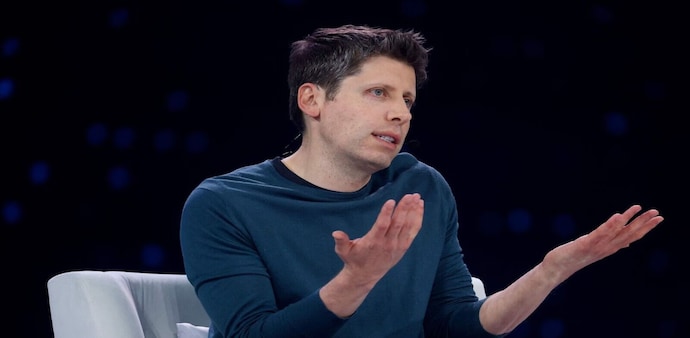
- Dec 25, 2025,
- Updated Dec 25, 2025 8:41 PM IST
OpenAI chief executive Sam Altman has laid out a bold — and unsettling — vision of how artificial intelligence could reshape careers over the next decade, arguing that while many existing jobs will vanish, entirely new and highly paid professions could emerge by the mid-2030s.
Speaking in a recent interview, Altman described the coming years as potentially the most exciting time in history to start a career, even as he acknowledged that the transition will be marked by disruption, displacement and uncertainty.
A job market that doesn’t exist yet
Altman believes students graduating around 2035 may not enter a traditional job market at all. Rather than applying for office roles or climbing corporate hierarchies, they could step into industries that barely exist today. In his view, artificial intelligence will absorb large parts of routine and knowledge-based work, creating space for new kinds of jobs with salaries and opportunities far beyond current norms.
He suggested that some of these roles could emerge in frontier sectors such as space exploration, imagining graduates joining missions across the solar system. These careers, he said, would be intellectually stimulating and exceptionally well paid — made possible only because AI systems take over much of the predictable work that dominates today’s economy.
Disruption before opportunity
Despite his optimism, Altman was blunt about the costs of this transformation. He warned that the path to these future careers will not be smooth. Many early-career and entry-level roles are likely to disappear entirely before new categories of work take shape, particularly jobs built around repetitive or predictable tasks.
The promise of exciting work and higher wages, Altman said, comes only after a period of painful adjustment. Workers, companies and societies will need to adapt quickly as familiar roles vanish and new skills become essential in an AI-driven economy.
Even CEOs won’t be immune
Altman’s belief in AI-driven disruption extends to his own role. In a separate conversation earlier this year, he said he expects artificial intelligence to eventually replace him as chief executive of OpenAI — and that he would see it as a failure if that does not happen.
He has spoken about regularly thinking through what it would take for an AI system to outperform him in leadership, strategy and execution. According to Altman, the timeline may be shorter than many expect, with AI potentially capable of running major departments within OpenAI in just a few years at a level comparable to senior human leaders.
For Unparalleled coverage of India's Businesses and Economy – Subscribe to Business Today Magazine
OpenAI chief executive Sam Altman has laid out a bold — and unsettling — vision of how artificial intelligence could reshape careers over the next decade, arguing that while many existing jobs will vanish, entirely new and highly paid professions could emerge by the mid-2030s.
Speaking in a recent interview, Altman described the coming years as potentially the most exciting time in history to start a career, even as he acknowledged that the transition will be marked by disruption, displacement and uncertainty.
A job market that doesn’t exist yet
Altman believes students graduating around 2035 may not enter a traditional job market at all. Rather than applying for office roles or climbing corporate hierarchies, they could step into industries that barely exist today. In his view, artificial intelligence will absorb large parts of routine and knowledge-based work, creating space for new kinds of jobs with salaries and opportunities far beyond current norms.
He suggested that some of these roles could emerge in frontier sectors such as space exploration, imagining graduates joining missions across the solar system. These careers, he said, would be intellectually stimulating and exceptionally well paid — made possible only because AI systems take over much of the predictable work that dominates today’s economy.
Disruption before opportunity
Despite his optimism, Altman was blunt about the costs of this transformation. He warned that the path to these future careers will not be smooth. Many early-career and entry-level roles are likely to disappear entirely before new categories of work take shape, particularly jobs built around repetitive or predictable tasks.
The promise of exciting work and higher wages, Altman said, comes only after a period of painful adjustment. Workers, companies and societies will need to adapt quickly as familiar roles vanish and new skills become essential in an AI-driven economy.
Even CEOs won’t be immune
Altman’s belief in AI-driven disruption extends to his own role. In a separate conversation earlier this year, he said he expects artificial intelligence to eventually replace him as chief executive of OpenAI — and that he would see it as a failure if that does not happen.
He has spoken about regularly thinking through what it would take for an AI system to outperform him in leadership, strategy and execution. According to Altman, the timeline may be shorter than many expect, with AI potentially capable of running major departments within OpenAI in just a few years at a level comparable to senior human leaders.
For Unparalleled coverage of India's Businesses and Economy – Subscribe to Business Today Magazine