
Samsung’s Won-joon Choi on future of foldables: ‘We see them as the optimum form factor for phones’
Samsung’s foldables are evolving fast, and the company believes AI could make them the best smartphones yet.
- Jul 10, 2025,
- Updated Jul 10, 2025 11:39 AM IST
As Samsung unveils the new Galaxy Z Fold 7 and Z Flip 7, the company’s leadership is doubling down on the idea that foldables are no longer a futuristic niche but a rapidly maturing category poised to challenge mainstream flagship phones. Speaking at a roundtable discussion following the launch, Won-joon Choi, President and COO of Samsung’s MX Division and Head of its R&D office, shared key insights into what it will take for foldables to become truly mainstream and why Samsung sees them as central to the mobile AI future.
“The biggest challenges have always been about perfecting the form factor,” Choi said when asked by Business Today about the hurdles that remain in replacing traditional slab smartphones. “There have been calls to make [foldables] lighter, sleeker, thinner, and more durable without compromising on premium performance. That’s what we’ve been working to solve.”
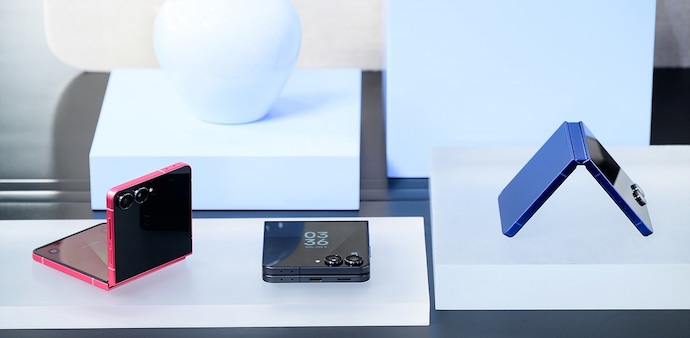
The Z Fold 7 and Z Flip 7 represent Samsung’s latest attempt at overcoming that balancing act. With refined hinge mechanisms, lighter chassis materials, and slimmer profiles, the company is inching closer to closing the gap between foldable innovation and everyday usability. But Choi was quick to point out that hardware alone isn’t enough.
“The other key challenge is about delivering a differentiated experience,” he added. “Why would someone choose a foldable device in the first place? It’s because they want a different way to engage with their phone, a large immersive screen on the Fold, or the compact design and cover display of the Flip.”
That unique experience, Choi argued, is now intersecting perfectly with the mobile AI boom. “We believe the foldable form factor is optimum for the mobile AI era,” he said, pointing to the Z Fold’s large internal display and the Z Flip’s flexible external use cases as ideal surfaces for richer AI interactions, multitasking, and new productivity flows.
While Samsung remains the dominant player in the foldables segment globally, competition is heating up, especially in markets like China where brands such as Huawei and Honor have made serious inroads. In India, too, foldables are still in their early adoption phase, with price, durability, and app optimisation often cited as pain points. Samsung’s focus appears to be on removing these last few barriers.
From Choi’s perspective, the mission is clear: foldables won’t just co-exist with traditional phones, they’re meant to replace them. And if AI truly becomes as central to smartphone usage as it is to the broader tech conversation, Samsung wants its foldables to be the canvas where that future unfolds first.
For Unparalleled coverage of India's Businesses and Economy – Subscribe to Business Today Magazine
As Samsung unveils the new Galaxy Z Fold 7 and Z Flip 7, the company’s leadership is doubling down on the idea that foldables are no longer a futuristic niche but a rapidly maturing category poised to challenge mainstream flagship phones. Speaking at a roundtable discussion following the launch, Won-joon Choi, President and COO of Samsung’s MX Division and Head of its R&D office, shared key insights into what it will take for foldables to become truly mainstream and why Samsung sees them as central to the mobile AI future.
“The biggest challenges have always been about perfecting the form factor,” Choi said when asked by Business Today about the hurdles that remain in replacing traditional slab smartphones. “There have been calls to make [foldables] lighter, sleeker, thinner, and more durable without compromising on premium performance. That’s what we’ve been working to solve.”
The Z Fold 7 and Z Flip 7 represent Samsung’s latest attempt at overcoming that balancing act. With refined hinge mechanisms, lighter chassis materials, and slimmer profiles, the company is inching closer to closing the gap between foldable innovation and everyday usability. But Choi was quick to point out that hardware alone isn’t enough.
“The other key challenge is about delivering a differentiated experience,” he added. “Why would someone choose a foldable device in the first place? It’s because they want a different way to engage with their phone, a large immersive screen on the Fold, or the compact design and cover display of the Flip.”
That unique experience, Choi argued, is now intersecting perfectly with the mobile AI boom. “We believe the foldable form factor is optimum for the mobile AI era,” he said, pointing to the Z Fold’s large internal display and the Z Flip’s flexible external use cases as ideal surfaces for richer AI interactions, multitasking, and new productivity flows.
While Samsung remains the dominant player in the foldables segment globally, competition is heating up, especially in markets like China where brands such as Huawei and Honor have made serious inroads. In India, too, foldables are still in their early adoption phase, with price, durability, and app optimisation often cited as pain points. Samsung’s focus appears to be on removing these last few barriers.
From Choi’s perspective, the mission is clear: foldables won’t just co-exist with traditional phones, they’re meant to replace them. And if AI truly becomes as central to smartphone usage as it is to the broader tech conversation, Samsung wants its foldables to be the canvas where that future unfolds first.
For Unparalleled coverage of India's Businesses and Economy – Subscribe to Business Today Magazine