
ShareChat bets on homegrown AI to drive revenue, not hype: CEO Ankush Sachdeva
By transitioning to AI-driven "micro-dramas" and hyper-local content in 15 languages, the Indian social media giant, ShareChat, is finding growth where others seem to struggle.
- Feb 25, 2026,
- Updated Feb 25, 2026 10:56 AM IST
While the India AI Impact Summit 2026 largely focused on sovereign compute, frontier models and enterprise adoption, consumer internet companies showcased how artificial intelligence has quietly reshaped everyday digital experiences. Among them, social media platform ShareChat argued that AI is already delivering tangible business outcomes, not future promise.
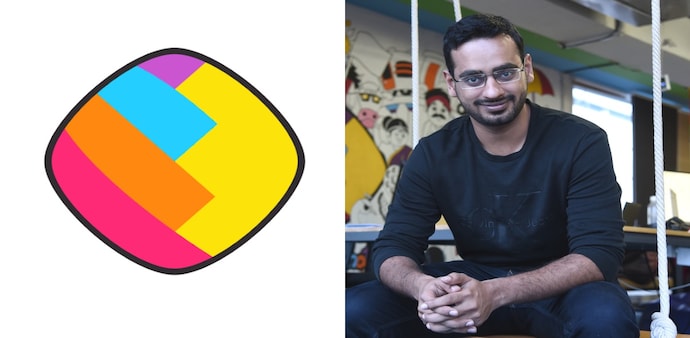
In an interview with Business Today, ShareChat CEO Ankush Sachdeva said the company’s long-running investment in recommendation systems has translated directly into engagement and revenue growth, long before the generative AI boom captured global attention.
“We started on the journey in 2018 with recommended systems. It's a niche within AI, like how LLM is one niche. Recommended systems are one more niche of AI,” he said.
AI that pays for itself
In a crowded landscape dominated by global platforms such as Meta, Pinterest and YouTube, Sachdeva said ShareChat’s differentiation lies in building its AI stack internally rather than relying on third-party foundation models.
“Many platforms rely on API calls to foundation models. For recommendation systems, we train our own deep learning model. We are on our own inference; we have optimised it for India at a very cheap cost. That's real AI done at the heart of the company,” he said.
According to Sachdeva, each successive model upgrade has delivered measurable gains. ShareChat’s first deep-learning recommendation model, launched in 2022, increased time spent on the platform by about 40%. More recently, AI-driven recommendations for short “micro-drama” video series delivered an additional 50% boost.
“So every new generation of model gives you that order of jump in your business metrics. And that helps us get higher ARPU to get profitable,” he added.
Built for Bharat
ShareChat’s broader strategy hinges on serving India’s linguistic diversity, a segment often underserved by global platforms.
“I think one place is the language diversity we have. So we operated in 15 languages. So if you want a very old Bhajan in Tamil, you'll most likely find that on ShareChat and not on Facebook,” Sachdeva said.
Distribution, meanwhile, comes from piggybacking on messaging platforms. Rather than competing directly with WhatsApp, ShareChat treats it as a growth channel.
“People come to shareChat, find content to share, and share it on WhatsApp. That content goes inside WhatsApp, and we actually ride on top of that virality to actually grow further,” he said.
Sachdeva also acknowledged government efforts to promote AI adoption through initiatives such as the IndiaAI Mission, saying policymakers have helped bring startups and builders into the mainstream.
The next wave
Looking ahead, Sachdeva expects generative AI to radically lower the cost of producing high-quality content, enabling tailored storytelling at scale.
“With micro dramas and costs coming down, you'll actually find very appealing high-quality stories. So you'll have hyperpersonalised, long stories being created at an affordable price with AI over the next 5 years,” he said.
Such content, customised by language, interests and individual preferences, could reshape entertainment consumption on mobile platforms.
Productivity, not replacement
Amid global concerns that AI agents will displace workers, Sachdeva struck an optimistic note, arguing that so-called “agentic AI” has improved efficiency rather than eliminated jobs at ShareChat.
“It has made things far more efficient. Things move better... we don't see a pressure of like AI replacing people. We are actually seeing that it helps us actually move past,” he said.
He added that India’s youthful workforce and enthusiasm for new technologies make it particularly well positioned to benefit.
For Unparalleled coverage of India's Businesses and Economy – Subscribe to Business Today Magazine
While the India AI Impact Summit 2026 largely focused on sovereign compute, frontier models and enterprise adoption, consumer internet companies showcased how artificial intelligence has quietly reshaped everyday digital experiences. Among them, social media platform ShareChat argued that AI is already delivering tangible business outcomes, not future promise.
In an interview with Business Today, ShareChat CEO Ankush Sachdeva said the company’s long-running investment in recommendation systems has translated directly into engagement and revenue growth, long before the generative AI boom captured global attention.
“We started on the journey in 2018 with recommended systems. It's a niche within AI, like how LLM is one niche. Recommended systems are one more niche of AI,” he said.
AI that pays for itself
In a crowded landscape dominated by global platforms such as Meta, Pinterest and YouTube, Sachdeva said ShareChat’s differentiation lies in building its AI stack internally rather than relying on third-party foundation models.
“Many platforms rely on API calls to foundation models. For recommendation systems, we train our own deep learning model. We are on our own inference; we have optimised it for India at a very cheap cost. That's real AI done at the heart of the company,” he said.
According to Sachdeva, each successive model upgrade has delivered measurable gains. ShareChat’s first deep-learning recommendation model, launched in 2022, increased time spent on the platform by about 40%. More recently, AI-driven recommendations for short “micro-drama” video series delivered an additional 50% boost.
“So every new generation of model gives you that order of jump in your business metrics. And that helps us get higher ARPU to get profitable,” he added.
Built for Bharat
ShareChat’s broader strategy hinges on serving India’s linguistic diversity, a segment often underserved by global platforms.
“I think one place is the language diversity we have. So we operated in 15 languages. So if you want a very old Bhajan in Tamil, you'll most likely find that on ShareChat and not on Facebook,” Sachdeva said.
Distribution, meanwhile, comes from piggybacking on messaging platforms. Rather than competing directly with WhatsApp, ShareChat treats it as a growth channel.
“People come to shareChat, find content to share, and share it on WhatsApp. That content goes inside WhatsApp, and we actually ride on top of that virality to actually grow further,” he said.
Sachdeva also acknowledged government efforts to promote AI adoption through initiatives such as the IndiaAI Mission, saying policymakers have helped bring startups and builders into the mainstream.
The next wave
Looking ahead, Sachdeva expects generative AI to radically lower the cost of producing high-quality content, enabling tailored storytelling at scale.
“With micro dramas and costs coming down, you'll actually find very appealing high-quality stories. So you'll have hyperpersonalised, long stories being created at an affordable price with AI over the next 5 years,” he said.
Such content, customised by language, interests and individual preferences, could reshape entertainment consumption on mobile platforms.
Productivity, not replacement
Amid global concerns that AI agents will displace workers, Sachdeva struck an optimistic note, arguing that so-called “agentic AI” has improved efficiency rather than eliminated jobs at ShareChat.
“It has made things far more efficient. Things move better... we don't see a pressure of like AI replacing people. We are actually seeing that it helps us actually move past,” he said.
He added that India’s youthful workforce and enthusiasm for new technologies make it particularly well positioned to benefit.
For Unparalleled coverage of India's Businesses and Economy – Subscribe to Business Today Magazine