
'The people who control AI are oligarchs': Godfather of AI Geoffrey Hinton slams big tech
Hinton said that companies and CEOs are downplaying the risks of AI, while sidelining Demis Hassabis, CEO of Google DeepMind. Hinton described him as one of the few leaders actively trying to address AI risks.
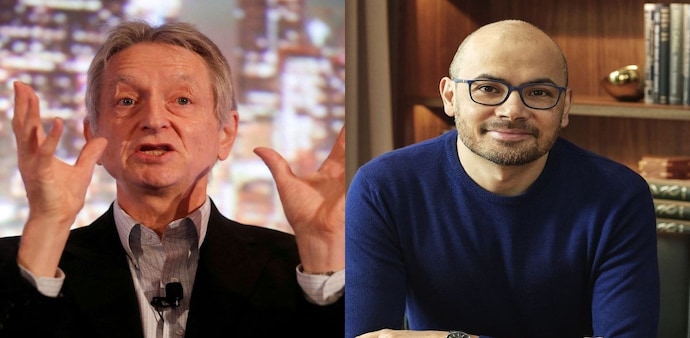
- Jul 28, 2025,
- Updated Jul 28, 2025 3:24 PM IST
Geoffrey Hinton, often referred to as the "Godfather of AI", has once again sounded the alarm on the growing risks of artificial intelligence, saying most major tech companies are not taking the threat seriously enough. Speaking on the One Decision podcast, Hinton said that while many leaders in the AI space are well aware of the dangers, they continue to downplay them publicly.
“Many of the people in big companies, I think, are downplaying the risk publicly,” Hinton said. “People like Demis, for example, really do understand the risks and really want to do something about it.”
Hinton reserved praise for Demis Hassabis, CEO of Google DeepMind, describing him as one of the few leaders actively trying to address AI risks. DeepMind, co-founded by Hassabis in the UK in 2010 and acquired by Google in 2014, has since become a key part of Google’s AI research strategy. Hinton noted that Hassabis “really wants to do something about” the potential misuse of AI, particularly by bad actors.
Earlier this year, in a CNN interview, Hassabis had said, “A bad actor could repurpose those same technologies for a harmful end… how do we restrict access to these powerful systems to bad actors but enable good actors to do many, many amazing things with it?”
Hinton, who shared the 2024 Nobel Prize in Physics with John J. Hopfield for their work on artificial neural networks, also criticised other tech leaders more directly. When asked whether he trusts figures like Elon Musk or Mark Zuckerberg, Hinton replied, “I think when I called them oligarchs, you know the answer to that.”
Hinton left Google in 2023 after more than a decade at the company. While his departure was widely interpreted as a protest against Google’s aggressive AI strategy, the AI pioneer later clarified that this narrative was exaggerated. “There’s a wonderful story that the media loves this honest scientist who wanted to tell the truth so I had to leave Google. It’s a myth,” he said. “I left Google because I was 75 and I couldn’t program effectively anymore, but when I left, maybe I could talk about all these risks more freely.”
He admitted that staying at Google would have meant some level of self-censorship. “You can’t take their money and then not be influenced by what’s in their own interest,” he said. Still, Hinton claimed Google had asked him to stay and continue working on AI safety.
Reflecting on the pace of progress in AI, Hinton warned that machines are becoming more intelligent in ways humans do not fully understand. “The rate at which they’ve started working now is way beyond what anybody expected,” he said. He also expressed personal regret, adding, “I should have realised much sooner what the eventual dangers were going to be. I always thought the future was far off, and I wish I had thought about safety sooner.”
For Unparalleled coverage of India's Businesses and Economy – Subscribe to Business Today Magazine
Geoffrey Hinton, often referred to as the "Godfather of AI", has once again sounded the alarm on the growing risks of artificial intelligence, saying most major tech companies are not taking the threat seriously enough. Speaking on the One Decision podcast, Hinton said that while many leaders in the AI space are well aware of the dangers, they continue to downplay them publicly.
“Many of the people in big companies, I think, are downplaying the risk publicly,” Hinton said. “People like Demis, for example, really do understand the risks and really want to do something about it.”
Hinton reserved praise for Demis Hassabis, CEO of Google DeepMind, describing him as one of the few leaders actively trying to address AI risks. DeepMind, co-founded by Hassabis in the UK in 2010 and acquired by Google in 2014, has since become a key part of Google’s AI research strategy. Hinton noted that Hassabis “really wants to do something about” the potential misuse of AI, particularly by bad actors.
Earlier this year, in a CNN interview, Hassabis had said, “A bad actor could repurpose those same technologies for a harmful end… how do we restrict access to these powerful systems to bad actors but enable good actors to do many, many amazing things with it?”
Hinton, who shared the 2024 Nobel Prize in Physics with John J. Hopfield for their work on artificial neural networks, also criticised other tech leaders more directly. When asked whether he trusts figures like Elon Musk or Mark Zuckerberg, Hinton replied, “I think when I called them oligarchs, you know the answer to that.”
Hinton left Google in 2023 after more than a decade at the company. While his departure was widely interpreted as a protest against Google’s aggressive AI strategy, the AI pioneer later clarified that this narrative was exaggerated. “There’s a wonderful story that the media loves this honest scientist who wanted to tell the truth so I had to leave Google. It’s a myth,” he said. “I left Google because I was 75 and I couldn’t program effectively anymore, but when I left, maybe I could talk about all these risks more freely.”
He admitted that staying at Google would have meant some level of self-censorship. “You can’t take their money and then not be influenced by what’s in their own interest,” he said. Still, Hinton claimed Google had asked him to stay and continue working on AI safety.
Reflecting on the pace of progress in AI, Hinton warned that machines are becoming more intelligent in ways humans do not fully understand. “The rate at which they’ve started working now is way beyond what anybody expected,” he said. He also expressed personal regret, adding, “I should have realised much sooner what the eventual dangers were going to be. I always thought the future was far off, and I wish I had thought about safety sooner.”
For Unparalleled coverage of India's Businesses and Economy – Subscribe to Business Today Magazine