
Why Infosys is betting on an insider to crack the AI era
By choosing a 31-year veteran Ashiss Kumar Dash over an external hire, Infosys is signalling that its next phase of growth will be driven as much by disciplined execution as by AI innovation.
- Jul 24, 2026,
- Updated Jul 24, 2026 8:43 PM IST
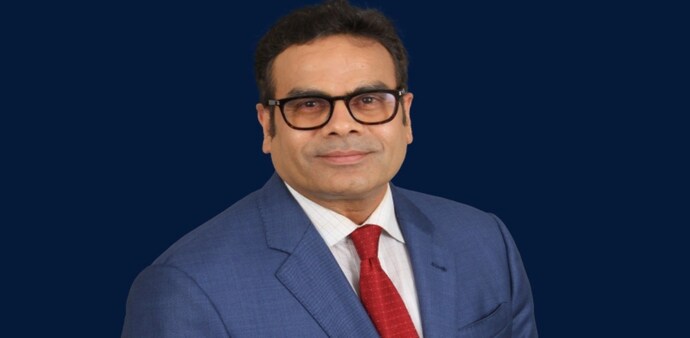
Infosys' decision to appoint company veteran Ashiss Kumar Dash as its next Chief Executive Officer is as much about the future of the Indian IT services industry as it is about succession planning. By choosing a 31-year insider over an external candidate, the board has signalled that navigating the AI era will require continuity, deep client trust and execution discipline as much as technological ambition.
The announcement came alongside a strong set of June quarter earnings. Infosys reported a 12% year-on-year rise in consolidated net profit to Rs 7,769 crore for the quarter ended June 30, 2026, compared with Rs 6,921 crore a year earlier.
Revenue from operations grew 14% to Rs 48,211 crore from Rs 42,279 crore in the corresponding quarter last year, reflecting healthy execution despite a challenging demand environment. However, the company narrowed its FY27 constant currency revenue growth guidance to 1.5-3%, highlighting persistent macroeconomic uncertainty and cautious enterprise spending.
Dash, who currently serves as Executive Vice President and Global Head of Services, Utilities, Resources, Energy and Sustainability, will take over from Salil Parekh on April 1, 2027, following a transition period that begins later this year.
His appointment comes at a time when AI is fundamentally reshaping the economics of IT services. Clients are demanding productivity gains rather than larger teams, discretionary technology spending remains cautious, and traditional outsourcing models are being redefined by AI-led automation.
For Infosys Chairman Nandan Nilekani, the choice was rooted in institutional knowledge and execution capability. "He has worked in Infosys for 31 years across every part of the company. He is an uncomplicated guy with focus on what needs to be done," Nilekani said, explaining why the board backed Dash to lead the company into its next phase. Currently based in Los Angeles, Dash is expected to relocate to India over the next few months as he prepares to assume the top role.
Nilekani's comments also reveal the board's thinking. Rather than search for a high-profile external leader to steer the AI transition, Infosys has opted for someone with deep institutional memory, trusted client relationships and an intimate understanding of how the company operates. That reflects a belief that the next phase of growth will depend not just on technological vision, but on the ability to execute AI-led transformation at scale without disrupting client confidence or the company's culture.
The decision also reflects the changing priorities of the IT services industry. Unlike previous technology shifts such as cloud computing or digital transformation, generative AI is forcing companies to rethink software development, pricing models, workforce deployment and even the economics of outsourcing.
As AI automates repetitive coding and business processes, technology vendors are increasingly being judged on the business outcomes they deliver rather than the number of engineers they deploy.
Against this backdrop, Dash's experience appears well suited to the challenge. Over three decades, he has worked across delivery, sales, account management and multiple industry verticals, while also building Infosys' Energy, Utilities and Resources business into one of the company's key growth engines. That experience has given him exposure to large global clients, complex transformation programmes and long-term strategic relationships—capabilities that will become even more critical as enterprises move from AI experimentation to enterprise-wide deployment.
Ultimately, the appointment is less about who succeeds Parekh and more about what Infosys believes the next decade will demand from its leaders. The company will need to prove that AI can become a meaningful growth engine while protecting margins in an environment where automation could reduce billable effort.
For Unparalleled coverage of India's Businesses and Economy – Subscribe to Business Today Magazine
Infosys' decision to appoint company veteran Ashiss Kumar Dash as its next Chief Executive Officer is as much about the future of the Indian IT services industry as it is about succession planning. By choosing a 31-year insider over an external candidate, the board has signalled that navigating the AI era will require continuity, deep client trust and execution discipline as much as technological ambition.
The announcement came alongside a strong set of June quarter earnings. Infosys reported a 12% year-on-year rise in consolidated net profit to Rs 7,769 crore for the quarter ended June 30, 2026, compared with Rs 6,921 crore a year earlier.
Revenue from operations grew 14% to Rs 48,211 crore from Rs 42,279 crore in the corresponding quarter last year, reflecting healthy execution despite a challenging demand environment. However, the company narrowed its FY27 constant currency revenue growth guidance to 1.5-3%, highlighting persistent macroeconomic uncertainty and cautious enterprise spending.
Dash, who currently serves as Executive Vice President and Global Head of Services, Utilities, Resources, Energy and Sustainability, will take over from Salil Parekh on April 1, 2027, following a transition period that begins later this year.
His appointment comes at a time when AI is fundamentally reshaping the economics of IT services. Clients are demanding productivity gains rather than larger teams, discretionary technology spending remains cautious, and traditional outsourcing models are being redefined by AI-led automation.
For Infosys Chairman Nandan Nilekani, the choice was rooted in institutional knowledge and execution capability. "He has worked in Infosys for 31 years across every part of the company. He is an uncomplicated guy with focus on what needs to be done," Nilekani said, explaining why the board backed Dash to lead the company into its next phase. Currently based in Los Angeles, Dash is expected to relocate to India over the next few months as he prepares to assume the top role.
Nilekani's comments also reveal the board's thinking. Rather than search for a high-profile external leader to steer the AI transition, Infosys has opted for someone with deep institutional memory, trusted client relationships and an intimate understanding of how the company operates. That reflects a belief that the next phase of growth will depend not just on technological vision, but on the ability to execute AI-led transformation at scale without disrupting client confidence or the company's culture.
The decision also reflects the changing priorities of the IT services industry. Unlike previous technology shifts such as cloud computing or digital transformation, generative AI is forcing companies to rethink software development, pricing models, workforce deployment and even the economics of outsourcing.
As AI automates repetitive coding and business processes, technology vendors are increasingly being judged on the business outcomes they deliver rather than the number of engineers they deploy.
Against this backdrop, Dash's experience appears well suited to the challenge. Over three decades, he has worked across delivery, sales, account management and multiple industry verticals, while also building Infosys' Energy, Utilities and Resources business into one of the company's key growth engines. That experience has given him exposure to large global clients, complex transformation programmes and long-term strategic relationships—capabilities that will become even more critical as enterprises move from AI experimentation to enterprise-wide deployment.
Ultimately, the appointment is less about who succeeds Parekh and more about what Infosys believes the next decade will demand from its leaders. The company will need to prove that AI can become a meaningful growth engine while protecting margins in an environment where automation could reduce billable effort.
For Unparalleled coverage of India's Businesses and Economy – Subscribe to Business Today Magazine