
Why is Donald Trump pushing Intel CEO Lip-Bu Tan to resign?
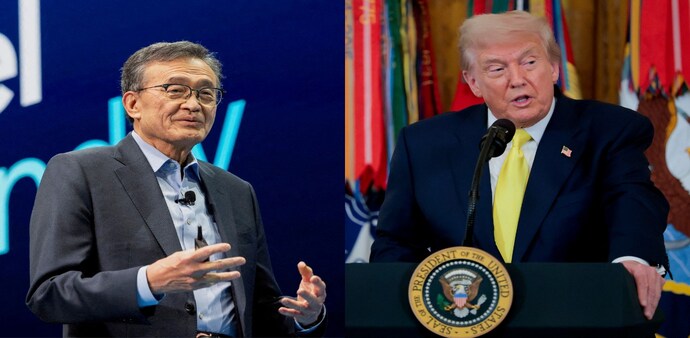
US President Donald Trump has publicly called for the immediate resignation of Intel chief executive Lip-Bu Tan, accusing him of being “highly conflicted”.
- Aug 8, 2025,
- Updated Aug 8, 2025 5:45 PM IST
US President Donald Trump has publicly called for the immediate resignation of Intel chief executive Lip-Bu Tan, accusing him of being “highly conflicted” due to alleged ties to Chinese companies. The demand has placed Intel at the centre of a high-stakes political and national security debate. Here’s a breakdown of the key issues driving Trump’s stance.
1. Alleged Investments Linked to China’s Military
Before becoming Intel CEO in March 2025, Tan spent over four decades at venture capital firm Walden International. During that time, he was involved in investments in several Chinese technology firms, including some reportedly connected to military contractors.
Republican Senator Tom Cotton recently questioned these links in a letter to Intel’s board, citing Tan’s past role at Cadence Design Systems. Under Tan’s leadership, Cadence sold products to China’s National University of Defence Technology, a military-linked institution. The company pleaded guilty last month to violating US export controls over those sales.
2. CHIPS Act Funding and Political Optics
Intel has received significant subsidies under the US CHIPS Act to boost domestic semiconductor production, including billions for new fabrication plants in Arizona. For critics, appointing a CEO with alleged financial connections to China undermines the optics of a company benefiting from taxpayer-funded incentives designed to strengthen US semiconductor security.
This point gives Trump political leverage, aligning with his broader messaging on bringing manufacturing back to America and reducing reliance on foreign, particularly Chinese, supply chains.
3. Questions Over Divestments
While Intel says Tan has divested from some of his Chinese holdings, public filings still list certain investments as active. This has created ambiguity over whether all divestments are complete, leaving room for political opponents to question his current financial exposure.
4. Trump’s Pattern of Corporate Pressure
The move fits a familiar Trump playbook: publicly pressuring corporate leaders on matters of policy, national security, and trade to send a message of toughness on China. His Truth Social post on Thursday read: “The CEO of INTEL is highly CONFLICTED and must resign, immediately. There is no other solution to this problem.”
5. Intel’s Defence
Intel and Tan have strongly denied any conflict of interest. In a statement, the company said it is “deeply committed to the national security of the United States” and pointed to its 56-year history of US manufacturing. It emphasised its ongoing multi-billion-dollar domestic investments, including what it says will be the country’s most advanced manufacturing process technology in its new Arizona facility.
Industry and Investor Reactions
Reactions to Trump’s demand have been mixed.
- Anshel Sag, principal analyst at Moor Insights & Strategy, told Reuters: “I believe that POTUS shouldn’t be calling for any CEO to be stepping down, especially not one who just took the job this year. I think this all boils down to Lip-Bu's past involvement and investment in Chinese semiconductors, which is also what makes him so valuable as CEO. He’s more aware than most people on earth of China’s capabilities and should be an asset to the U.S. and Intel.”
- David Wagner, head of equity and portfolio manager at Aptus Capital Advisors, an Intel shareholder, said: “While I can understand that many investors likely believe that President Trump has his hand in too many cookie jars, it’s just another signal that he’s very serious about trying to bring business back to the U.S. He has momentum from the Apple deal and now hoping that a few more businesses fall into place.”
- Ryuta Makino, research analyst at Gabelli Funds and an Intel investor, suggested: “I think Trump is mostly attacking Lip-Bu because he wanted to stop the manufacturing business if Intel 14A doesn’t work out with external customers. More speculation whether Trump is making some deals with TSMC to do something with Intel. I think it’s very much a political move.”
- Blake Anderson, associate portfolio manager at Carson Group, warned: “Investors remaining focused on issues like these hint that the company’s manufacturing turnaround, and long-term viability, may be dependent on factors external to the company and thus increase long-term uncertainty.”
- Shiraz Ahmed, founder and CEO at Sartorial Wealth, noted: “It’s not surprising. I mean we’re seeing the administration step in and point fingers at private or corporate CEOs. It’s not the first time he’s done it, it’s likely not the last time he’ll do it.”
- Phil Blancato, CEO of Ladenburg Thalmann Asset Management, cautioned: “It would be setting a very unfortunate precedent. You don’t want American presidents dictating who runs companies, but certainly his opinion has merit and weight. The board of Intel will have to determine if that’s something they would consider in their evaluation. But this CEO is fairly new. On one hand, I don’t think the U.S. president has the ability to do that. I’m not sure that that’s a good idea for any political official. But certainly, when you look at where the company stands today, it hasn’t benefited greatly over the last few years. And I think it’s more than just a CEO issue here. It’s the company’s need for real, radical change.”
What Happens Next?
The situation remains unresolved, hinging on whether further disclosures clarify Tan’s investment history and whether Intel’s board continues to back him. The controversy is not just about one executive, it taps into the larger geopolitical battle over semiconductor dominance, US-China relations, and the political narrative around economic security.
For Unparalleled coverage of India's Businesses and Economy – Subscribe to Business Today Magazine
US President Donald Trump has publicly called for the immediate resignation of Intel chief executive Lip-Bu Tan, accusing him of being “highly conflicted” due to alleged ties to Chinese companies. The demand has placed Intel at the centre of a high-stakes political and national security debate. Here’s a breakdown of the key issues driving Trump’s stance.
1. Alleged Investments Linked to China’s Military
Before becoming Intel CEO in March 2025, Tan spent over four decades at venture capital firm Walden International. During that time, he was involved in investments in several Chinese technology firms, including some reportedly connected to military contractors.
Republican Senator Tom Cotton recently questioned these links in a letter to Intel’s board, citing Tan’s past role at Cadence Design Systems. Under Tan’s leadership, Cadence sold products to China’s National University of Defence Technology, a military-linked institution. The company pleaded guilty last month to violating US export controls over those sales.
2. CHIPS Act Funding and Political Optics
Intel has received significant subsidies under the US CHIPS Act to boost domestic semiconductor production, including billions for new fabrication plants in Arizona. For critics, appointing a CEO with alleged financial connections to China undermines the optics of a company benefiting from taxpayer-funded incentives designed to strengthen US semiconductor security.
This point gives Trump political leverage, aligning with his broader messaging on bringing manufacturing back to America and reducing reliance on foreign, particularly Chinese, supply chains.
3. Questions Over Divestments
While Intel says Tan has divested from some of his Chinese holdings, public filings still list certain investments as active. This has created ambiguity over whether all divestments are complete, leaving room for political opponents to question his current financial exposure.
4. Trump’s Pattern of Corporate Pressure
The move fits a familiar Trump playbook: publicly pressuring corporate leaders on matters of policy, national security, and trade to send a message of toughness on China. His Truth Social post on Thursday read: “The CEO of INTEL is highly CONFLICTED and must resign, immediately. There is no other solution to this problem.”
5. Intel’s Defence
Intel and Tan have strongly denied any conflict of interest. In a statement, the company said it is “deeply committed to the national security of the United States” and pointed to its 56-year history of US manufacturing. It emphasised its ongoing multi-billion-dollar domestic investments, including what it says will be the country’s most advanced manufacturing process technology in its new Arizona facility.
Industry and Investor Reactions
Reactions to Trump’s demand have been mixed.
- Anshel Sag, principal analyst at Moor Insights & Strategy, told Reuters: “I believe that POTUS shouldn’t be calling for any CEO to be stepping down, especially not one who just took the job this year. I think this all boils down to Lip-Bu's past involvement and investment in Chinese semiconductors, which is also what makes him so valuable as CEO. He’s more aware than most people on earth of China’s capabilities and should be an asset to the U.S. and Intel.”
- David Wagner, head of equity and portfolio manager at Aptus Capital Advisors, an Intel shareholder, said: “While I can understand that many investors likely believe that President Trump has his hand in too many cookie jars, it’s just another signal that he’s very serious about trying to bring business back to the U.S. He has momentum from the Apple deal and now hoping that a few more businesses fall into place.”
- Ryuta Makino, research analyst at Gabelli Funds and an Intel investor, suggested: “I think Trump is mostly attacking Lip-Bu because he wanted to stop the manufacturing business if Intel 14A doesn’t work out with external customers. More speculation whether Trump is making some deals with TSMC to do something with Intel. I think it’s very much a political move.”
- Blake Anderson, associate portfolio manager at Carson Group, warned: “Investors remaining focused on issues like these hint that the company’s manufacturing turnaround, and long-term viability, may be dependent on factors external to the company and thus increase long-term uncertainty.”
- Shiraz Ahmed, founder and CEO at Sartorial Wealth, noted: “It’s not surprising. I mean we’re seeing the administration step in and point fingers at private or corporate CEOs. It’s not the first time he’s done it, it’s likely not the last time he’ll do it.”
- Phil Blancato, CEO of Ladenburg Thalmann Asset Management, cautioned: “It would be setting a very unfortunate precedent. You don’t want American presidents dictating who runs companies, but certainly his opinion has merit and weight. The board of Intel will have to determine if that’s something they would consider in their evaluation. But this CEO is fairly new. On one hand, I don’t think the U.S. president has the ability to do that. I’m not sure that that’s a good idea for any political official. But certainly, when you look at where the company stands today, it hasn’t benefited greatly over the last few years. And I think it’s more than just a CEO issue here. It’s the company’s need for real, radical change.”
What Happens Next?
The situation remains unresolved, hinging on whether further disclosures clarify Tan’s investment history and whether Intel’s board continues to back him. The controversy is not just about one executive, it taps into the larger geopolitical battle over semiconductor dominance, US-China relations, and the political narrative around economic security.
For Unparalleled coverage of India's Businesses and Economy – Subscribe to Business Today Magazine