
World Governments Summit 2026: Media leaders draw red lines for AI in journalism, storytelling
At a packed roundtable featuring 31 media executives and creators, voices from across the globe gathered not just to reflect — but to challenge, confront, and redefine the future of storytelling in an AI-dominated era.
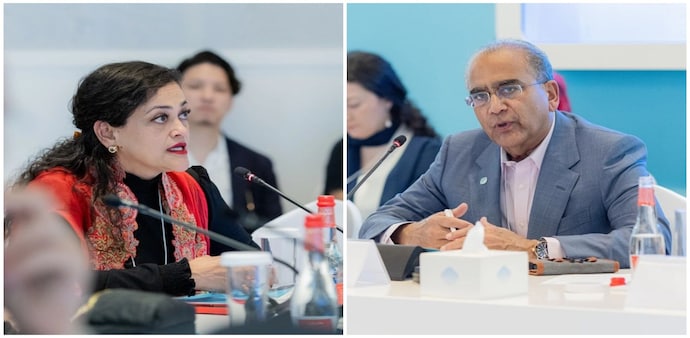
- Feb 5, 2026,
- Updated Feb 10, 2026 3:08 PM IST
In a world where machines increasingly mimic the art of storytelling, the World Government Summit 2026 became a critical stage for media leaders to reckon with one of the most pressing questions of our time: What happens to journalism when AI can write the story?
At a packed roundtable featuring 31 media executives and creators, voices from across the globe gathered not just to reflect — but to challenge, confront, and redefine the future of storytelling in an AI-dominated era.
“We’re not asking if we’re using AI — that’s a foregone conclusion,” moderator Athan Stephanopoulos said. “The real question is: where does the human fingerprint remain essential?”
Kalli Purie’s 'AI Sandwich' model
Among the most resonant voices was Kalli Purie, Vice Chairperson of India Today Group. For Purie, the human element isn’t optional — it’s foundational.
“We absolutely cannot at this moment in time replace the human connect that reporters bring to the newsroom by telling the story with empathy,” she said.
To navigate this reality, India Today has implemented what Purie calls the “AI sandwich”:
“You have human intent at the beginning, AI in the middle to help you augment, and then you have the human decision at the end.”
Her remarks struck a balance between pragmatism and principle — but she also offered a chilling cultural insight.
“What if AI natives don’t see trust the same way as we do? What if a bit of lying and hallucination is okay by them? That raises very big existential questions for us on credibility.”
Arun Purie: Media institutions must hold the line
Chairman and Founder of India Today Group, Aroon Purie, reinforced the theme of human responsibility — arguing that media institutions rooted in values are needed now more than ever.
“AI is just an engine. But the driver is a human — and also has the brakes,” he said. “In this world of abundant information, interpretation, meaning, and ethics is what humans have to bring to the table.”
He warned against ceding editorial authority to algorithms, emphasizing that legacy media brands have a duty to anchor truth and trust in a time of information overload.
Journalism vs Content creation
Mina Al-Oraibi, Editor-in-Chief of The National, was unequivocal in her stance. “Our red line is fact and fiction. We can use AI to summarize or augment, but when it comes to informing society, that responsibility remains human.”
She also called for transparency in AI-generated content, particularly in opinion pieces and videos where the source is often opaque.
Entrepreneur and deepfake artist Miles Fisher brought a cultural lens to the table, reflecting on how imperfect content may soon be more trustworthy than polished AI simulations.
“Being too perfect signals AI. Imperfect signals trust,” he said, referencing the authenticity-driven rise of unfiltered long-form podcasts.
Cost cuts and consequences
Pedro Davi, Chairman of Euronews, took the conversation into uncomfortable but necessary territory.
“AI will be a huge enabler of cost reduction. We will cut jobs,” he said bluntly. “We need to stop pretending otherwise.”
Yet Davi wasn’t entirely pessimistic. He advocated for redirecting those savings toward better editorial output: “The audience still wants unique, well-reported stories.”
Faheem Ahmed of UAE-based G42 added a layer of philosophical urgency. “We need to start focusing on how to be relevant in a society that’s already AI-native,” he said, questioning whether current norms around trust and authorship would hold for future generations.
Filmmaker and investor Lauren Selig urged attendees to consider AI’s capacity to uplift. She pointed to a new $5 million X Prize challenge that rewards AI-generated content capable of making the world better.
“Why wouldn’t we use this technology to uplift humanity?” she asked. “We have the reach, the creativity, and now the tools.”
Business models under threat — and reinvention
Axios co-founder Jim VandeHei didn’t hold back: “If you’re not using this technology 20% of your day to 10x your output within the next year, you probably don’t have a job,” he said.
Still, he sees a path forward: focus on trust, expertise, and distinctiveness. “Commoditised content is dead,” he warned. “But if you can produce what AI can’t — insight, personality, perspective — you have enormous value.”
As the session closed, attendees were asked to imagine what media would look like five years from now. Most agreed: the ecosystem will be unrecognisable — hyper-personalised, agent-driven, and fragmented. But amid the algorithmic chaos, the human voice may become more valuable than ever.
“We are in the age of authenticity,” said Stephanopoulos. “And in this era, trust isn't just important — it’s everything.”
For Unparalleled coverage of India's Businesses and Economy – Subscribe to Business Today Magazine
In a world where machines increasingly mimic the art of storytelling, the World Government Summit 2026 became a critical stage for media leaders to reckon with one of the most pressing questions of our time: What happens to journalism when AI can write the story?
At a packed roundtable featuring 31 media executives and creators, voices from across the globe gathered not just to reflect — but to challenge, confront, and redefine the future of storytelling in an AI-dominated era.
“We’re not asking if we’re using AI — that’s a foregone conclusion,” moderator Athan Stephanopoulos said. “The real question is: where does the human fingerprint remain essential?”
Kalli Purie’s 'AI Sandwich' model
Among the most resonant voices was Kalli Purie, Vice Chairperson of India Today Group. For Purie, the human element isn’t optional — it’s foundational.
“We absolutely cannot at this moment in time replace the human connect that reporters bring to the newsroom by telling the story with empathy,” she said.
To navigate this reality, India Today has implemented what Purie calls the “AI sandwich”:
“You have human intent at the beginning, AI in the middle to help you augment, and then you have the human decision at the end.”
Her remarks struck a balance between pragmatism and principle — but she also offered a chilling cultural insight.
“What if AI natives don’t see trust the same way as we do? What if a bit of lying and hallucination is okay by them? That raises very big existential questions for us on credibility.”
Arun Purie: Media institutions must hold the line
Chairman and Founder of India Today Group, Aroon Purie, reinforced the theme of human responsibility — arguing that media institutions rooted in values are needed now more than ever.
“AI is just an engine. But the driver is a human — and also has the brakes,” he said. “In this world of abundant information, interpretation, meaning, and ethics is what humans have to bring to the table.”
He warned against ceding editorial authority to algorithms, emphasizing that legacy media brands have a duty to anchor truth and trust in a time of information overload.
Journalism vs Content creation
Mina Al-Oraibi, Editor-in-Chief of The National, was unequivocal in her stance. “Our red line is fact and fiction. We can use AI to summarize or augment, but when it comes to informing society, that responsibility remains human.”
She also called for transparency in AI-generated content, particularly in opinion pieces and videos where the source is often opaque.
Entrepreneur and deepfake artist Miles Fisher brought a cultural lens to the table, reflecting on how imperfect content may soon be more trustworthy than polished AI simulations.
“Being too perfect signals AI. Imperfect signals trust,” he said, referencing the authenticity-driven rise of unfiltered long-form podcasts.
Cost cuts and consequences
Pedro Davi, Chairman of Euronews, took the conversation into uncomfortable but necessary territory.
“AI will be a huge enabler of cost reduction. We will cut jobs,” he said bluntly. “We need to stop pretending otherwise.”
Yet Davi wasn’t entirely pessimistic. He advocated for redirecting those savings toward better editorial output: “The audience still wants unique, well-reported stories.”
Faheem Ahmed of UAE-based G42 added a layer of philosophical urgency. “We need to start focusing on how to be relevant in a society that’s already AI-native,” he said, questioning whether current norms around trust and authorship would hold for future generations.
Filmmaker and investor Lauren Selig urged attendees to consider AI’s capacity to uplift. She pointed to a new $5 million X Prize challenge that rewards AI-generated content capable of making the world better.
“Why wouldn’t we use this technology to uplift humanity?” she asked. “We have the reach, the creativity, and now the tools.”
Business models under threat — and reinvention
Axios co-founder Jim VandeHei didn’t hold back: “If you’re not using this technology 20% of your day to 10x your output within the next year, you probably don’t have a job,” he said.
Still, he sees a path forward: focus on trust, expertise, and distinctiveness. “Commoditised content is dead,” he warned. “But if you can produce what AI can’t — insight, personality, perspective — you have enormous value.”
As the session closed, attendees were asked to imagine what media would look like five years from now. Most agreed: the ecosystem will be unrecognisable — hyper-personalised, agent-driven, and fragmented. But amid the algorithmic chaos, the human voice may become more valuable than ever.
“We are in the age of authenticity,” said Stephanopoulos. “And in this era, trust isn't just important — it’s everything.”
For Unparalleled coverage of India's Businesses and Economy – Subscribe to Business Today Magazine