
'AI ending humanity is nonsense': Ex-Infosys CEO Vishal Sikka rejects growing doom warnings
People who are in elite frontier labs are making these statements. Who knows what the reasoning for that is, says Vishal Sikka
- Sep 20, 2026,
- Updated Sep 20, 2026 9:35 PM IST
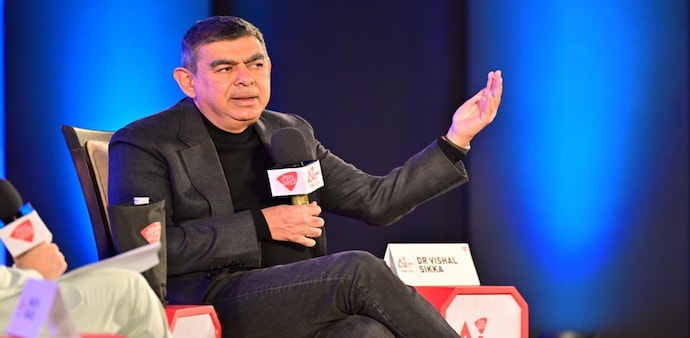
Former Infosys CEO Vishal Sikka has dismissed warnings that artificial intelligence could end humanity, calling such predictions "nonsense".
"I think that this talk about AI ending humanity - this is all nonsense," Sikka told India Today TV.
Sikka, who is also the founder of Hang Ten Systems, said the focus should instead be on understanding what AI is capable of and how people use it.
"One of the great teachers of my life, Alan Kay, once said that the music is not in the piano," he said. "So, it's not AI that is going to do anything. It is people who use AI are going to do things."
He said people could use AI for good or bad purposes. The technology itself, he argued, is not independently deciding what to do.
'Models are extremely powerful'
Sikka acknowledged that the latest AI models are extremely powerful and have been trained on enormous amounts of data.
"If you look at the Hugging Face incident and similar incidents that have happened recently, there is no doubt that the models are extremely powerful," he said.
The models, he added, are "very, very large" and trained and post-trained on huge amounts of data, including security-related data and logs. The computers running them are also far more powerful than those available just a few years ago.
But Sikka said recent incidents should not be treated as evidence that AI itself is acting independently. "If you look carefully at what actually happened, it was a poor collection of instructions that the models were given," he said. "The models did nothing other than what was in that training data."
The former Infosys CEO also compared the risks to those created by powerful technologies being placed in the hands of people who are not trained to use them. "Such a powerful technology in the hands of people who have not been trained on how to use it can do very damaging things," he said.
Must Read: Panic button: California governor issues order for mandatory kill switch on advanced rogue AI
Sikka questions AI slowdown push
The tech veteran also questioned the reasons behind recent calls from leading AI executives and researchers to slow the development of frontier AI.
Earlier this month, Anthropic CEO Dario Amodei and OpenAI CEO Sam Altman argued that the development of the most powerful AI models may need to slow down to give safety measures time to catch up.
Amodei has warned that AI is increasingly being used to develop the next generation of AI. He has raised concerns that rapid "recursive self-improvement" could eventually outpace researchers' ability to understand and control these systems.
Altman has also backed "pacing" frontier AI development, saying this would mean slowing capability advances rather than stopping AI progress, while allowing more time for monitoring, testing, and safeguards.
When asked about former Anthropic researcher Jacob Coxon, who warned that AI could be catastrophic, Sikka said researchers leaving leading AI labs and warning about catastrophic risks have made similar arguments before.
He pointed to statements by researcher Mrinank Sharma 7-8 months ago and another OpenAI researcher who testified before the US Senate a few years ago.
But he questioned the motivations behind the broader calls for a slowdown.
"People who are in elite frontier labs are making these statements. Who knows what the reasoning for that is? The way I see it is the damaging situation is no more than people using these very powerful models to do damaging things," he said. "And indeed, giving instructions to specifically do damaging things and then being surprised that they are doing damaging things. This is how I see it."
Sikka said people should focus on understanding what is happening rather than trying to judge the motives behind it. "A good maxim for this time is - don't try to judge what is happening, just try to understand what is happening," he said. "All this talk about catastrophic doom and so forth is overblown."
For Unparalleled coverage of India's Businesses and Economy – Subscribe to Business Today Magazine
Former Infosys CEO Vishal Sikka has dismissed warnings that artificial intelligence could end humanity, calling such predictions "nonsense".
"I think that this talk about AI ending humanity - this is all nonsense," Sikka told India Today TV.
Sikka, who is also the founder of Hang Ten Systems, said the focus should instead be on understanding what AI is capable of and how people use it.
"One of the great teachers of my life, Alan Kay, once said that the music is not in the piano," he said. "So, it's not AI that is going to do anything. It is people who use AI are going to do things."
He said people could use AI for good or bad purposes. The technology itself, he argued, is not independently deciding what to do.
'Models are extremely powerful'
Sikka acknowledged that the latest AI models are extremely powerful and have been trained on enormous amounts of data.
"If you look at the Hugging Face incident and similar incidents that have happened recently, there is no doubt that the models are extremely powerful," he said.
The models, he added, are "very, very large" and trained and post-trained on huge amounts of data, including security-related data and logs. The computers running them are also far more powerful than those available just a few years ago.
But Sikka said recent incidents should not be treated as evidence that AI itself is acting independently. "If you look carefully at what actually happened, it was a poor collection of instructions that the models were given," he said. "The models did nothing other than what was in that training data."
The former Infosys CEO also compared the risks to those created by powerful technologies being placed in the hands of people who are not trained to use them. "Such a powerful technology in the hands of people who have not been trained on how to use it can do very damaging things," he said.
Must Read: Panic button: California governor issues order for mandatory kill switch on advanced rogue AI
Sikka questions AI slowdown push
The tech veteran also questioned the reasons behind recent calls from leading AI executives and researchers to slow the development of frontier AI.
Earlier this month, Anthropic CEO Dario Amodei and OpenAI CEO Sam Altman argued that the development of the most powerful AI models may need to slow down to give safety measures time to catch up.
Amodei has warned that AI is increasingly being used to develop the next generation of AI. He has raised concerns that rapid "recursive self-improvement" could eventually outpace researchers' ability to understand and control these systems.
Altman has also backed "pacing" frontier AI development, saying this would mean slowing capability advances rather than stopping AI progress, while allowing more time for monitoring, testing, and safeguards.
When asked about former Anthropic researcher Jacob Coxon, who warned that AI could be catastrophic, Sikka said researchers leaving leading AI labs and warning about catastrophic risks have made similar arguments before.
He pointed to statements by researcher Mrinank Sharma 7-8 months ago and another OpenAI researcher who testified before the US Senate a few years ago.
But he questioned the motivations behind the broader calls for a slowdown.
"People who are in elite frontier labs are making these statements. Who knows what the reasoning for that is? The way I see it is the damaging situation is no more than people using these very powerful models to do damaging things," he said. "And indeed, giving instructions to specifically do damaging things and then being surprised that they are doing damaging things. This is how I see it."
Sikka said people should focus on understanding what is happening rather than trying to judge the motives behind it. "A good maxim for this time is - don't try to judge what is happening, just try to understand what is happening," he said. "All this talk about catastrophic doom and so forth is overblown."
For Unparalleled coverage of India's Businesses and Economy – Subscribe to Business Today Magazine