
Apple's next chapter: From Steve Jobs to Tim Cook, now John Ternus takes charge
Tim Cook is stepping down as CEO, but his continued involvement as executive chairman means he will remain closely tied to Apple's future.
- Apr 25, 2026,
- Updated Apr 25, 2026 10:38 AM IST
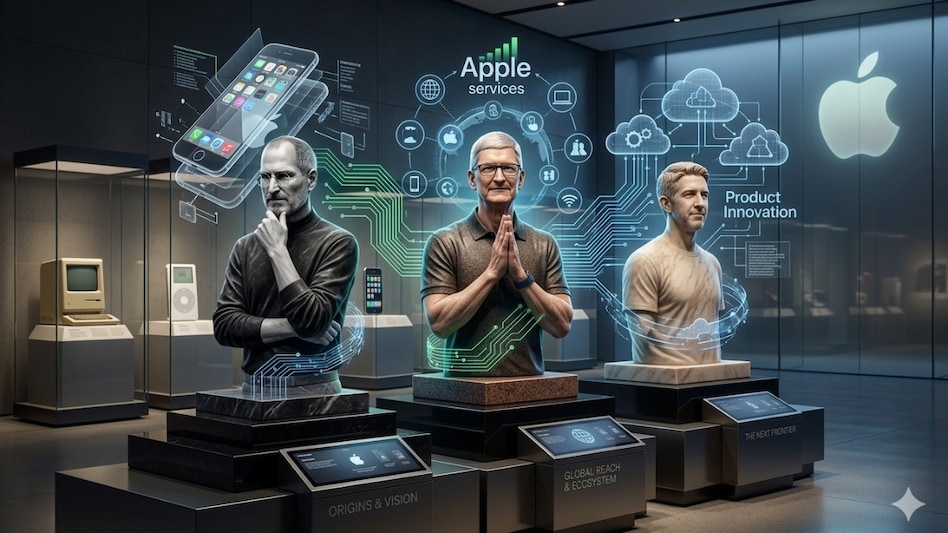
Apple is changing hands for only the third time in its history. Tim Cook, who steered the company from a $350 billion valuation to a $4 trillion giant over 15 years, will step down as CEO on September 1, 2026. John Ternus, Apple's hardware chief and a 25-year company veteran, will succeed him, marking the beginning of a new era shaped as much by Apple's AI ambitions as by its product legacy.
While Cook is stepping down as CEO, his continued involvement as executive chairman means he will remain closely tied to Apple's future, a detail that echoes his own comment that he can't imagine life without Apple. The majority of decisions and responsibilities, however, will pass to Ternus.
After more than 15 years, Apple is again navigating a major transition. Many online have expressed gratitude for how Cook held the company together and built it into a $4 trillion enterprise in the post-Jobs era. But it is hard not to look back at the last handover, marked by Steve Jobs' final days.
Must read: Tim Cook's legacy: Services, chips and wearables that reshaped Apple
Tim Cook's leadership began amid profound personal loss
When Tim Cook took over as CEO of Apple, it was at a challenging time; the company had just lost its iconic founder. The role came with immense pressure, not only to keep Apple successful but to honour Jobs' legacy, all while navigating a profound personal loss. Despite those early battles, Cook brought Apple from a $350 billion company to a $4 trillion one over 15 years.
Jobs announced his resignation in a letter to the Apple board and the Apple community. "I have always said if there ever came a day when I could no longer meet my duties and expectations as Apple's CEO, I would be the first to let you know," he wrote. "Unfortunately, that day has come."
"I hereby resign as CEO of Apple. I would like to serve, if the Board sees fit, as Chairman of the Board, director and Apple employee," he added.
In the same letter, Jobs named his successor: "I strongly recommend that we execute our succession plan and name Tim Cook as CEO of Apple." The letter remains a deeply emotional document, a testament to Jobs' legacy and to how Cook carried that vision forward through a new era.
Cook's community letter, shared on April 20, appeared to draw inspiration from Jobs' own letter to the community. Read here
Just 42 days after Cook became CEO, Jobs passed away, leaving the full weight of the company in Cook's hands. On the same day, Cook wrote to employees: "Apple has lost a visionary and creative genius, and the world has lost an amazing human being. Those of us who have been fortunate enough to know and work with Steve have lost a dear friend and an inspiring mentor. No words can adequately express our sadness at Steve's death or our gratitude for the opportunity to work with him."
Now, with Cook stepping down after transforming Apple into a supply-chain powerhouse, the appointment of Ternus signals a return to product-first leadership.
Must read: Beyond the iPhone: How Tim Cook made India the backbone of Apple's next decade of growth
John Ternus: A return of product-first leadership
Ternus joined Apple in 2001 and has played a key role in building many of its defining products, including the iPad and Apple Silicon. With over 25 years at the company, he brings deep expertise in design and innovation, reminiscent of Jobs, alongside the operational rigour associated with Cook.
For the first time, however, Apple will be led by someone who was not part of the original Mac or iPhone era. Ternus came of age professionally at a company already established and globally dominant.
According to a Bloomberg report, Ternus has been appointed to revive the product-driven spirit of the Jobs era. His hands-on experience across Apple's product lineup makes him the right fit for what comes next. Cook has said that Ternus possesses the "Apple DNA" required to navigate the next decade of spatial computing and AI.
Unlike the tragic and abrupt transition of 2011, this handover was carefully planned. Cook's move to executive chairman will provide a guiding presence for Ternus as he settles into the role.
In 2011, Steve Jobs told the board he believed Apple's brightest and most innovative days were still ahead. Fifteen years later, as Cook passes the keys to Ternus, that belief remains the company's north star.
For Unparalleled coverage of India's Businesses and Economy – Subscribe to Business Today Magazine
Apple is changing hands for only the third time in its history. Tim Cook, who steered the company from a $350 billion valuation to a $4 trillion giant over 15 years, will step down as CEO on September 1, 2026. John Ternus, Apple's hardware chief and a 25-year company veteran, will succeed him, marking the beginning of a new era shaped as much by Apple's AI ambitions as by its product legacy.
While Cook is stepping down as CEO, his continued involvement as executive chairman means he will remain closely tied to Apple's future, a detail that echoes his own comment that he can't imagine life without Apple. The majority of decisions and responsibilities, however, will pass to Ternus.
After more than 15 years, Apple is again navigating a major transition. Many online have expressed gratitude for how Cook held the company together and built it into a $4 trillion enterprise in the post-Jobs era. But it is hard not to look back at the last handover, marked by Steve Jobs' final days.
Must read: Tim Cook's legacy: Services, chips and wearables that reshaped Apple
Tim Cook's leadership began amid profound personal loss
When Tim Cook took over as CEO of Apple, it was at a challenging time; the company had just lost its iconic founder. The role came with immense pressure, not only to keep Apple successful but to honour Jobs' legacy, all while navigating a profound personal loss. Despite those early battles, Cook brought Apple from a $350 billion company to a $4 trillion one over 15 years.
Jobs announced his resignation in a letter to the Apple board and the Apple community. "I have always said if there ever came a day when I could no longer meet my duties and expectations as Apple's CEO, I would be the first to let you know," he wrote. "Unfortunately, that day has come."
"I hereby resign as CEO of Apple. I would like to serve, if the Board sees fit, as Chairman of the Board, director and Apple employee," he added.
In the same letter, Jobs named his successor: "I strongly recommend that we execute our succession plan and name Tim Cook as CEO of Apple." The letter remains a deeply emotional document, a testament to Jobs' legacy and to how Cook carried that vision forward through a new era.
Cook's community letter, shared on April 20, appeared to draw inspiration from Jobs' own letter to the community. Read here
Just 42 days after Cook became CEO, Jobs passed away, leaving the full weight of the company in Cook's hands. On the same day, Cook wrote to employees: "Apple has lost a visionary and creative genius, and the world has lost an amazing human being. Those of us who have been fortunate enough to know and work with Steve have lost a dear friend and an inspiring mentor. No words can adequately express our sadness at Steve's death or our gratitude for the opportunity to work with him."
Now, with Cook stepping down after transforming Apple into a supply-chain powerhouse, the appointment of Ternus signals a return to product-first leadership.
Must read: Beyond the iPhone: How Tim Cook made India the backbone of Apple's next decade of growth
John Ternus: A return of product-first leadership
Ternus joined Apple in 2001 and has played a key role in building many of its defining products, including the iPad and Apple Silicon. With over 25 years at the company, he brings deep expertise in design and innovation, reminiscent of Jobs, alongside the operational rigour associated with Cook.
For the first time, however, Apple will be led by someone who was not part of the original Mac or iPhone era. Ternus came of age professionally at a company already established and globally dominant.
According to a Bloomberg report, Ternus has been appointed to revive the product-driven spirit of the Jobs era. His hands-on experience across Apple's product lineup makes him the right fit for what comes next. Cook has said that Ternus possesses the "Apple DNA" required to navigate the next decade of spatial computing and AI.
Unlike the tragic and abrupt transition of 2011, this handover was carefully planned. Cook's move to executive chairman will provide a guiding presence for Ternus as he settles into the role.
In 2011, Steve Jobs told the board he believed Apple's brightest and most innovative days were still ahead. Fifteen years later, as Cook passes the keys to Ternus, that belief remains the company's north star.
For Unparalleled coverage of India's Businesses and Economy – Subscribe to Business Today Magazine