
'Elxsi was on the brink of collapse, Ratan Tata was worried': Ex-CEO recalls survival, and why India lost manufacturing
In Designed To Win, S Devarajan recounts the revival of Tata Elxsi from the edge of collapse
- Jan 27, 2026,
- Updated Jan 27, 2026 12:06 PM IST
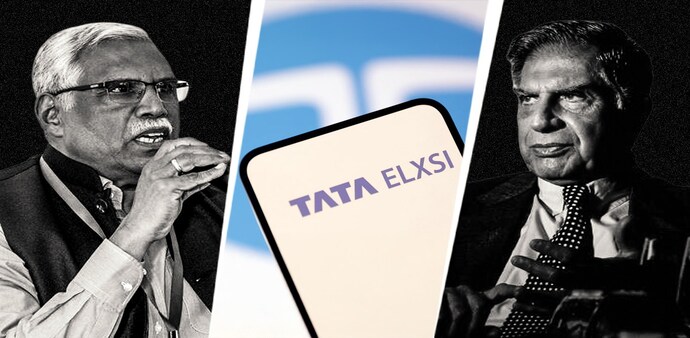
When S Devarajan took charge of Tata Elxsi in the early 1990s, the company was deep in the red, short on cash, and struggling to survive. Morale was fragile, and even within the Tata Group, there were suggestions that Elxsi should be shut down or merged with TCS.
Ratan Tata, for whom Elxsi was a pet project, was "visibly worried" as losses continued to mount.
In his new book, Designed To Win: The Tata Elxsi Story, Devarajan - who served as Tata Elxsi's Managing Director and CEO from 1996 to 2001 - recounts the company's turnaround under his watch and its transformation into a global engineering and design services firm.
In an exclusive interview with Business Today, the former CEO speaks about the brink-of-collapse moment at Elxsi, why India ceded hardware leadership to East Asia, the lack of technology transfer from multinationals, and what India's semiconductor push must do differently.
Edited Excepts
You write in the book about Tata Elxsi's struggling days; even one Tata Steel General Manager once suggested that you should either shut down Tata Elxsi or merge with TCS. Did it ever occur to you that we might have to shut Elxsi or merge with TCS?
When I was hired, Tata Elxsi was deep in the red. I was hired to manage the business turnaround of the company. I joined the company knowing that things were not good. My then Chairman of Tata Elxsi was Mr FC Kohli, founder of TCS and the Father of the Indian IT Industry. During my interview, when he told me, 'Can you come on board and do this?' you couldn't say no. So I took it up as a challenge.
In 1993, Elxsi's financial situation was grim. You write that Ratan Tata was visibly worried because the company was one of his pet projects. What exactly did he tell you at that moment - and how did that shape Elxsi's turnaround?
He (Ratan Tata) funded the company when it was in the US. Because it was his pet project, he used to review the performance more than once a quarter. There came a time, a year and a half later, when the losses just got deeper because the company still had not built itself around the new strategy. It takes about 18 months to absorb whatever strategy you are trying to implement. We were on the brink of disaster. That was the time when Mr Tata was very worried, and he said, 'We have to do something to salvage the situation.' Though he was aware of what we were trying to do, he was certainly concerned. Subsequently, it was a combination of factors that was in our favour. Our revised business strategy kicked in, we raised additional equity through a rights issue, and with customer confidence and team effort, the company started doing very well.
You describe a conversation where Ratan Tata told Thampy Thomas: 'I can invest in Silicon Valley- they need capital, I need technology transfer.' Later, Tata Elxsi was set up in Singapore. Even with such visionary intent at the top, why could India not replicate what smaller economies like Taiwan or Japan achieved in hardware and electronics? What blocked us?
Till pre-liberalisation of 1991, there were at least half a dozen computer companies in India. Tata Elxsi, HCL, Wipro and ECIL were manufacturing computers in India. The Government of India set up the Semiconductor Complex in Chandigarh to manufacture chips. We were also manufacturing transistors and small ICs at Bharat Electronics. Most of the work was being done in the Public Sector. But when liberalisation happened, and the country's economy opened up, manufacturing stopped, and everything started getting imported.
We were manufacturing our own whitegoods and TVs etc. Brands like Godrej, Allwyn and Kelvinator were popular brands. The TV industry also flourished with local brands such as Bush, Onida, Dyanora and EC tvs.
But when liberalisation happened, all white goods started coming from the Far East. Brands like Samsung, LG and Sony ruled.
The automotive industry opened up because you could get newer and newer models at a quicker pace. The electronics industry also opened up, and people started importing computers. Everything was available to be imported. So, the domestic manufacturing industry just withered away
Why couldn't we compete? We imported because that was cheaper…
When the country was a closed economy, access to technology was limited. So, we were manufacturing products that were maybe a generation or two behind in terms of capability and technology. Suddenly, when the economy opened up, the whole world opened up in front of you. We could import everything at a similar price point and of current technology.
Elxsi was among the earliest tech startups founded by an Indian in Silicon Valley in 1979. Texas Instruments set up a chip design centre in Bengaluru in 1985. Yet none of this translated into a domestic semiconductor ecosystem. What prevented India from capitalising on that early head start?
Texas Instruments (TI) was the first multinational technology company to establish a presence in India. TI aimed to capitalise on India's skilled workforce to design products locally at a lower cost, primarily for the American market.
As an American company, Texas Instruments set up operations in India much like today's multinationals, focusing exclusively on serving the global market rather than the domestic Indian market. It had nothing to do with the domestic market. That was their agenda. Foreign exchange was coming in because of that, and we were happy.
Q - So there was no technology transfer…
Nothing. That was not even on the agenda. Everything was available to import. Our domestic products took a back seat as they were not in line with the modern technology that was available from the global markets. When somebody has leadership and advancement in technology, it is very difficult to catch up.
Take the flip side: in the global software industry, India is the market leader. We are far ahead of everybody else in the global software services market. China today is focused on hardware, and it is far ahead of everybody in the global hardware manufacturing and integration market.
That is a big push the nation is driving to become self-reliant in hardware technology as well. These are all movements, and they take time. It has to be accepted up and down the line, and that’s where patient capital is needed.
But today we realise that you cannot be subject to threats from anywhere else outside. We have to be self-reliant and do all this ourselves. So now that we have done it for others, we have the wherewithal - people, technology, and everything else - to do it for ourselves.
There are also arguments that IT companies are not investing in R&D for deep-tech innovation. Where do you stand on this?
We invest in R&D, but we invest for others - not for ourselves. For example, if an Indian company works on state-of-the-art autonomous car technology, infotainment products for the automotive industry, AI for home automation, or industrial automation, they will look for business from the global market. Because that's where the revenues and margins lie. That is where the business comes from. There is still not much money to make from India in this space.
I am part of a consortium called EPIC (Electronic Products Innovation Consortium). We are trying to see how to create domestic demand and how to design products for India. An essential aspect of our mission involves reviving and implementing Preferential Market Access (PMA) policies on both - central and state fronts. Our proactive efforts are centred on amplifying the demand for innovative products. And if we can aggregate government demands, as they would be a huge consumer, then Indian 'Made in India' companies can scale.
How close is India today to achieving meaningful scale in semiconductor production?
A lot of investments are happening today by big corporations in semiconductor production. And then we have to go up the value chain to see how to integrate those into subsystems and finally products.
The movement has begun. There is momentum created. It is a bottom-up approach as far as the semiconductor fab industry is concerned. The demand will get absorbed by the domestic market first. And we can also look at the global marketplace, like we did with software services. In this process, a beautiful ecosystem will be created.
What is the one mistake the government must avoid repeating this time?
I don't think this time they are committing any mistake.
Trump has imposed tariffs on merchandise trade. Raghuram Rajan earlier warned that the US HIRE Act - which penalises outsourcing - could hurt India even more because of its heavy reliance on services exports. How should India prepare?
If you look at the outsourcing industry in India, the clients are very powerful companies in the United States. You have Cisco, Microsoft, NVIDIA, and Broadcom. All these are very big players in the American industry. They will not allow it to happen as their end products will become much more expensive. All these big players will be impacted, and I am sure they will lobby to ensure it is not implemented.
You write about Elxsi's role in Tejas. What is the company's contribution to the Tejas programme?
It was the early days when the whole product and architecture of Tejas were being formulated. Before you design an aircraft, you need a simulation product to simulate all aspects of the aircraft. If I design a wing in a certain way, how will it behave? If I design the engine in a certain way, how will it behave? All behavioural patterns have to be simulated because these are very expensive products. You cannot even make a prototype in the beginning because each prototype costs crores and crores of rupees.
So you create computer models to simulate all aspects of the aircraft design. One of the main things we did was the flight simulator itself. When I say aircraft simulator, I mean how the aircraft behaves when you fly it - how the controls, switches, and buttons respond, and what the entire flying experience is like.
For Unparalleled coverage of India's Businesses and Economy – Subscribe to Business Today Magazine
When S Devarajan took charge of Tata Elxsi in the early 1990s, the company was deep in the red, short on cash, and struggling to survive. Morale was fragile, and even within the Tata Group, there were suggestions that Elxsi should be shut down or merged with TCS.
Ratan Tata, for whom Elxsi was a pet project, was "visibly worried" as losses continued to mount.
In his new book, Designed To Win: The Tata Elxsi Story, Devarajan - who served as Tata Elxsi's Managing Director and CEO from 1996 to 2001 - recounts the company's turnaround under his watch and its transformation into a global engineering and design services firm.
In an exclusive interview with Business Today, the former CEO speaks about the brink-of-collapse moment at Elxsi, why India ceded hardware leadership to East Asia, the lack of technology transfer from multinationals, and what India's semiconductor push must do differently.
Edited Excepts
You write in the book about Tata Elxsi's struggling days; even one Tata Steel General Manager once suggested that you should either shut down Tata Elxsi or merge with TCS. Did it ever occur to you that we might have to shut Elxsi or merge with TCS?
When I was hired, Tata Elxsi was deep in the red. I was hired to manage the business turnaround of the company. I joined the company knowing that things were not good. My then Chairman of Tata Elxsi was Mr FC Kohli, founder of TCS and the Father of the Indian IT Industry. During my interview, when he told me, 'Can you come on board and do this?' you couldn't say no. So I took it up as a challenge.
In 1993, Elxsi's financial situation was grim. You write that Ratan Tata was visibly worried because the company was one of his pet projects. What exactly did he tell you at that moment - and how did that shape Elxsi's turnaround?
He (Ratan Tata) funded the company when it was in the US. Because it was his pet project, he used to review the performance more than once a quarter. There came a time, a year and a half later, when the losses just got deeper because the company still had not built itself around the new strategy. It takes about 18 months to absorb whatever strategy you are trying to implement. We were on the brink of disaster. That was the time when Mr Tata was very worried, and he said, 'We have to do something to salvage the situation.' Though he was aware of what we were trying to do, he was certainly concerned. Subsequently, it was a combination of factors that was in our favour. Our revised business strategy kicked in, we raised additional equity through a rights issue, and with customer confidence and team effort, the company started doing very well.
You describe a conversation where Ratan Tata told Thampy Thomas: 'I can invest in Silicon Valley- they need capital, I need technology transfer.' Later, Tata Elxsi was set up in Singapore. Even with such visionary intent at the top, why could India not replicate what smaller economies like Taiwan or Japan achieved in hardware and electronics? What blocked us?
Till pre-liberalisation of 1991, there were at least half a dozen computer companies in India. Tata Elxsi, HCL, Wipro and ECIL were manufacturing computers in India. The Government of India set up the Semiconductor Complex in Chandigarh to manufacture chips. We were also manufacturing transistors and small ICs at Bharat Electronics. Most of the work was being done in the Public Sector. But when liberalisation happened, and the country's economy opened up, manufacturing stopped, and everything started getting imported.
We were manufacturing our own whitegoods and TVs etc. Brands like Godrej, Allwyn and Kelvinator were popular brands. The TV industry also flourished with local brands such as Bush, Onida, Dyanora and EC tvs.
But when liberalisation happened, all white goods started coming from the Far East. Brands like Samsung, LG and Sony ruled.
The automotive industry opened up because you could get newer and newer models at a quicker pace. The electronics industry also opened up, and people started importing computers. Everything was available to be imported. So, the domestic manufacturing industry just withered away
Why couldn't we compete? We imported because that was cheaper…
When the country was a closed economy, access to technology was limited. So, we were manufacturing products that were maybe a generation or two behind in terms of capability and technology. Suddenly, when the economy opened up, the whole world opened up in front of you. We could import everything at a similar price point and of current technology.
Elxsi was among the earliest tech startups founded by an Indian in Silicon Valley in 1979. Texas Instruments set up a chip design centre in Bengaluru in 1985. Yet none of this translated into a domestic semiconductor ecosystem. What prevented India from capitalising on that early head start?
Texas Instruments (TI) was the first multinational technology company to establish a presence in India. TI aimed to capitalise on India's skilled workforce to design products locally at a lower cost, primarily for the American market.
As an American company, Texas Instruments set up operations in India much like today's multinationals, focusing exclusively on serving the global market rather than the domestic Indian market. It had nothing to do with the domestic market. That was their agenda. Foreign exchange was coming in because of that, and we were happy.
Q - So there was no technology transfer…
Nothing. That was not even on the agenda. Everything was available to import. Our domestic products took a back seat as they were not in line with the modern technology that was available from the global markets. When somebody has leadership and advancement in technology, it is very difficult to catch up.
Take the flip side: in the global software industry, India is the market leader. We are far ahead of everybody else in the global software services market. China today is focused on hardware, and it is far ahead of everybody in the global hardware manufacturing and integration market.
That is a big push the nation is driving to become self-reliant in hardware technology as well. These are all movements, and they take time. It has to be accepted up and down the line, and that’s where patient capital is needed.
But today we realise that you cannot be subject to threats from anywhere else outside. We have to be self-reliant and do all this ourselves. So now that we have done it for others, we have the wherewithal - people, technology, and everything else - to do it for ourselves.
There are also arguments that IT companies are not investing in R&D for deep-tech innovation. Where do you stand on this?
We invest in R&D, but we invest for others - not for ourselves. For example, if an Indian company works on state-of-the-art autonomous car technology, infotainment products for the automotive industry, AI for home automation, or industrial automation, they will look for business from the global market. Because that's where the revenues and margins lie. That is where the business comes from. There is still not much money to make from India in this space.
I am part of a consortium called EPIC (Electronic Products Innovation Consortium). We are trying to see how to create domestic demand and how to design products for India. An essential aspect of our mission involves reviving and implementing Preferential Market Access (PMA) policies on both - central and state fronts. Our proactive efforts are centred on amplifying the demand for innovative products. And if we can aggregate government demands, as they would be a huge consumer, then Indian 'Made in India' companies can scale.
How close is India today to achieving meaningful scale in semiconductor production?
A lot of investments are happening today by big corporations in semiconductor production. And then we have to go up the value chain to see how to integrate those into subsystems and finally products.
The movement has begun. There is momentum created. It is a bottom-up approach as far as the semiconductor fab industry is concerned. The demand will get absorbed by the domestic market first. And we can also look at the global marketplace, like we did with software services. In this process, a beautiful ecosystem will be created.
What is the one mistake the government must avoid repeating this time?
I don't think this time they are committing any mistake.
Trump has imposed tariffs on merchandise trade. Raghuram Rajan earlier warned that the US HIRE Act - which penalises outsourcing - could hurt India even more because of its heavy reliance on services exports. How should India prepare?
If you look at the outsourcing industry in India, the clients are very powerful companies in the United States. You have Cisco, Microsoft, NVIDIA, and Broadcom. All these are very big players in the American industry. They will not allow it to happen as their end products will become much more expensive. All these big players will be impacted, and I am sure they will lobby to ensure it is not implemented.
You write about Elxsi's role in Tejas. What is the company's contribution to the Tejas programme?
It was the early days when the whole product and architecture of Tejas were being formulated. Before you design an aircraft, you need a simulation product to simulate all aspects of the aircraft. If I design a wing in a certain way, how will it behave? If I design the engine in a certain way, how will it behave? All behavioural patterns have to be simulated because these are very expensive products. You cannot even make a prototype in the beginning because each prototype costs crores and crores of rupees.
So you create computer models to simulate all aspects of the aircraft design. One of the main things we did was the flight simulator itself. When I say aircraft simulator, I mean how the aircraft behaves when you fly it - how the controls, switches, and buttons respond, and what the entire flying experience is like.
For Unparalleled coverage of India's Businesses and Economy – Subscribe to Business Today Magazine