
Fraud in the strait?: How crypto scamsters are targeting ships stuck in Hormuz
The fraudulent messages asked companies to submit vessel documents for review by Iranian security services, after which a transit fee would be determined. "Only then will your vessel be able to transit the strait unimpeded at the pre-agreed time," the fraudulent communication read, according to MARISKS.
- Apr 21, 2026,
- Updated Apr 21, 2026 4:20 PM IST
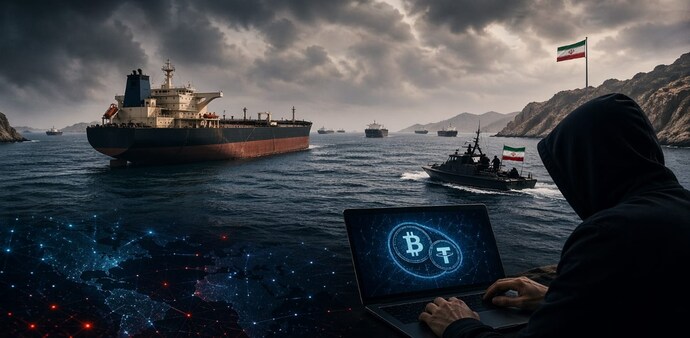
As hundreds of ships remain stuck near the Strait of Hormuz, fraudsters have found an opportunity. Unknown actors pretending to be Iranian officials are asking shipping companies to pay in cryptocurrency to allow their vessels to pass through the blocked route, according to Greek maritime risk firm MARISKS.
The firm said the messages, demanding fees in Bitcoin or Tether, were not sent by Iranian authorities. "These specific messages are a scam," MARISKS said in an alert to shipowners.
The messages asked companies to submit vessel documents for review by Iranian security services, after which a transit fee would be determined. "Only then will your vessel be able to transit the strait unimpeded at the pre-agreed time," the fraudulent communication read, according to MARISKS, cited by Reuters.
The alert comes as the Strait of Hormuz, through which roughly a fifth of the world's oil and liquefied natural gas flowed before the West Asia conflict erupted, remains effectively shut to commercial shipping.
The firm said it believed at least one of the ships targeted by the scam may have acted on the fraudulent instructions, according to the Reuters report. On April 18, when Iran briefly reopened the strait for passage subject to inspections, at least two vessels, including a tanker, reported coming under fire from Iranian patrol boats and were forced to turn back. MARISKS said one of those vessels appeared to have fallen victim to the fraud before attempting to transit.
Must read: Why the Strait of Hormuz matters for India's internet
The Hormuz scam is part of a broader wave of cryptocurrency-linked crime. According to data from DefiLlama, losses from hacking incidents in April 2026 have already crossed $606 million.
Meanwhile, ship movement in the area remains uncertain. At least 20 ships passed through the strait over the weekend, according to LSEG data, but traffic slowed again after fresh attacks. In one case, Iran’s Revolutionary Guard fired at a tanker, while a container ship was hit by a projectile. India reportedly confirmed both targeted ships were flying the Indian flag and said it had conveyed serious concern to Tehran.
The situation worsened after a short diplomatic breakthrough failed. Iran had briefly reopened the strait following a US-brokered ceasefire in Lebanon. But it shut it again after Donald Trump refused to lift a US naval blockade on Iranian ports.
Must read: 'Strait of Hormuz is...': Iran opens crucial waterway for all shipping traffic during ceasefire
Over the weekend, the US Navy fired at an Iranian cargo ship in the Gulf of Oman, and US Marines seized the vessel. Trump said the ship had tried to break the blockade.
Iran had earlier suggested a system where ships would pay a fee for safe passage. Talks between the US and Iran, being facilitated by Pakistan, are ongoing, but chances of a deal remain low. Trump told Bloomberg that extending the ceasefire, which is set to end on Wednesday, is “highly unlikely.”
For Unparalleled coverage of India's Businesses and Economy – Subscribe to Business Today Magazine
As hundreds of ships remain stuck near the Strait of Hormuz, fraudsters have found an opportunity. Unknown actors pretending to be Iranian officials are asking shipping companies to pay in cryptocurrency to allow their vessels to pass through the blocked route, according to Greek maritime risk firm MARISKS.
The firm said the messages, demanding fees in Bitcoin or Tether, were not sent by Iranian authorities. "These specific messages are a scam," MARISKS said in an alert to shipowners.
The messages asked companies to submit vessel documents for review by Iranian security services, after which a transit fee would be determined. "Only then will your vessel be able to transit the strait unimpeded at the pre-agreed time," the fraudulent communication read, according to MARISKS, cited by Reuters.
The alert comes as the Strait of Hormuz, through which roughly a fifth of the world's oil and liquefied natural gas flowed before the West Asia conflict erupted, remains effectively shut to commercial shipping.
The firm said it believed at least one of the ships targeted by the scam may have acted on the fraudulent instructions, according to the Reuters report. On April 18, when Iran briefly reopened the strait for passage subject to inspections, at least two vessels, including a tanker, reported coming under fire from Iranian patrol boats and were forced to turn back. MARISKS said one of those vessels appeared to have fallen victim to the fraud before attempting to transit.
Must read: Why the Strait of Hormuz matters for India's internet
The Hormuz scam is part of a broader wave of cryptocurrency-linked crime. According to data from DefiLlama, losses from hacking incidents in April 2026 have already crossed $606 million.
Meanwhile, ship movement in the area remains uncertain. At least 20 ships passed through the strait over the weekend, according to LSEG data, but traffic slowed again after fresh attacks. In one case, Iran’s Revolutionary Guard fired at a tanker, while a container ship was hit by a projectile. India reportedly confirmed both targeted ships were flying the Indian flag and said it had conveyed serious concern to Tehran.
The situation worsened after a short diplomatic breakthrough failed. Iran had briefly reopened the strait following a US-brokered ceasefire in Lebanon. But it shut it again after Donald Trump refused to lift a US naval blockade on Iranian ports.
Must read: 'Strait of Hormuz is...': Iran opens crucial waterway for all shipping traffic during ceasefire
Over the weekend, the US Navy fired at an Iranian cargo ship in the Gulf of Oman, and US Marines seized the vessel. Trump said the ship had tried to break the blockade.
Iran had earlier suggested a system where ships would pay a fee for safe passage. Talks between the US and Iran, being facilitated by Pakistan, are ongoing, but chances of a deal remain low. Trump told Bloomberg that extending the ceasefire, which is set to end on Wednesday, is “highly unlikely.”
For Unparalleled coverage of India's Businesses and Economy – Subscribe to Business Today Magazine