
From UPI to stock markets: How the Strait of Hormuz crisis could hit your wallet
As geopolitical tensions escalate in West Asia, the Strait of Hormuz, long known as the world’s most critical oil chokepoint, is emerging as a potential digital flashpoint.
- Apr 3, 2026,
- Updated Apr 3, 2026 10:02 AM IST
Have you ever considered what a full-scale internet blackout would look like, not due to a cyberattack, but because the physical backbone of the internet is snapped?
As geopolitical tensions escalate in West Asia, the Strait of Hormuz, long known as the world’s most critical oil chokepoint, is emerging as a potential digital flashpoint. Beneath its waters lies a cluster of undersea fibre optic cables that carry a significant portion of global internet traffic.
The hidden chokepoint beneath Hormuz
The Strait of Hormuz, located between Iran and Oman, handles nearly 20% of global oil flows. Less discussed is its role in global connectivity.
Roughly 16 major submarine cables pass through or near the region. These cables are estimated to carry about a quarter of global data traffic and a substantial share of India’s international bandwidth.
In 2024, disruptions to undersea cables in the Red Sea, linked to regional conflict involving Houthi forces, impacted connectivity across parts of West Asia, reportedly affecting a large portion of bandwidth in some countries.
Markets would feel the tremors first
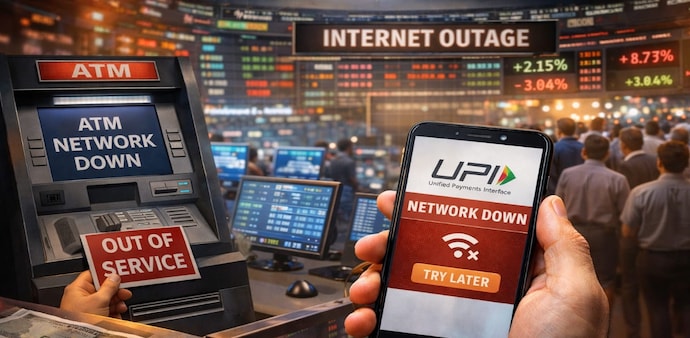
If connectivity through the Strait of Hormuz is hit, financial markets would likely be among the first to feel the impact. India’s stock exchanges depend on real-time data and seamless connectivity for trading, settlement and risk management. Even short-lived outages or latency spikes could disrupt order execution, trigger volatility and dent investor confidence, especially in a system where speed is everything.
Banking and payments at risk
The disruption would quickly spill over into the banking system. India’s financial infrastructure today is deeply digital, with core banking systems, ATMs and mobile applications all relying on stable network connectivity.
In such a scenario, transactions could slow down or fail, ATM withdrawals may be affected and routine financial activities such as salary credits or vendor payments could face delays.
UPI ecosystem comes under stress
The National Payments Corporation of India-run UPI ecosystem has become the backbone of everyday commerce. From roadside vendors to large retailers, UPI powers billions of transactions each month.
Any significant disruption could force a sudden shift back to cash, leaving gig workers unpaid, small merchants struggling to transact and consumers unable to make routine purchases.
Travel, logistics and daily life disrupted
Transport and ticketing systems would also come under strain. Platforms like Indian Railway Catering and Tourism Corporation (IRCTC) depend on continuous internet access for bookings and operations.
A connectivity breakdown could halt online ticketing, pushing millions of users toward offline counters that are neither designed nor equipped to handle such a surge. The disruption could extend to logistics networks as well, affecting freight movement and supply chains tied to digital platforms.
For Unparalleled coverage of India's Businesses and Economy – Subscribe to Business Today Magazine
Have you ever considered what a full-scale internet blackout would look like, not due to a cyberattack, but because the physical backbone of the internet is snapped?
As geopolitical tensions escalate in West Asia, the Strait of Hormuz, long known as the world’s most critical oil chokepoint, is emerging as a potential digital flashpoint. Beneath its waters lies a cluster of undersea fibre optic cables that carry a significant portion of global internet traffic.
The hidden chokepoint beneath Hormuz
The Strait of Hormuz, located between Iran and Oman, handles nearly 20% of global oil flows. Less discussed is its role in global connectivity.
Roughly 16 major submarine cables pass through or near the region. These cables are estimated to carry about a quarter of global data traffic and a substantial share of India’s international bandwidth.
In 2024, disruptions to undersea cables in the Red Sea, linked to regional conflict involving Houthi forces, impacted connectivity across parts of West Asia, reportedly affecting a large portion of bandwidth in some countries.
Markets would feel the tremors first
If connectivity through the Strait of Hormuz is hit, financial markets would likely be among the first to feel the impact. India’s stock exchanges depend on real-time data and seamless connectivity for trading, settlement and risk management. Even short-lived outages or latency spikes could disrupt order execution, trigger volatility and dent investor confidence, especially in a system where speed is everything.
Banking and payments at risk
The disruption would quickly spill over into the banking system. India’s financial infrastructure today is deeply digital, with core banking systems, ATMs and mobile applications all relying on stable network connectivity.
In such a scenario, transactions could slow down or fail, ATM withdrawals may be affected and routine financial activities such as salary credits or vendor payments could face delays.
UPI ecosystem comes under stress
The National Payments Corporation of India-run UPI ecosystem has become the backbone of everyday commerce. From roadside vendors to large retailers, UPI powers billions of transactions each month.
Any significant disruption could force a sudden shift back to cash, leaving gig workers unpaid, small merchants struggling to transact and consumers unable to make routine purchases.
Travel, logistics and daily life disrupted
Transport and ticketing systems would also come under strain. Platforms like Indian Railway Catering and Tourism Corporation (IRCTC) depend on continuous internet access for bookings and operations.
A connectivity breakdown could halt online ticketing, pushing millions of users toward offline counters that are neither designed nor equipped to handle such a surge. The disruption could extend to logistics networks as well, affecting freight movement and supply chains tied to digital platforms.
For Unparalleled coverage of India's Businesses and Economy – Subscribe to Business Today Magazine