
India wants cars to talk to each other and to traffic lights. Here is what that means
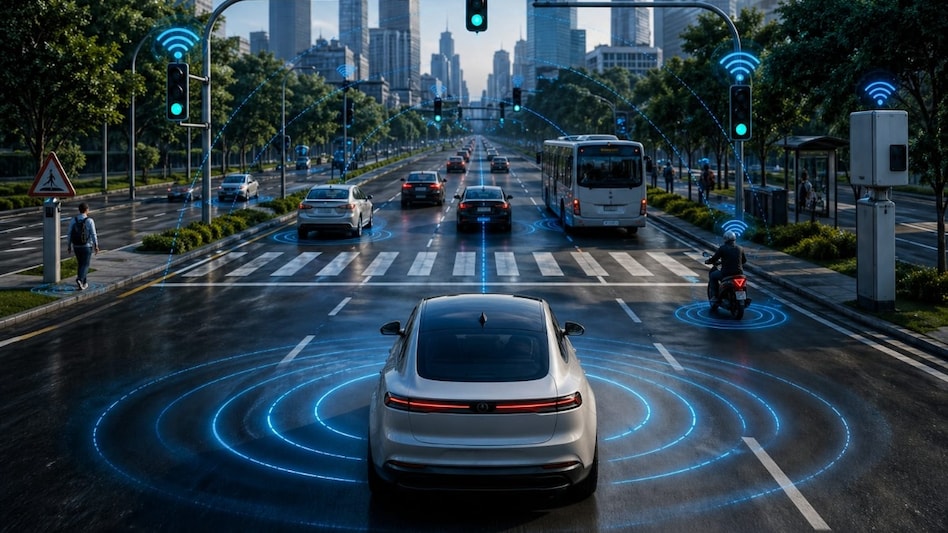
The idea is straightforward, equip vehicles and road infrastructure with wireless technology so that they can exchange data in real time, alerting drivers, warning pedestrians of oncoming traffic and helping cities manage congestion more efficiently.
- Apr 30, 2026,
- Updated Apr 30, 2026 5:59 PM IST
India's roads kill lakhs of people every year and human error is behind the majority of those deaths. A new regulatory push by the Telecom Regulatory Authority of India suggests that wireless technology, not just better enforcement, could be part of the answer.
TRAI has released a consultation paper proposing a framework for Vehicle-to-Everything communication. The idea is straightforward, equip vehicles and road infrastructure with wireless technology so that they can exchange data in real time, alerting drivers, warning pedestrians of oncoming traffic and helping cities manage congestion more efficiently.
Must read: India gears up for connected cars, TRAI starts V2X consultation
The consultation paper proposes that the system be built on existing 4G and 5G cellular networks rather than on dedicated short-range radio, effectively making telecom operators the backbone of India's future mobility infrastructure.
What exactly is V2X?
V2X refers to a set of technologies that allow cars to exchange data with their environment using sensors, cameras and wireless connectivity like 4G and 5G.
While modern cars already use sensors for features like parking assistance or collision warnings, most systems today work in isolation. V2X aims to connect these systems into a larger network, enabling vehicles to share information beyond what a single car can “see”.
The "everything" in the name refers to other vehicles, road infrastructure, pedestrians and wider network systems.
In simple terms, it expands communication in four key ways:
- Vehicle-to-Vehicle (V2V): Cars share data on speed, direction and position in real time
- Vehicle-to-Infrastructure (V2I): Vehicles interact with traffic lights, road signs and other smart infrastructure
- Vehicle-to-Pedestrian (V2P): Systems detect and respond to pedestrians, cyclists and other road users
- Vehicle-to-Network (V2N): Cars connect to broader networks using cellular technology
What is TRAI proposing?
TRAI's consultation paper lays out a regulatory structure for making this happen. The headline decision is the preference for a cellular-based architecture, meaning V2X will run over the same networks that carry phone calls and mobile data, rather than requiring entirely new infrastructure.
Must read: Pure software is rapidly becoming uninvestable: Naval Ravikant on why vibe coding changes everything
Around 30 MHz in the 5.9 GHz frequency band has been identified for the initial rollout, with additional spectrum reserved for future needs as the technology scales.
On the regulatory side, the paper proposes a differentiated approach. Communication devices built into vehicles may be allowed to operate without individual licences, which would lower the barrier to adoption for automakers. Roadside communication units would need authorisation to prevent signal interference and ensure orderly deployment.
The challenges ahead
Despite its promise, V2X is still in a fragmented stage globally. Many vehicles cannot send and receive data across brands or platforms and large-scale network integration is still evolving.
There are also concerns around reliability and security. For V2X to work effectively, sensors and communication systems need to be highly dependable. At the same time, the large volumes of data generated raise questions around privacy and vulnerability to cyberattacks.
For Unparalleled coverage of India's Businesses and Economy – Subscribe to Business Today Magazine
India's roads kill lakhs of people every year and human error is behind the majority of those deaths. A new regulatory push by the Telecom Regulatory Authority of India suggests that wireless technology, not just better enforcement, could be part of the answer.
TRAI has released a consultation paper proposing a framework for Vehicle-to-Everything communication. The idea is straightforward, equip vehicles and road infrastructure with wireless technology so that they can exchange data in real time, alerting drivers, warning pedestrians of oncoming traffic and helping cities manage congestion more efficiently.
Must read: India gears up for connected cars, TRAI starts V2X consultation
The consultation paper proposes that the system be built on existing 4G and 5G cellular networks rather than on dedicated short-range radio, effectively making telecom operators the backbone of India's future mobility infrastructure.
What exactly is V2X?
V2X refers to a set of technologies that allow cars to exchange data with their environment using sensors, cameras and wireless connectivity like 4G and 5G.
While modern cars already use sensors for features like parking assistance or collision warnings, most systems today work in isolation. V2X aims to connect these systems into a larger network, enabling vehicles to share information beyond what a single car can “see”.
The "everything" in the name refers to other vehicles, road infrastructure, pedestrians and wider network systems.
In simple terms, it expands communication in four key ways:
- Vehicle-to-Vehicle (V2V): Cars share data on speed, direction and position in real time
- Vehicle-to-Infrastructure (V2I): Vehicles interact with traffic lights, road signs and other smart infrastructure
- Vehicle-to-Pedestrian (V2P): Systems detect and respond to pedestrians, cyclists and other road users
- Vehicle-to-Network (V2N): Cars connect to broader networks using cellular technology
What is TRAI proposing?
TRAI's consultation paper lays out a regulatory structure for making this happen. The headline decision is the preference for a cellular-based architecture, meaning V2X will run over the same networks that carry phone calls and mobile data, rather than requiring entirely new infrastructure.
Must read: Pure software is rapidly becoming uninvestable: Naval Ravikant on why vibe coding changes everything
Around 30 MHz in the 5.9 GHz frequency band has been identified for the initial rollout, with additional spectrum reserved for future needs as the technology scales.
On the regulatory side, the paper proposes a differentiated approach. Communication devices built into vehicles may be allowed to operate without individual licences, which would lower the barrier to adoption for automakers. Roadside communication units would need authorisation to prevent signal interference and ensure orderly deployment.
The challenges ahead
Despite its promise, V2X is still in a fragmented stage globally. Many vehicles cannot send and receive data across brands or platforms and large-scale network integration is still evolving.
There are also concerns around reliability and security. For V2X to work effectively, sensors and communication systems need to be highly dependable. At the same time, the large volumes of data generated raise questions around privacy and vulnerability to cyberattacks.
For Unparalleled coverage of India's Businesses and Economy – Subscribe to Business Today Magazine